
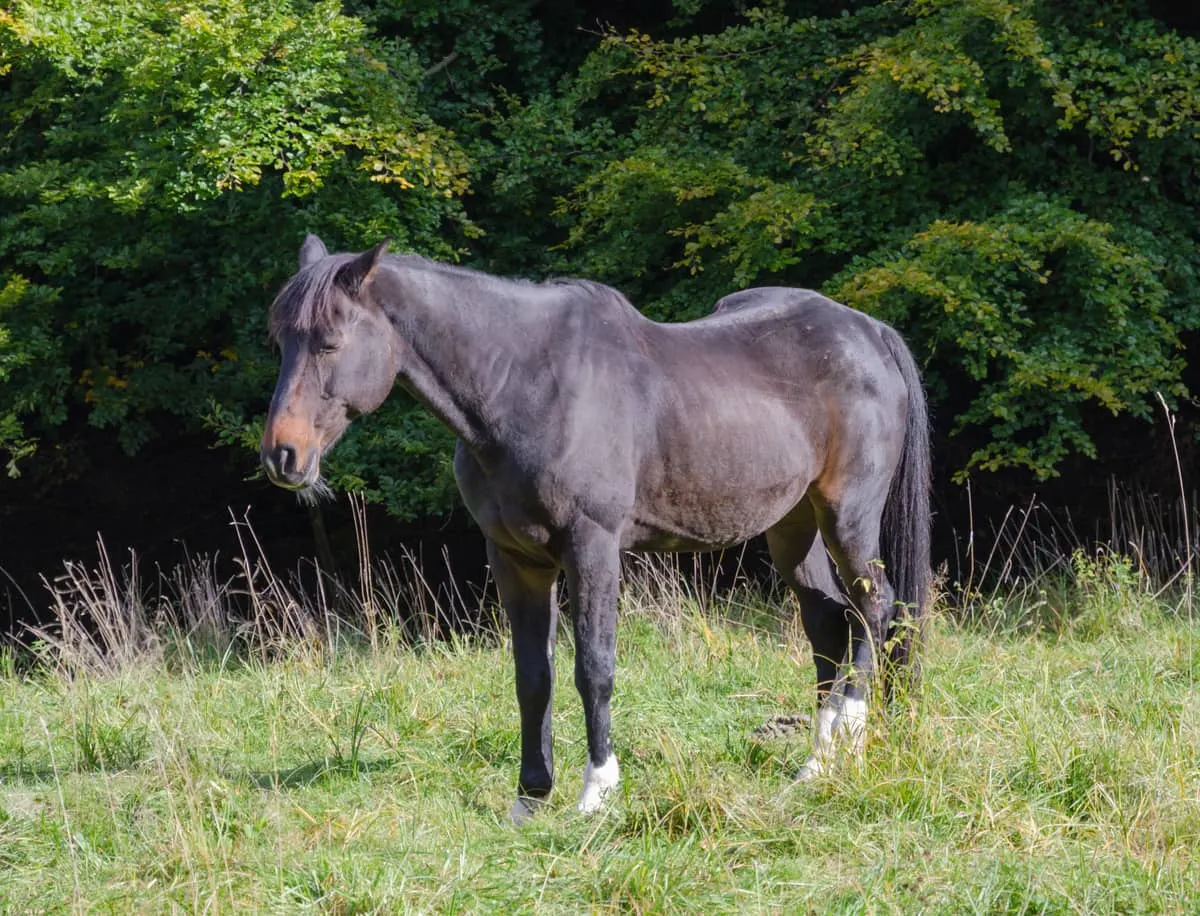
Sleep, for a horse, is a problem of trust. A horse can doze on its feet, locked upright with no wall to lean on and no risk of toppling, which looks like a magic trick. The real surprise is the catch hidden inside it: even a horse that sleeps standing up still has to lie down.
Legs that lock
So why do horses sleep standing up? Because they're built to. A horse has a system of tendons and ligaments called the stay apparatus, an arrangement that helps it remain standing with little muscular effort (biomechanics study). The key piece is a ligament that hooks the kneecap over a notch in the leg bone, stabilizing the joint so the leg can stay straight on its own. With the joints supported, the horse can reduce the muscle work of holding itself up (Live Science). It's the animal equivalent of a kickstand, and the horse can even rest one hind leg at a time, shifting its weight as it dozes.
A prey animal's head start
The reason this trick evolved comes down to one fact: horses are prey. On the open plains their ancestors lived in, the difference between life and death could be a couple of seconds, and a horse caught lying down has to scramble to its feet before it can run. A horse already standing can explode into a gallop instantly. As the equine specialist Karen Waite puts it, "standing gives them a literal jump on predators and a better chance of getting away than if they were lying down" (Live Science). Dozing on their feet keeps them permanently ready to flee.
But they still have to lie down
Here's the part that completes the picture. Standing sleep is only ever light sleep. To get REM sleep, the deep, dreaming stage, a horse must lie down, because REM switches off muscle tone throughout the body, including the stay apparatus itself (Mad Barn). A locked leg can't stay locked once the body fully relaxes, so a standing horse simply can't enter that stage. As the equine vet Joe Bertone explains, paradoxical (REM) sleep "can only be achieved while a horse is lying down, because the body must be 'paralyzed' in this sleep phase" (EquiManagement).
Horses only need a small amount of this lying-down sleep, but they genuinely need it. A horse that never feels safe enough to lie down, or can't because of pain or cramped space, slowly racks up a REM-sleep debt, and a badly sleep-deprived horse can suddenly buckle or collapse. That's where the herd comes in: some horses lie down and sink into deep sleep while others stand guard, then they swap.
So the picture is neater than the magic trick suggests. A horse sleeps standing up to stay safe and to save effort, dozing on locked legs like a parked machine. But for the deep, dreaming sleep every mammal needs, it has to trust the world enough to fold its legs and lie down. The standing horse is resting. The lying-down horse is the one that's really asleep.
Keep wondering: another animal solves the sleep-and-survive problem in how dolphins sleep, the hunter's version is why cats sleep so much, and the stage horses can only reach lying down is the subject of why we dream.


Join the conversation
Comments are reviewed before they appear. Be kind and stay curious.
Loading comments…