
Space & Cosmos
Why Do Comets Have Tails?
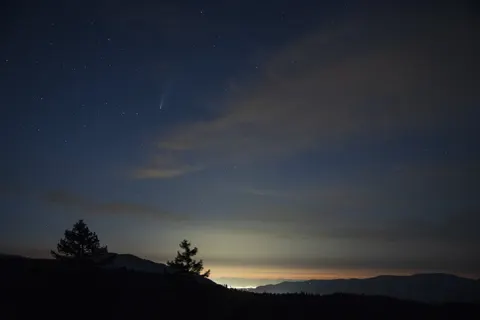
Why do comets have tails? Sunlight turns comet ice straight into gas, and the Sun pushes it into two tails: a curved dust tail and a straight ion tail.
Black holes, stars, planets, and the scale of everything.
Why do comets have tails? Sunlight turns comet ice straight into gas, and the Sun pushes it into two tails: a curved dust tail and a straight ion tail.
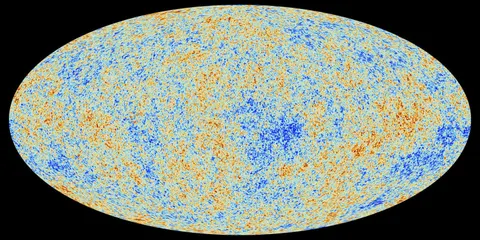
Why is space black? Not because the universe is empty. With endless stars the sky should blaze. The real answer is that the universe has a finite age.
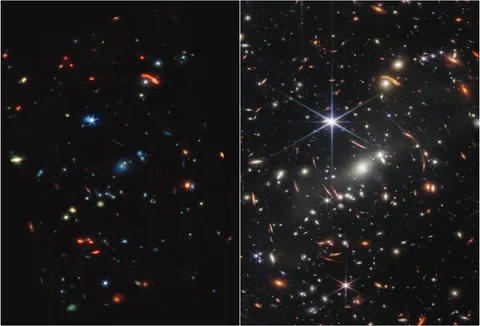
What is outside the universe? Possibly nothing, because 'outside' needs space to be outside in. Why expansion needs no outside and the horizon is not an edge.
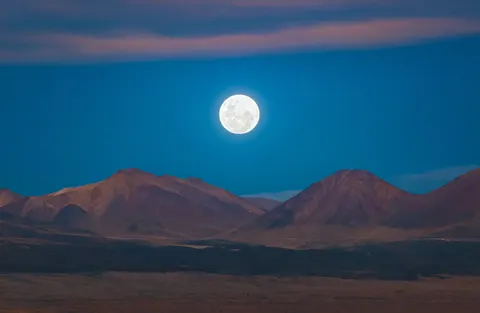
Why does the moon look bigger on the horizon? It isn't. The moon is the same size there, and slightly farther away. Psychologists still argue about the cause.
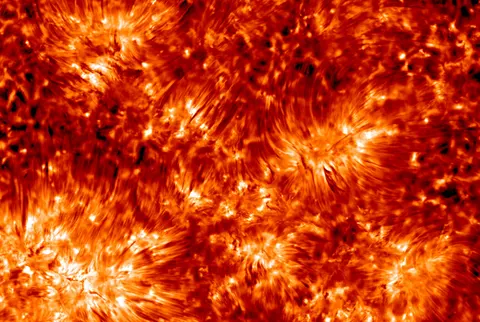
What is the Sun made of? About 92% hydrogen and 8% helium by atom count, all of it plasma. It shines from nuclear fusion, not fire, no oxygen needed.
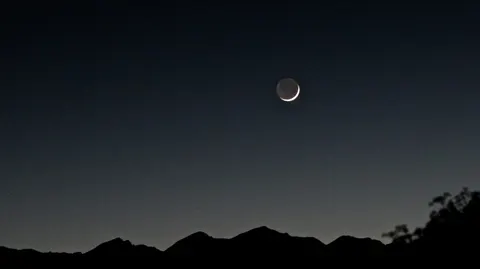
Does the Moon make its own light? No. Moonlight is reflected sunlight, and the Moon is a poor reflector, about as dark as worn asphalt against a black sky.
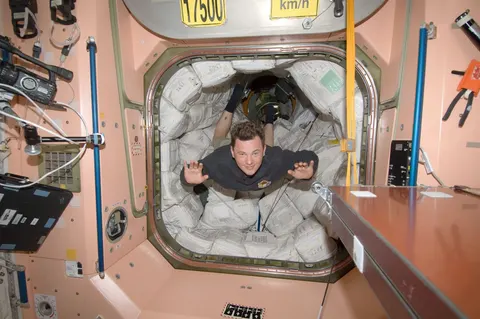
Why do astronauts grow taller in space? With no gravity compressing the spine, it stretches by up to 3 percent, a couple of inches. It reverses on Earth.
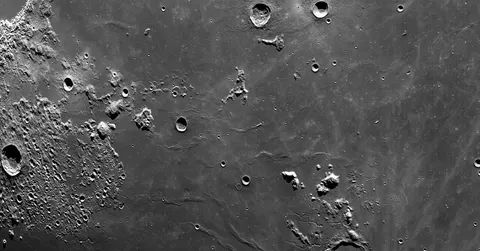
Why does the Moon have so many craters? It gets hit constantly, and with almost no air, water, or weather to erase the scars, many impacts remain visible for billions of years.
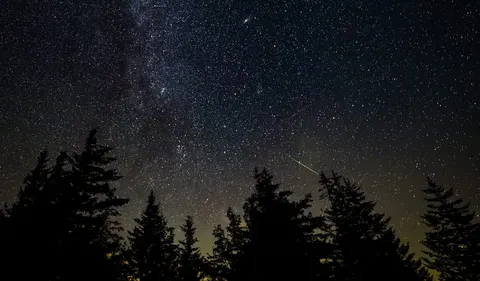
Meteor vs meteorite: what's the difference? One space rock at three stages: a meteoroid in space, a meteor as it streaks and burns, a meteorite once it lands.

How do astronauts sleep in space? Zipped in wall-strapped bags through 16 daily sunrises, with masks, earplugs, and, a 2014 Lancet study found, sleep meds.

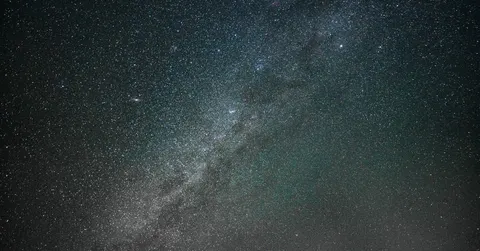
Can you see the Milky Way with the naked eye? Yes, under dark skies, but light pollution hides it from ~80% of North Americans. Here's how and where to look.

Can you see the Moon during the day? Yes, on most days of the month. It's bright enough to show against the blue when it's clear of the Sun's glare.

How many moons does Jupiter have? NASA recognizes 101 officially, and the latest catalog lists 115 as of April 2026. Here is why the number keeps rising.

In an idealized quiet system, a small black hole can shred you before the horizon, while a supermassive one may let you cross before tides become lethal.

What is the temperature on the moon? It swings from about 120 C in daylight to -130 C at night, with polar craters near -240 C, because the Moon has no atmosphere.

Why do we have seasons? Earth's axis is tilted about 23.5 degrees, so each hemisphere leans toward the Sun for half the year. It's the tilt, not the distance.

How old is the universe? About 13.8 billion years, measured from the oldest light in the sky and the rate at which the cosmos is still expanding.

Why is Venus the hottest planet when Mercury sits closer to the Sun? A runaway greenhouse effect and thick carbon dioxide trap the heat with nowhere to go.

What would happen if the Sun disappeared? For 8 minutes, nothing. Then darkness, Earth flung into space, and a slow freeze. Here is the full timeline.

How big is the sun compared to earth? About 109 times wider, big enough to swallow 1.3 million Earths, and holding 99.8% of all the mass in the solar system.
How do astronauts poop in space? With airflow, not gravity. NASA's toilet suctions waste away, recycles urine into drinking water, and burns the rest up.
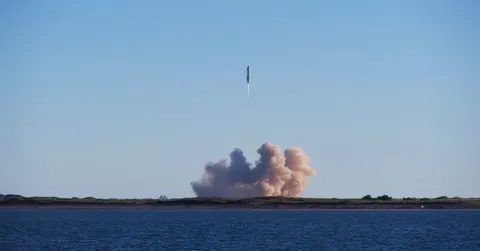
How long would it take to get to the moon? About 3 days like Apollo, 8.5 hours at the fastest flyby, or 14 months by ion engine. It all depends on how you travel.
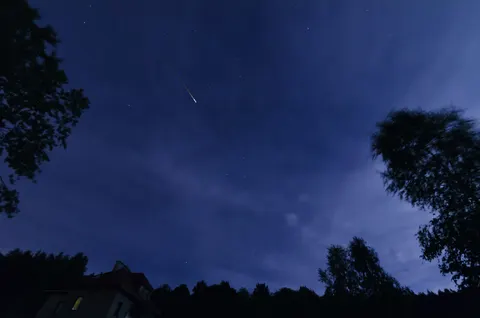
What is a shooting star? Not a star at all. It's a meteoroid, often a grain of dust or a pebble, burning up about 75 to 120 km overhead as it hits the air.
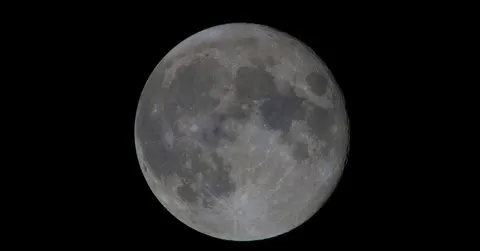
Why is the moon moving away from earth? Tidal friction nudges it 3.8 cm farther each year, the speed your fingernails grow, while slowly stretching out our days.
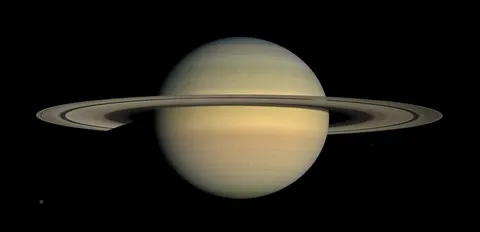
What are Saturn's rings made of? Over 95 percent water ice, from dust grains to house-sized boulders, and they are young, thin, and slowly raining away.
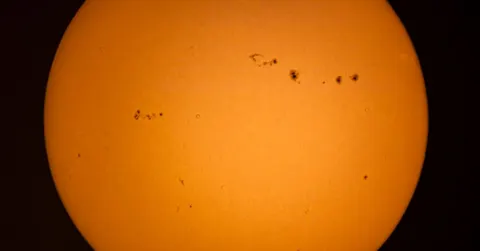
How loud would the sun be if we could hear it? Estimates put it near 100 dB at Earth, about a rock concert, but space is a vacuum so the sound never arrives.
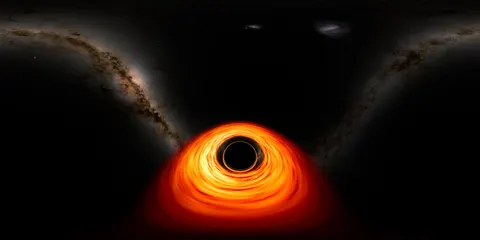
What is a white hole? It is a black hole with time reversed: a region nothing can enter. Real math, badly unstable, and never once seen in the sky.
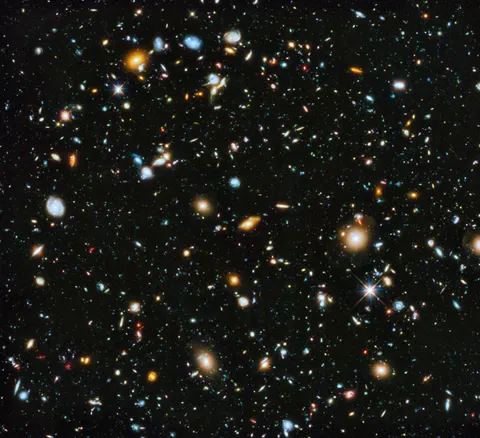
Is the universe infinite? Space measures flat to within a fraction of a percent, which permits an endless cosmos but cannot prove one. Here's why.
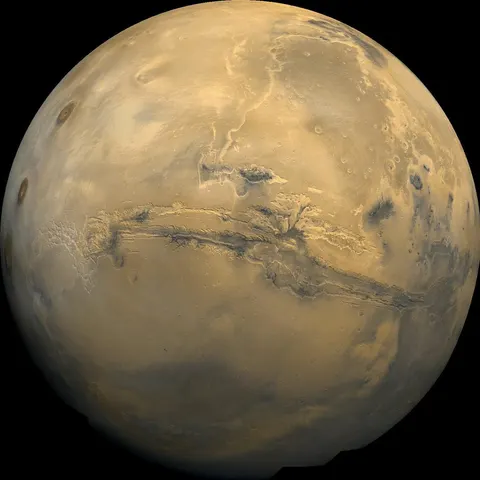
Why is Mars red? The planet is coated in iron oxide dust, the same stuff as rust. A 2025 study points to a water-bearing mineral, hinting Mars was once wet.
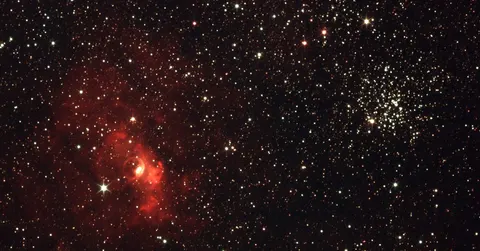
How big is the biggest star compared to the sun? The largest known stars are roughly 1,500 to 2,100+ times the Sun's radius, big enough to swallow the inner planets.

What would happen if the moon crashed into earth? It would break apart into a ring long before impact, when it crossed Earth's Roche limit. And it can't happen.
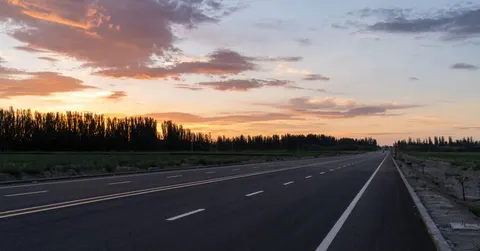
How long would it take to drive to the sun? At a steady 60 mph nonstop, about 177 years. Light makes the same trip in 8 minutes, and one NASA probe in 9 days.
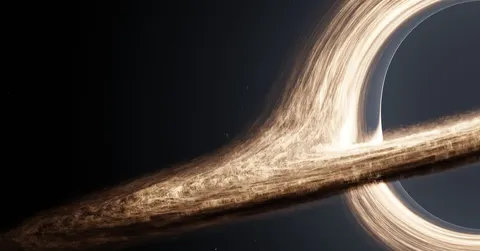
What is on the other side of a black hole? Likely a singularity we can never see, while white holes and wormholes stay math, not proof. Here is the honest answer.
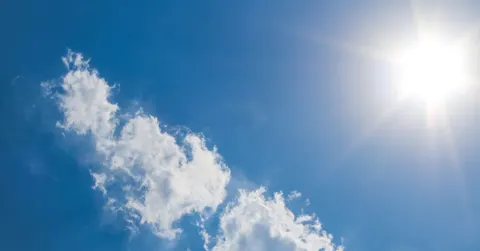
How many earths can fit in the sun? About 1.3 million by volume, or roughly 960,000 packed as solid spheres, with 109 lined up across its face.
How cold is space? Empty space sits at about -270C, just above absolute zero. But a vacuum has no real temperature, and you would overheat before you froze.
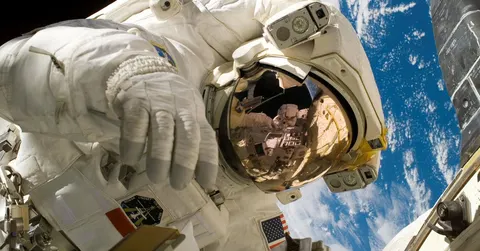
What does space smell like? Astronauts describe seared steak, hot metal, and gunpowder clinging to suits after spacewalks. Here is the chemistry behind it.
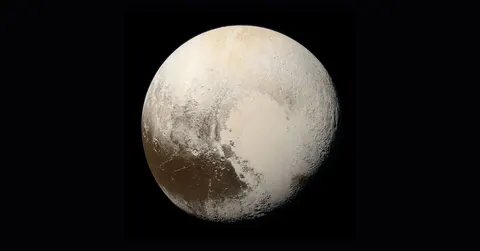
Why is Pluto not a planet? In 2006 astronomers voted it a dwarf planet for failing one rule: it never cleared its orbit. The story, and the man who killed it.
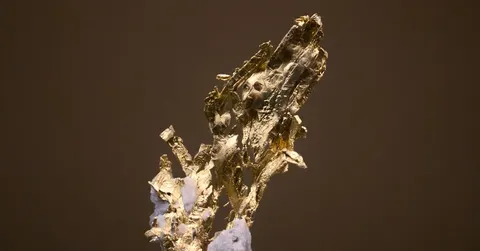
Where does gold come from? The gold in your jewelry was forged in a neutron star collision billions of years ago. Here's the wild physics behind it.
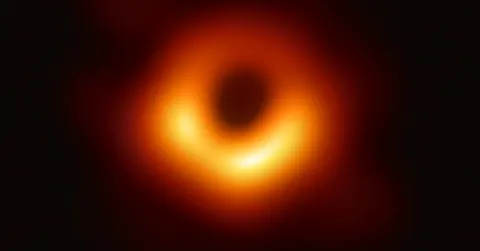
How do black holes die? Through Hawking radiation, they slowly evaporate over almost unimaginable spans of time. Here's how the universe's darkest objects end.
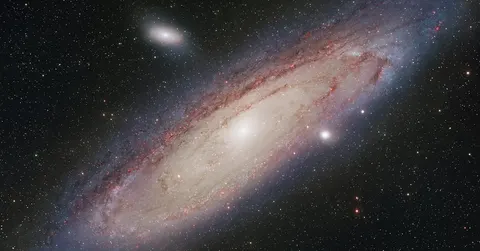
How big is the universe? The observable universe spans 93 billion light-years, but the whole thing may be infinite. Here's what 'size' even means in space.
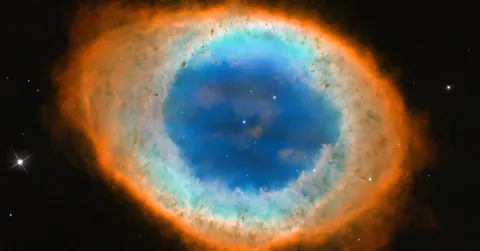
What happens when the sun dies? In 5 billion years it swells into a red giant, swallows the inner planets, and fades to a white dwarf. Here's the timeline.
Why do stars twinkle while planets shine steadily? The answer is our turbulent atmosphere bending starlight, and a surprising trick of distance and size.