
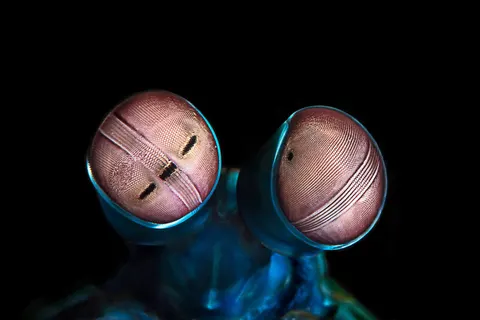
Life on Earth
How many colors can a mantis shrimp see?
How many colors can a mantis shrimp see? Fewer than you, despite 12 color channels. The 2014 Science experiment that broke the internet's favorite fact.
Ocean extremes, animal abilities, and evolution's stranger moves.
How many colors can a mantis shrimp see? Fewer than you, despite 12 color channels. The 2014 Science experiment that broke the internet's favorite fact.
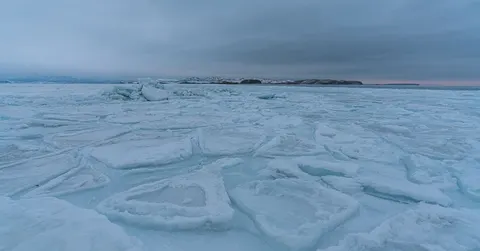
Does the ocean freeze? Seawater turns to ice near -1.8 degrees Celsius, and the ice pushes its salt back out, which is why old sea ice melts down fresh.
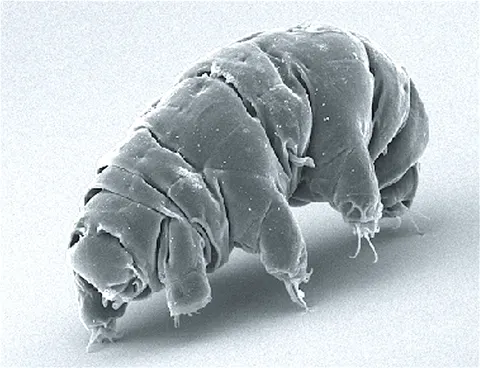
Are tardigrades immortal? No. An active water bear dies of old age in about 40 days. The famous 30-year revival paused the clock, it did not stop it.
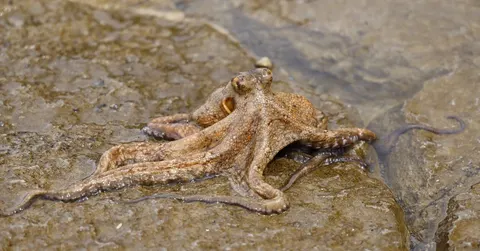
Does an octopus have three hearts? Yes: two branchial hearts for the gills and one systemic heart for the body, which stops beating whenever it swims.
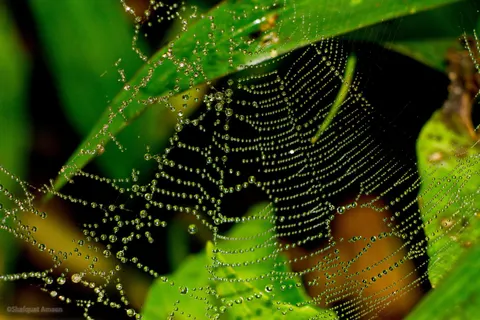
How strong is spider silk? Dragline silk breaks near 1.1 GPa, below high-tensile steel. It beats steel by weight, and beats Kevlar on toughness by miles.
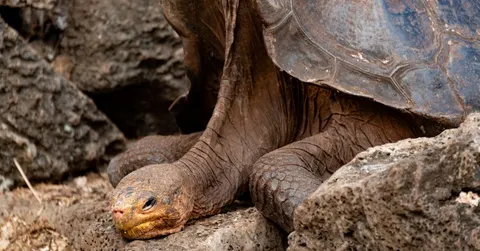
What is the longest living animal? A glass sponge may reach 11,000 years, a clam hit 507, and a Greenland shark swims past 270, ranked by how each was dated.
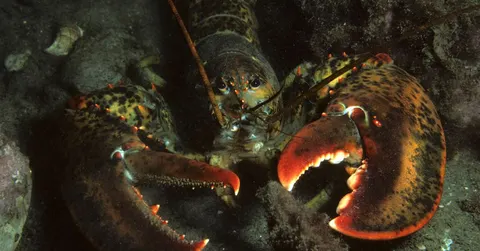
How long do lobsters live? Likely 50 years and sometimes near a century. They age slowly thanks to telomerase, but they are not immortal and still die.
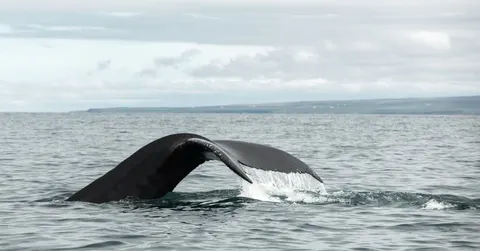
How do whales sleep? Most rest one half of the brain at a time so they keep breathing, and sperm whales nap upright in short vertical drift-dives.
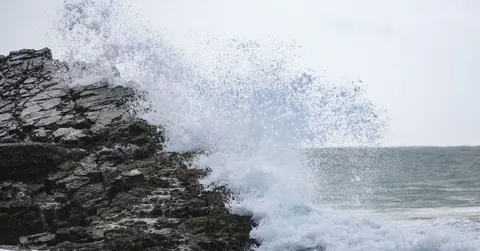
Why is the ocean salty? Rain weathers rock, rivers carry dissolved salts to the sea, vents add more, and evaporation leaves the salt behind at about 3.5%.
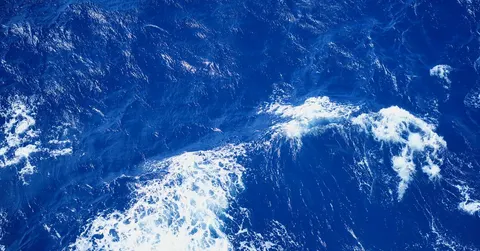
Why is the ocean blue? Water itself absorbs red light and lets blue through. The blue is the water, not a reflection of the sky, and here is why.
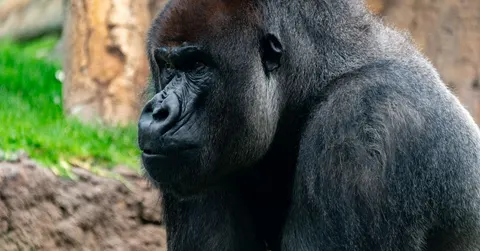
How strong is a gorilla? The 4-to-10x-a-human claim is mostly guesswork. Almost no gorilla has been directly measured, and the best ape data says about 1.35x.
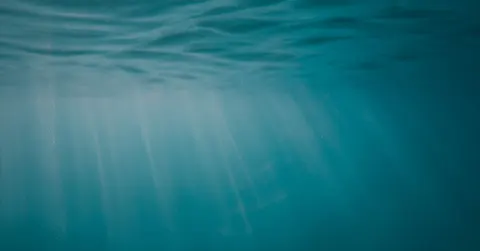
How much of the ocean have we explored? The famous 5% stat is misleading. About 27% of the seafloor is mapped at high resolution, but we've seen far less.
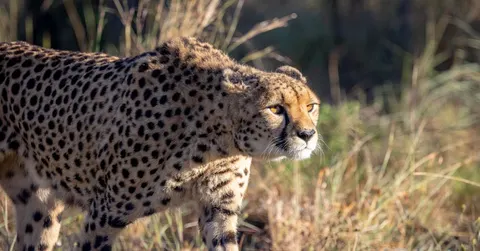
How fast can a cheetah run? Up to 60-70 mph, hitting 45 mph in 2.5 seconds, but it can only hold a full sprint for about 20 seconds before it has to stop.
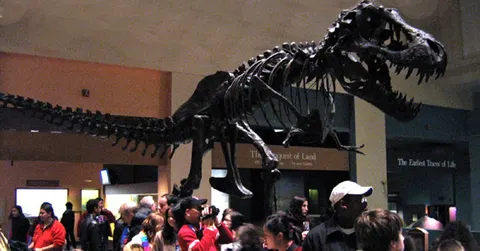
Why did T. rex have tiny arms? A 2026 study links shrinking forelimbs to a bigger, deadlier skull, but their use is still debated. Here are the top ideas.
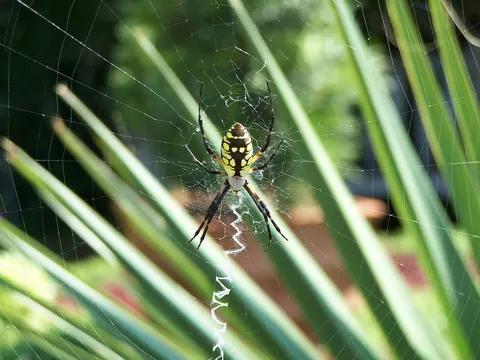
Why do spiders make webs? Mainly to trap prey without chasing it, and the web doubles as a vibration sensor. But not all spiders build webs, many hunt on foot.
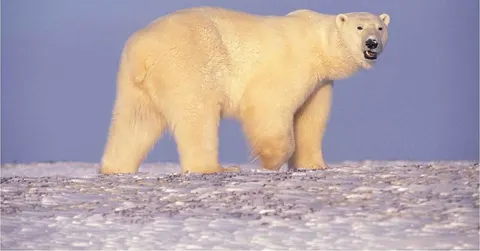
Why is polar bear skin black? Under that coat the skin is jet black, though its exact function is not settled, and the fur is clear, hollow, and air-filled.
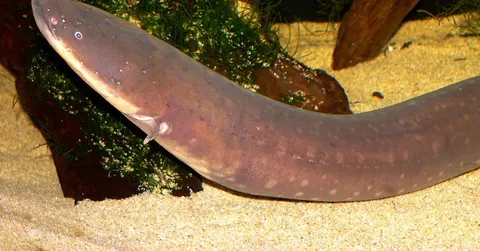
How do electric eels make electricity? Thousands of cells called electrocytes stack like batteries and fire together, producing species-dependent shocks that can reach 860 volts.
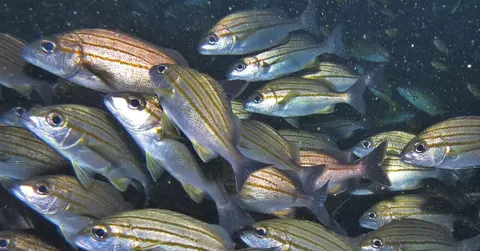
Why do fish swim in schools? Predation is one important reason, but schooling can also help with feeding, sensing, mating, and movement in some species.
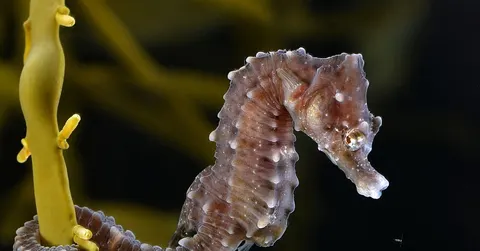
How do seahorses give birth? The female passes eggs to the male, who fertilizes them, carries them in a pouch, and then pushes out hundreds of tiny fry.
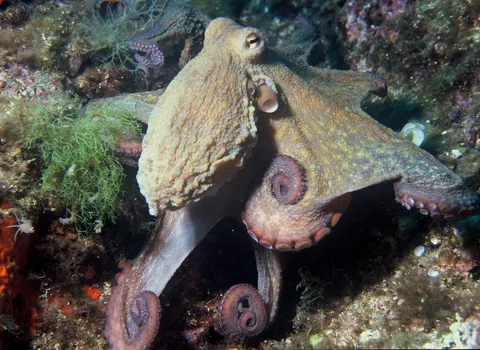
Do octopuses have bones? No. They're soft-bodied molluscs, and the beak is the main hard biting structure, which helps explain how they squeeze through tiny gaps.
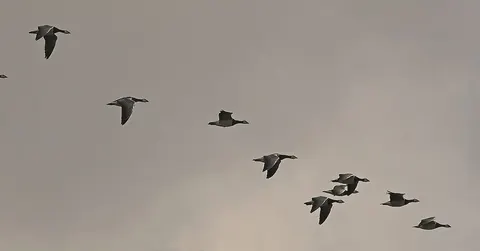
Why do geese fly in a V? Birds in suitable positions can use upwash from a bird ahead, while the shape helps keep a flock together.
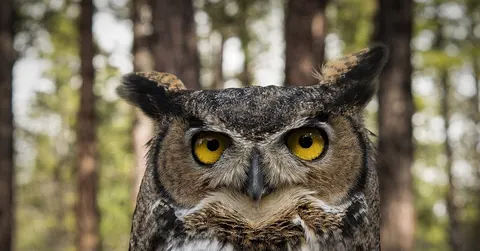
Why can owls turn their heads so far? Their eyes are fixed tubes that cannot move, so some owls rotate beyond 270 degrees, with neck tricks that guard the brain.
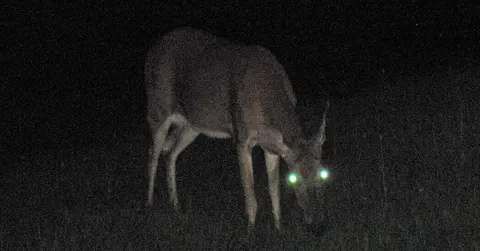
Why do deer freeze in headlights? Their night-tuned eyes can be overwhelmed by sudden glare, so they may hold still rather than bolt into the dark.
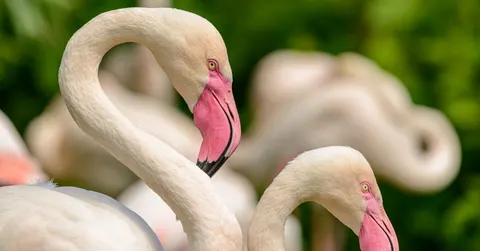
Why are flamingos pink? They are born grey and eat their way to pink, drawing pigment from algae and shrimp. Some even wear it as makeup.

How does a Venus flytrap work? It counts touches on its trigger hairs, normally snapping shut after two within roughly 20 to 30 seconds and digesting only after about five.

How long can penguins hold their breath? Emperor penguins usually dive 3 to 6 minutes, but the longest dive on record ran 27.6 minutes on a single breath.

Why do horses sleep standing up? A built-in 'stay apparatus' helps stabilize selected leg joints so they can doze upright and stay ready to move. But they must lie down to dream.

Why did woolly mammoths go extinct? A warming climate shrank their habitat and humans hunted them, and the last island survivors may have died from a fluke.

Why do turtles live so long? A slow metabolism, a protective shell, and a trait called negligible senescence: many barely age, their death risk barely rises.

Why do cats eyes glow in the dark? A mirror behind the retina, the tapetum lucidum, bounces light back for a second look. Their eyes reflect light, not make it.

Were dinosaurs warm blooded? Some ran as hot as birds while others stayed cool like reptiles. Here is what fossil bone chemistry actually reveals today.

Why do snakes shed their skin? Their outer layer can't grow, so they replace it whole, peeling off inside out like a sock, eye caps and all. Here's how it works.

How do jellyfish sting? Their tentacles carry microscopic cells that sense contact, fire barbed threads, and deliver venom in one of biology's fastest cellular events.

How fast do hummingbirds flap their wings? Many beat 40 to 80 times a second, while the smallest species can top 100. Here is how they hover.

Why do frogs croak? Mostly male frogs call to attract mates and warn off rivals, using a balloon-like vocal sac to amplify a song unique to their species.

How strong are ants? A controlled study clocked leafcutters at about 9 times their body weight, and a neck joint held up to 5,000. What the figures mean.

How do starfish eat? A starfish pries open a clam, pushes its own stomach out through its mouth into the shell, and digests the animal alive, outside its body.

How do fish breathe underwater? Gills pull dissolved oxygen from water using countercurrent exchange, grabbing up to 90 percent of it.
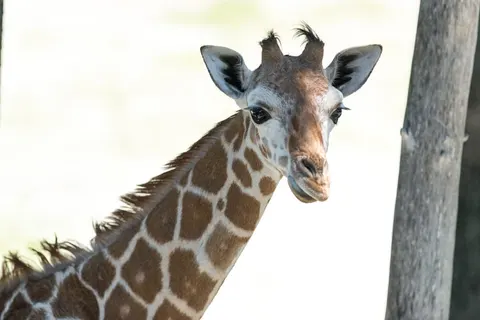
Why do giraffes have long necks? The textbook answer, reaching high leaves, is actually contested, and a rival idea says the neck is a weapon for male combat.

Why do dogs have wet noses? The moisture traps scent so they smell better and helps them cool off, and the cold tip can even sense a warm body's heat across a room.

Why do beavers build dams? To flood a deep pond that guards them from predators and keeps food reachable under winter ice. The trigger is a sound.

Why do dogs lick you? It's not just kisses. Licking is inherited affection, feel-good endorphins, a taste of salt on your skin, and a bid for attention.
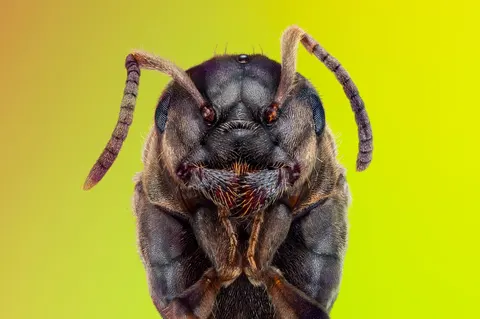
Do ants have brains? Yes, each ant has a real brain with tens of thousands of neurons. But the colony's true intelligence lives somewhere stranger.
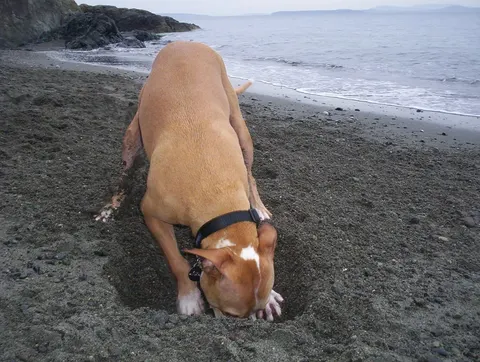
Why do dogs bury bones? It's an inherited caching instinct from wolf ancestors who hid surplus food for lean times. Pet dogs do it even when they're well fed.
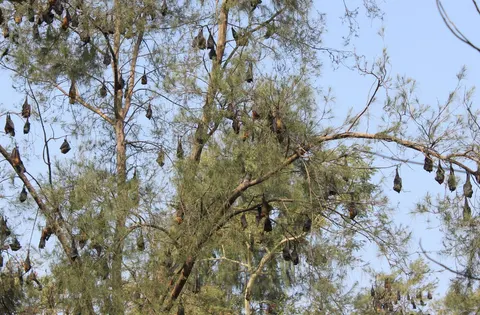
Why do bats hang upside down? They can't take off from the ground, so they roost high and drop into flight, and a tendon lock lets them hang for free.
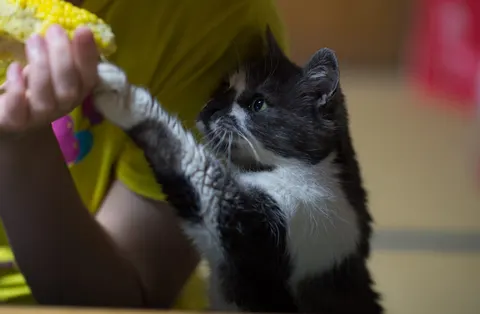
Why do cats knock things over? A mix of hunting instinct, paws built to test 'prey,' and the fact that it reliably gets your attention. It is not spite.
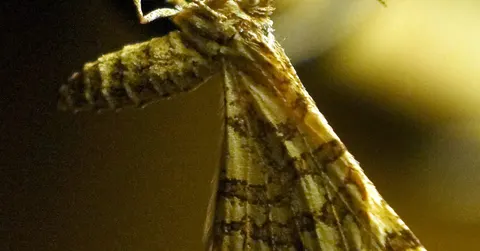
Why are moths attracted to light? Science still isn't sure. A 2024 study found they tilt their backs to the glow and get trapped circling it, not flying at it.
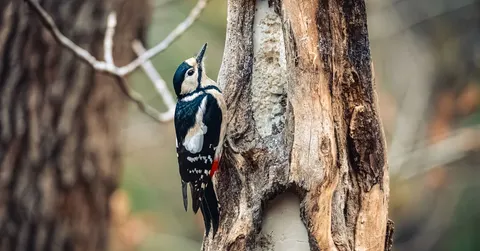
Why don't woodpeckers get headaches? Not from built-in shock absorbers. Their heads work like stiff hammers, and their tiny brains stay below the injury line.
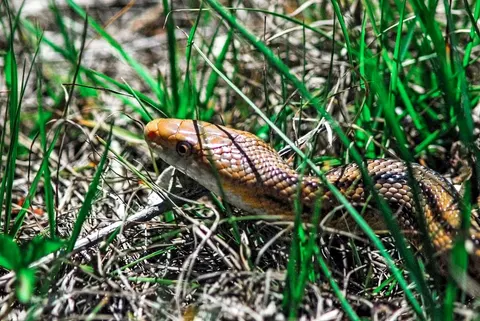
How do snakes move without legs? They push their flexible body against the ground and use directional belly scales, with four gaits for different terrain.
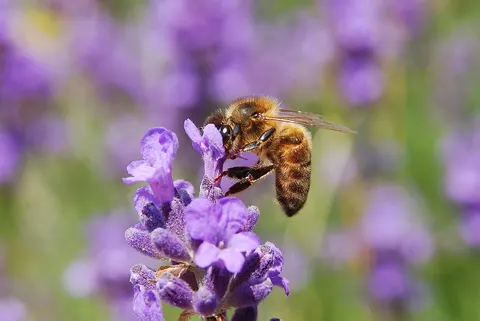
Why do bees die after they sting? A honey bee's barbed stinger lodges in your skin and tears loose with its guts, but the rule is narrower than you think.
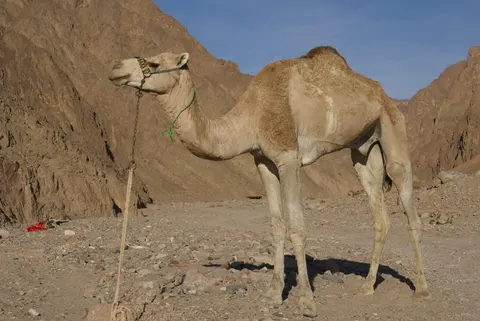
Why do camels have humps? To store fat, not water. The hump is an energy reserve that lets a camel survive long stretches without food in the desert.
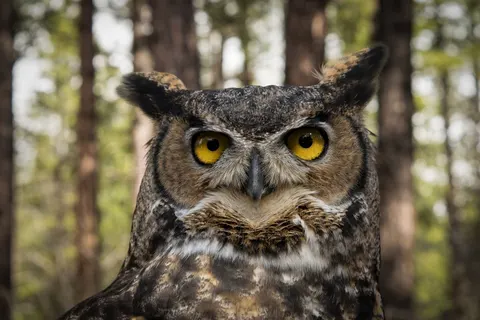
Why do owls hoot? To claim territory and attract a mate, where sound beats sight. Not every owl hoots, and the famous twit-twoo is two birds, not one.
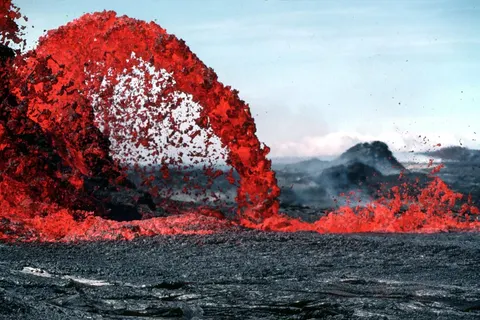
How do volcanoes erupt? Molten rock rises because it is light, and dissolved gas bursts out of it as the pressure drops, like a shaken can of soda.
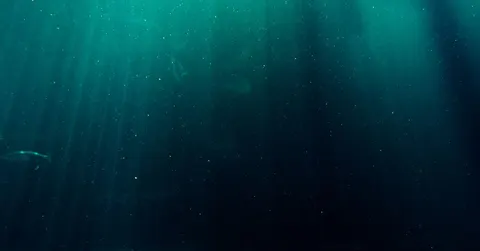
How dark is the bottom of the ocean? Below about 1,000 meters there is no sunlight at all, just permanent black, and that dark zone is most of the ocean.
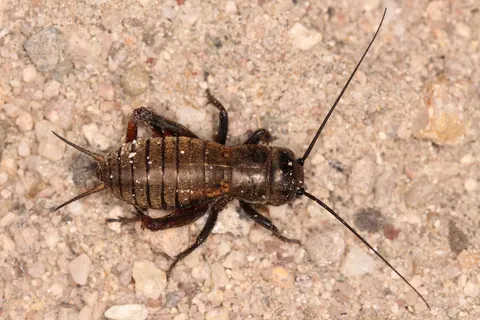
Why do crickets chirp? Male crickets rub their wings together, not their legs, to attract mates and warn off rivals, and the chirp rate tracks the temperature.
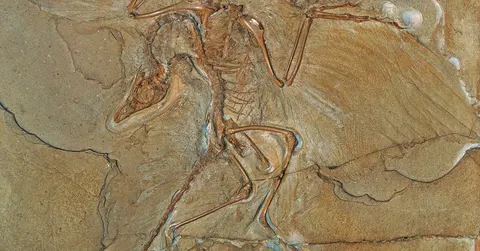
Did dinosaurs have feathers? Many did. Fossils since 1996 reveal fuzzy and fully feathered theropods, even a relative of T. rex. Birds are living dinosaurs.
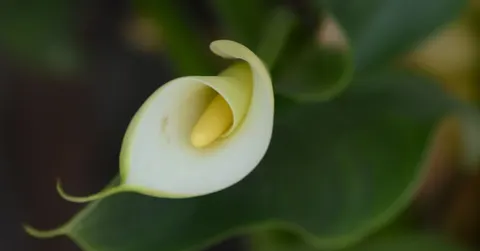
Why does the corpse flower smell so bad? It mimics rotting flesh with sulfur and amine chemicals, then heats itself to body temperature to broadcast the stench.
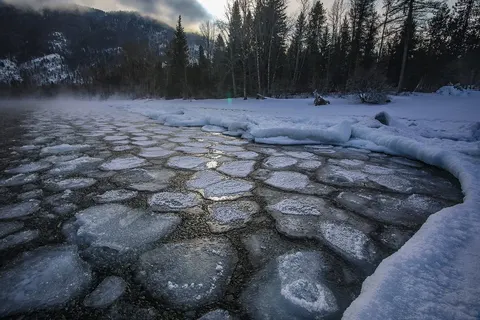
Why does ice float? Freezing locks water into an open crystal less dense than liquid, so lakes freeze top-down and life survives the winter.
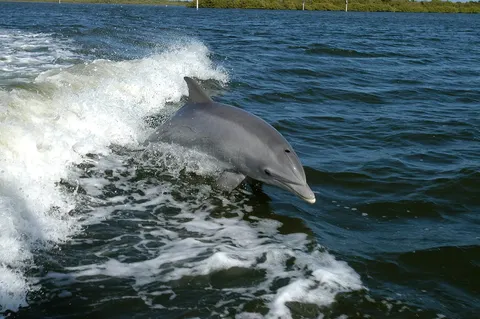
How do dolphins sleep without drowning? They shut down one half of the brain at a time, keeping the other half awake to surface, breathe, and watch for danger.
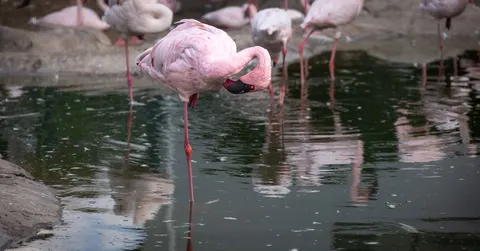
Why do flamingos stand on one leg? To stay warm in cold water, and because it takes almost no effort, a dead flamingo can balance on one leg.
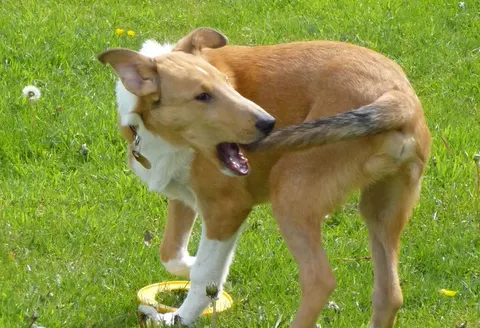
Why do dogs chase their tails? Usually it's play, boredom, or a puppy meeting its own body. But frequent, frantic spinning can signal an itch or a compulsion.
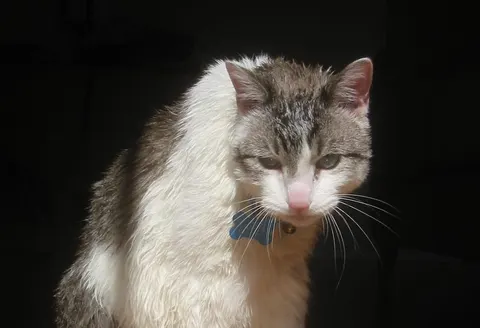
Why do cats hate water? Most descend from desert wildcats that never needed to swim, and wet fur turns heavy, cold, and slow to dry, leaving a cat exposed.
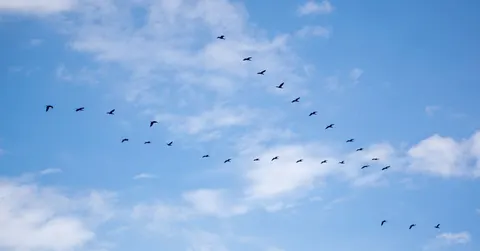
How do birds know where to migrate? With a stacked toolkit: an inherited direction, a sun compass, a star compass, a magnetic sense, landmarks, and smell.

Why do dogs wag their tails? It signals arousal, good or bad, not just joy, and they wag right when positive, left when wary. Wolves barely wag.
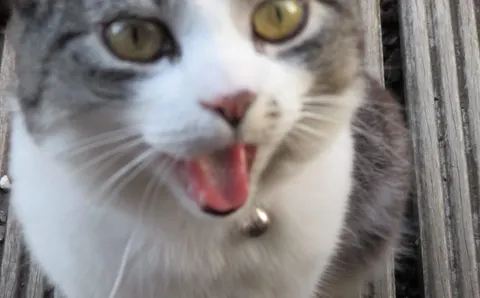
Why do cats meow? Mostly at humans, and almost never at other cats. The meow is a near-private language cats evolved to manage us. Here is what it means.

Why do dogs pant? It is their main way to cool down, because they barely sweat. Panting evaporates heat off the tongue and lungs. Here is when to worry.
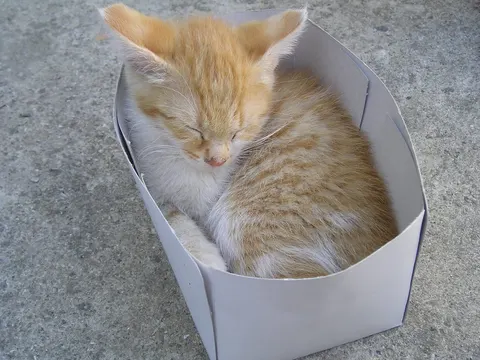
Why do cats like boxes? An enclosed space lowers stress and feels safe to a predator that is also prey. Cats will even sit in a square that looks like a box.
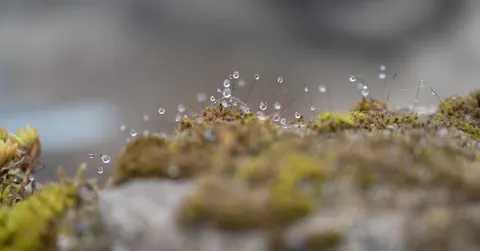
What do tardigrades eat? Most pierce plant, algae, and moss cells with needle-like stylets and sip the fluid; some hunt rotifers and nematodes.
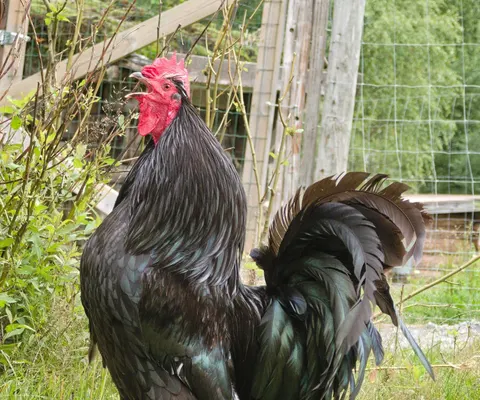
Why do roosters crow? Not to greet the sunrise. An internal body clock makes them crow before dawn, and a strict pecking order decides who gets to call first.
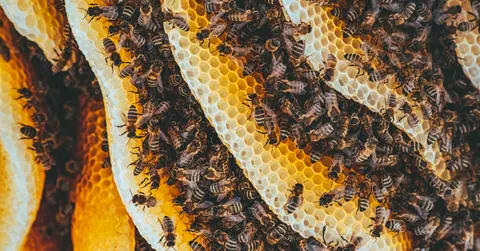
Why do bees make honey? It is a stored winter food the colony lives on when no flowers bloom. Here is how nectar becomes honey, and why a hive makes far extra.
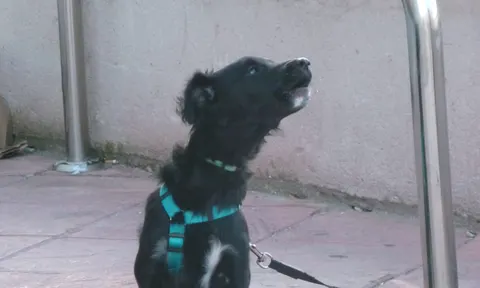
Why do dogs howl? It is long-distance communication inherited from wolves, a way of saying 'here I am.' Here is what your dog means, sirens included.
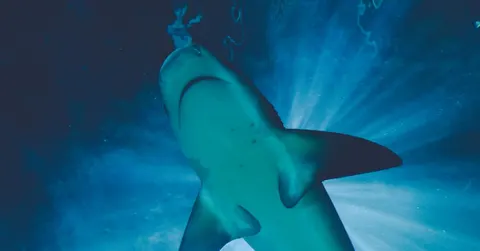
Do sharks sleep? Some do. A 2022 study caught draughtsboard sharks asleep by their metabolic rate, eyes open, most resting in bouts under ten minutes.
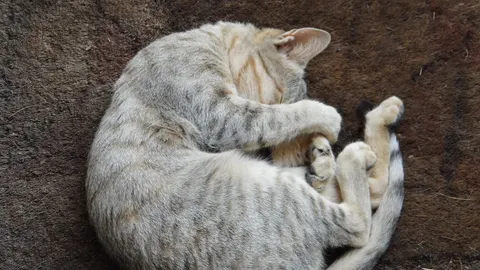
Why do cats sleep so much? Often 12 to 18 hours a day. They are ambush predators conserving energy between hunts, and most of that sleep is light dozing.
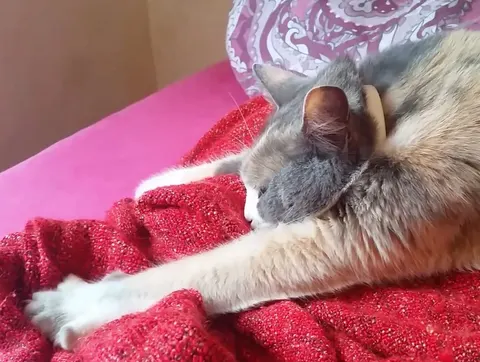
Why do cats knead? The rhythmic paw-pushing, or making biscuits, is a comfort habit left over from kittenhood, with a scent-marking twist. Here is the science.
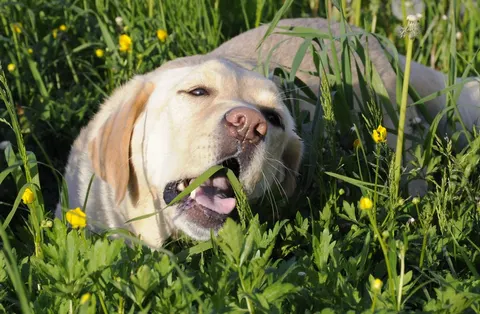
Why do dogs eat grass? It is usually normal, not a sign of illness. The science points to an inherited instinct, and most dogs do not vomit afterward at all.
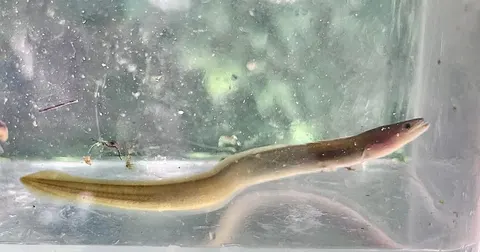
How do eels reproduce? They spawn once in the Sargasso Sea, then die, and no one has ever seen it. Inside the 2,000-year hunt, from Aristotle to a 2022 study.
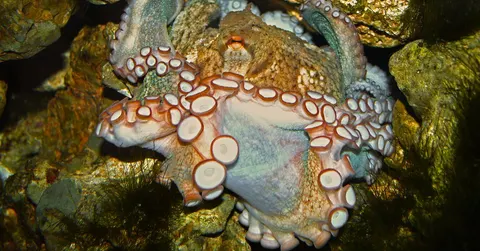
How do octopuses change color? Pigment sacs, mirror cells, and a colorblind brain that matches hues it can't see, all in under a third of a second.
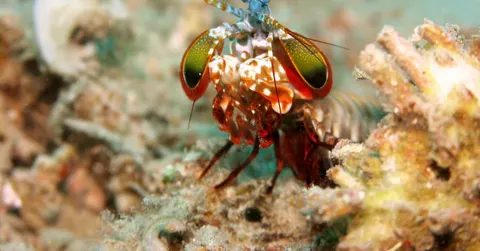
How hard does a mantis shrimp punch? Up to 1,500 newtons at 23 m/s, with cavitation bubbles that flash light and deliver a second hit. The physics, explained.
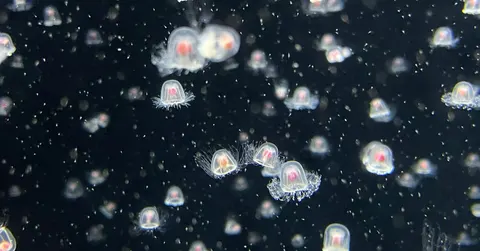
The immortal jellyfish, Turritopsis dohrnii, rewinds its own body from adult back to a baby polyp. Here is how that escape from old age actually works.
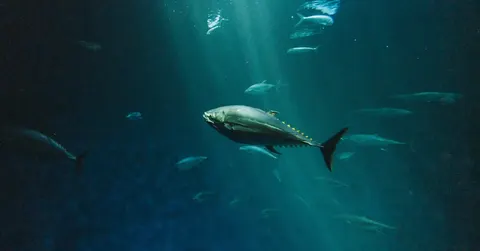
Why deep sea pressure doesn't crush fish comes down to water, not air, and a molecule that sets a hard chemical limit on how deep any fish can go.
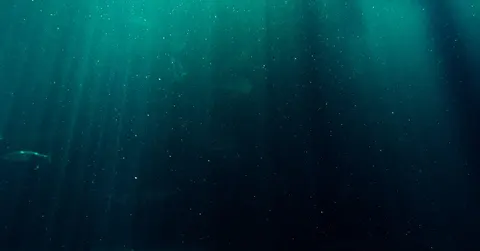
Would the deep sea crush you flat? Not the way movies show it. Here is what nearly 16,000 psi would really do to an unprotected human body, and why.
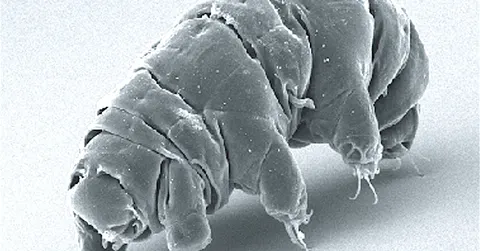
How do tardigrades survive space, boiling, freezing, and radiation? These microscopic 'water bears' have a survival trick that borders on the miraculous.
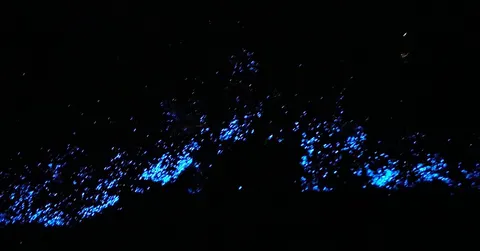
Why do sea creatures glow? Bioluminescence, living light from a chemical reaction, fills the deep ocean for hunting, hiding, and luring. Here's how it works.
How deep is the ocean? The deepest point plunges nearly 7 miles down. Here's what the journey looks like, and the astonishing life waiting in the dark.