
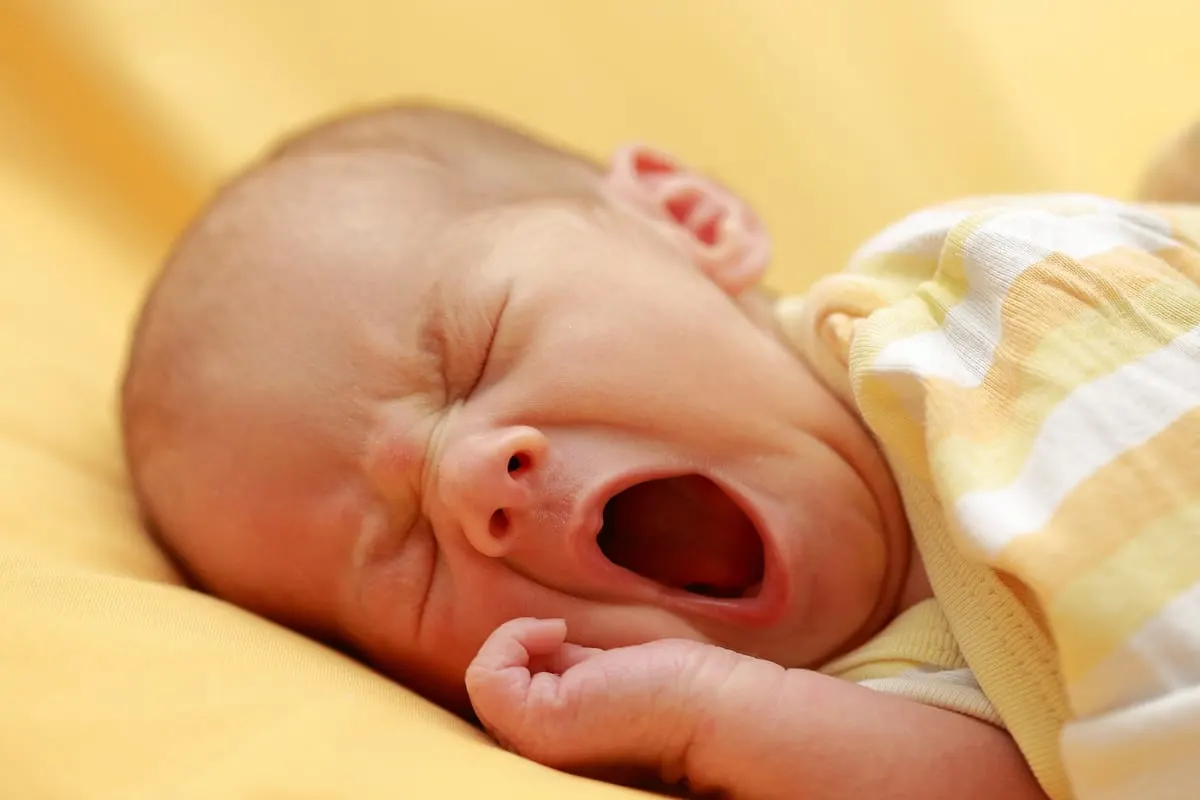
You might have yawned at the title. If not, you may well yawn before the end of this sentence, now that the idea is in your head. Yawning is one of the most universal things humans do, something we share with cats, dogs, even fish, and yet science still can't tell you for certain why we do it. For such an ordinary act, it's a surprisingly deep mystery.
Start by throwing out the oxygen story
So why do we yawn? The first thing to say is what the answer is not. The popular belief, the one most people carry around, is that we yawn to gulp down extra oxygen when our blood is low on it. It's a clean story. It's also wrong. The psychologist Robert Provine tested it directly, having people breathe air loaded with extra carbon dioxide, or pure oxygen, or exercise hard. Their breathing rate changed, as you'd expect. Their yawning didn't. The conclusion was blunt: "yawning and breathing are triggered by different internal states and are controlled by separate mechanisms" (Behavioral and Neural Biology). Whatever a yawn is for, it isn't a quick breath of air.
That leaves the real question wide open, and scientists have a few leading ideas, none of them fully proven.
The leading guess: a radiator for the brain
The hypothesis with the most momentum is that yawning helps cool the brain. The brain runs best in a narrow temperature band, and the deep inhale and jaw-stretch of a yawn may pull in cooler air and boost blood flow in a way that brings brain temperature down. As the researcher Andrew Gallup describes it, "the brain cooling, or thermoregulatory, hypothesis, which proposes that yawning is triggered by increases in brain temperature, and that the physiological consequences of a yawn act to promote brain cooling" (Princeton University). Backing it up, studies have found people yawn more in cooler seasons than in summer heat, and that contagious yawning fades when the surrounding air is as warm as the body, when a cooling yawn would do no good.
It's a genuinely interesting idea with real evidence behind it. It is not, however, settled fact, and plenty of researchers aren't convinced. Treat brain-cooling as the front-runner in an open race, not the finish line.
Or a gear-shift for the mind
A second idea points less to temperature and more to timing. Yawns cluster around transitions: just before sleep, right after waking, when we're bored, when we're nervous before something stressful (Library of Congress). That pattern suggests yawning may be a kind of reset, a way to nudge the brain from one state to another, jolting a drowsy mind toward alertness. The paratrooper about to jump and the student fighting sleep in a lecture are yawning for what might be the same reason: the brain shifting gears. Like brain-cooling, it's a strong hypothesis rather than a closed case, and the two ideas may even be describing the same yawn from different angles.
Why you caught it from a screen
Here's the strangest part, and the reason you may have yawned reading this. Yawning is contagious. See someone yawn, hear it, read about it, or just picture it, and your own yawn reflex can fire. Roughly half of people are susceptible under lab conditions.
What's telling is who catches it from whom. When researchers tracked real yawns between people, the contagion followed the closeness of the relationship: "the rate of contagion was greatest in response to kin, then friends, then acquaintances, and lastly strangers" (PLOS ONE). The closer you feel to someone, the more likely their yawn pulls one out of you. That pattern has led scientists to link contagious yawning to empathy and social connection, an unconscious echo of the people around us, and it shows up in other social animals like chimpanzees and baboons (Scientific American). Contagious yawning even shows up on a developmental clock, appearing only once young children develop the social awareness that empathy depends on.
The empathy link is suggestive, not proven, and there are wrinkles, but it reframes the contagious yawn as something almost social, a tiny piece of involuntary fellow-feeling. Which means the yawn is doing at least two jobs we don't fully understand: something private inside one brain, and something quietly shared between brains.
So we've arrived at an honest and slightly delightful place. The yawn is one of the first things you ever did, possibly even in the womb, and one of the most reliable things your body does for the rest of your life, and science genuinely cannot yet tell you for sure what it's for. We can rule out the oxygen myth, point confidently at brain-cooling and state-shifting as the best current guesses, and marvel that a single yawn can leap from one person to another across a room. The rest, for now, is a mystery you're carrying around in your own jaw. Sorry, by the way, if this made you yawn.
Keep wondering: another automatic act hides a deeper purpose in why we blink, the brain runs its own theater in why we dream, and it quietly predicts your own touch in why you can't tickle yourself.


Join the conversation
Comments are reviewed before they appear. Be kind and stay curious.
Loading comments…