
Go ahead and try it. Run a fingernail lightly up the sole of your own foot. Nothing much happens. Now imagine someone else doing exactly the same thing, at the same speed, with the same pressure. You'd probably be writhing across the room. The touch is identical. The reaction is not. So why can't you tickle yourself, when someone else so easily can? Something in your brain is cheating.
Your cerebellum files a prediction the moment you decide to move
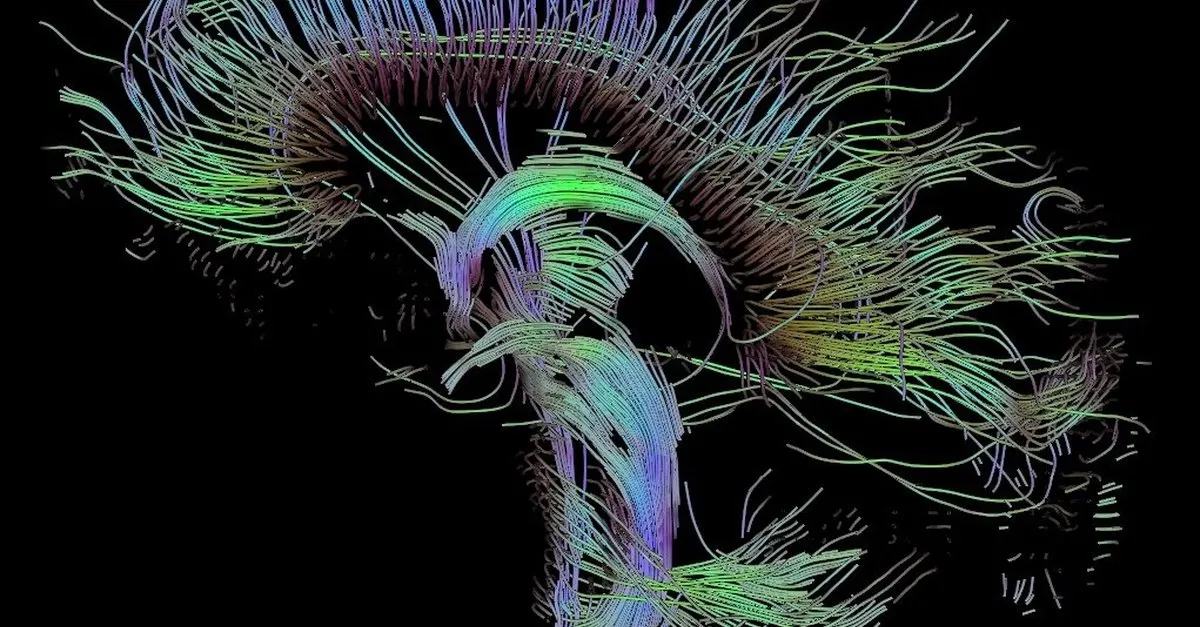
The answer arrives from the back of your brain. When you initiate any deliberate movement, your cerebellum, a dense, wrinkled structure tucked below the main cortex, doesn't just coordinate the motion. It also runs a calculation called a forward model: a real-time prediction of the sensory consequences your movement is about to produce. Before your fingertip makes contact with anything, the cerebellum has already filed a report with the rest of your brain describing roughly what's coming, when, and where.
That prediction is sent ahead, like a memo to the somatosensory cortex and the anterior cingulate cortex, the brain regions that process touch and register its emotional charge. The same self-versus-other bookkeeping shapes why scratching your own itch feels so good. When the actual sensation arrives, the brain compares it against the prediction. Close match: attenuate. Muffle the signal. The touch still registers, but at reduced intensity. Because ticklishness depends almost entirely on surprise and unpredictability, the muffling is enough to kill it. You felt the touch. You just didn't feel tickled.
This is sensory attenuation, and it is not a side effect of something else. It is a feature. Without it, every step you took would be overwhelming. Every brush of clothing against your skin would compete for your full attention. The brain needs to separate signals it caused from signals the world is sending at you. The tickle distinction is just one consequence of a much larger, constant sorting operation, and it joins a long list of things your body decides on its own, right down to the reason coffee makes you poop.
The robot experiment that proved it
A team at University College London, Sarah-Jayne Blakemore, Daniel Wolpert, and Chris Frith, spent the late 1990s finding ways to get inside this mechanism and poke at it. Their most satisfying experiment used a small robot arm. Participants moved a joystick, which controlled the robot, which then applied a stroke to their palm. Same motion, same pressure, same spot. But by inserting a delay between the joystick movement and the robot's touch, the researchers could slide a wedge between what the cerebellum predicted and what actually arrived.
The result was clean: tickliness increased in direct proportion to the delay. A touch that arrived on time was dull. A touch that arrived a fraction of a second late started to feel like someone else was doing it. A longer lag made it ticklier still. As Blakemore noted, the cerebellum can predict the sensory consequences of your own movements but not when someone else produces them, and as prediction accuracy degrades, the sensation climbs back toward what it would feel like coming from a stranger.
Their 1998 paper in Nature Neuroscience used fMRI to show what this looks like inside the skull. Externally produced touch drove more activity in the somatosensory cortex than self-produced touch. And the cerebellum showed less activation during movements that generated tactile feedback than during movements that did not, consistent with the idea that it is doing the cancellation work. The 2000 review paper in NeuroReport laid out the full forward-model account: attenuation is proportional to the error between the predicted sensation and the actual one. No error, no tickle.
Why tickling is really a social act
There is a reason you cannot engineer your own tickle by thinking about it harder or trying to be unpredictable. The prediction mechanism does not care about your intentions. It operates upstream of conscious control, on the motor command itself, the same kind of automatic machinery that makes you see faces in things whether you want to or not. The moment the brain decides to move your hand, the prediction is already running. You cannot surprise yourself because the part of you that would be surprised is the same part that decided to move in the first place.
This is what makes tickling almost uniquely social. It requires that the touch come from outside your own motor system, from a body whose intentions your cerebellum cannot predict. That is why being tickled is hardwired to produce a particular kind of helplessness: you are, by definition, not in control of what is happening to you. It tends to occur between people in close relationships, and it produces that strange mixture of laughter and distress that is not quite either one. The sensation is partly about the touch and largely about the fact that someone else is causing it.
Infants respond to tickling well before they can tickle themselves on purpose. The social circuit is early and deep, an inherited reflex you never had to learn, in the same family of hardwired urges as why dogs eat grass.
The patients whose predictions go missing
Here is where it gets strange. A study published in Psychological Medicine in 2000 recruited three groups, schizophrenic patients, people with bipolar disorder or depression, and healthy controls, and measured how ticklish they found self-produced versus externally produced touch.
The controls behaved exactly as expected: self-produced touch felt less intense, less tickly, less pleasant than identical touch from the experimenter. Most of the psychiatric patients showed the same pattern. But the patients who were currently experiencing auditory hallucinations or passivity phenomena, the sense that their movements or thoughts were being controlled by an external force, did not. For them, self-produced and externally produced touch felt roughly the same.
Blakemore and colleagues argued this reflects a breakdown in the self-monitoring mechanism itself. If the forward model is not generating reliable predictions, the brain cannot flag its own actions as self-generated. Self-produced sensations arrive without warning labels. They feel external. A thought that the brain cannot identify as its own thought sounds, from the inside, like a voice. A movement the brain fails to claim as its own feels like someone else moving you. And a touch you produced yourself feels, perhaps, like someone is touching you.
The tickle test is trivial, but what it measures is not. It is a window into the machinery the brain uses to locate itself inside its own actions.
Keep wondering: the same prediction systems that shape what you feel also shape what you remember, and what causes deja vu is another case where the brain's self-monitoring stumbles in revealing ways. And if you want to stay with the strangeness of consciousness, why we dream is still one of the most genuinely open questions in all of neuroscience.




Join the conversation
Comments are reviewed before they appear. Be kind and stay curious.
Loading comments…