
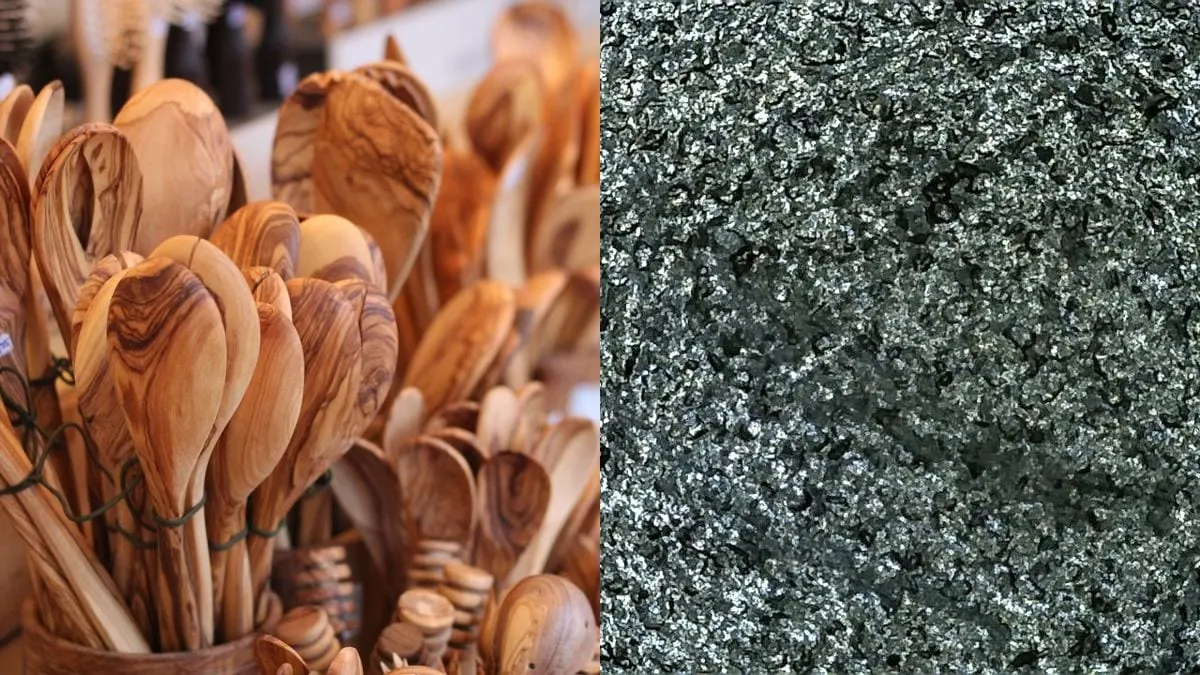
A metal table leg feels noticeably colder than the wooden top it holds up, even though both have sat in the same room all day at exactly the same temperature. It is one of the most convincing illusions the sense of touch pulls on us, and the senses are simply wrong about it.
Your skin is a heat-flow meter, not a thermometer
So why does metal feel colder than wood when they are equally warm? Because your skin was never measuring temperature in the first place. It measures how fast heat is leaving it. As the University of Illinois Physics Van puts it, "your skin can't actually detect the temperature of other objects, it only senses its own temperature" (Physics Van). When you touch something cooler than you, heat flows out of your hand into it, your skin cools, and your nerves read that drop as "cold." The faster the heat drains, the colder it feels.
That single shift, from temperature to heat flow, explains the whole illusion. Your fingertips are reporting a speed, not a number, and two objects at the same temperature can pull heat at wildly different speeds.
Metal is a heat thief
Metal is one of the best heat conductors there is, and wood is one of the worst. Touch the metal and it yanks heat out of your skin almost instantly, so your hand cools fast and the metal feels icy. Touch the wood and it sips heat away slowly, so your skin barely cools and the wood feels close to neutral (tec-science). Same temperature, opposite sensation, entirely because of how quickly each moves heat.
The gap is not subtle. Copper conducts heat at roughly 400 watts per meter-kelvin, while wood comes in around 0.1 to 0.2 (Wikipedia). That is a difference of a few thousand times. Metal does not feel a little colder than wood, because metal does not pull heat a little faster. It pulls it thousands of times faster. (The precise property, for the curious, is called thermal effusivity, which blends conductivity with how dense a material is and how much heat it can store (Wikipedia). But conductivity carries the headline.)
Why the same metal can feel scalding
Here is the proof that this is about heat flow and nothing else: the exact same metal that feels freezing in a cool room will burn you in a hot one. Leave a metal seatbelt buckle in a sunbaked car and it scalds the instant you touch it, while the cloth seat right next to it, at the same temperature, feels merely warm. The metal is just as eager to shove heat into your skin as it was to pull heat out. The property never changed; only the direction of the flow did.
This also kills a comfortable bit of everyday language. We say cold "seeps" into our hands, as if cold were a thing that travels. It is not. There is no such substance as cold. There is only heat, and the only thing moving is heat leaving your warm hand for the cooler metal (tec-science). What you call "cold" is simply the feeling of your own warmth draining away, and metal is just very, very good at draining it.
So the chill of a doorknob on a winter morning is not the doorknob's temperature talking. It is a report on how fast that doorknob is robbing you. Your skin, it turns out, is a brilliant little speedometer for heat, and a terrible thermometer.
Keep wondering: another everyday substance breaks the rules in why ice floats, the physics of light explains why the sky is blue, and the same trick of perception underlies why grass is green.



Join the conversation
Comments are reviewed before they appear. Be kind and stay curious.
Loading comments…