
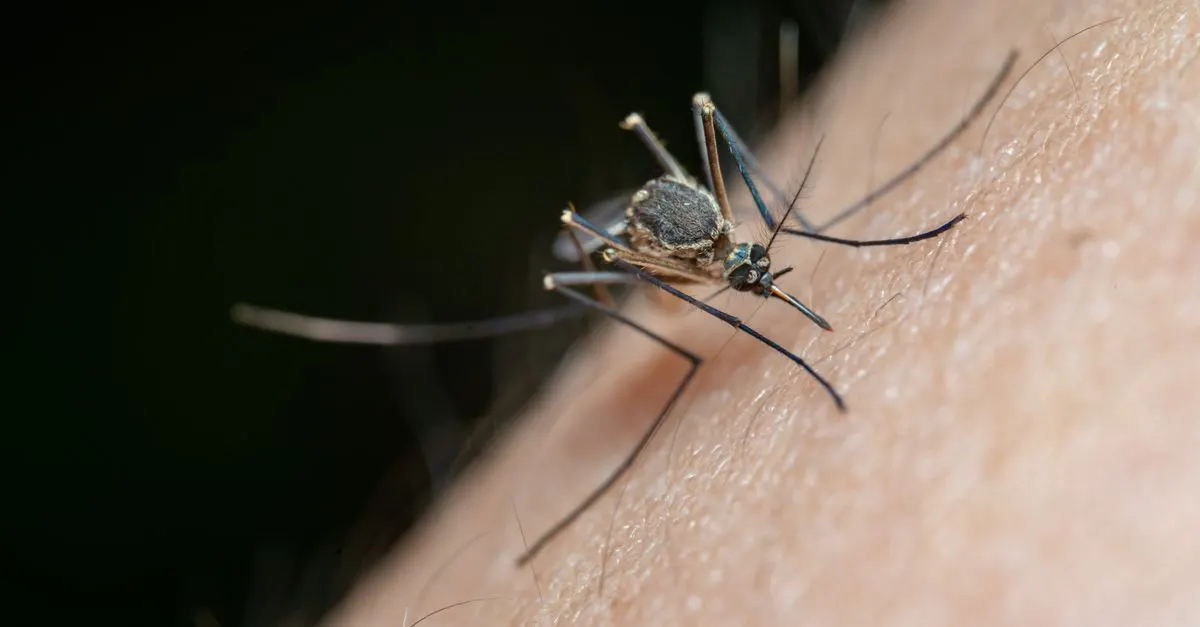
A mosquito bite on the back of an ankle, and four fingernails dragging across it. For about ten seconds, nothing else in the world matters. The relief is wildly out of proportion to the problem: a welt maybe five millimeters across, answered by a sensation people describe as close to bliss. You are raking your own skin with keratin. It should not feel like a favour. Why does scratching an itch feel good when you are, mechanically speaking, hurting yourself to get it? Your spinal cord is making a trade you never agreed to.
Scratching feels good because it hurts, slightly
Scratching relieves an itch by delivering a small, controlled dose of pain, and your spinal cord will drop an itch to deal with a pain. The two sensations travel upward through overlapping circuitry in the dorsal horn, and that circuitry does not carry both at full volume at once. Your fingernails produce exactly the kind of low-grade damage signal that wins the argument. The itch goes quiet. What you feel as pleasure is partly that quieting, and partly a reward signal arriving from deep in your midbrain to congratulate you for making it stop.
That is the whole trick, and it is a strange one when you sit with it. The nervous system's solution to an unbearable sensation is a slightly worse sensation you chose on purpose.
The gate that Melzack and Wall proposed in 1965
The competition idea is old. In 1965, Ronald Melzack and Patrick Wall published a paper in Science called "Pain mechanisms: a new theory", which argued that the spinal cord is not a passive cable running sensations to the brain. It is a switchboard. Incoming signals from large, fast nerve fibres could suppress signals from small, slow ones before either reached the brain at all, opening or closing what they called a gate.
Gate control is why rubbing a banged elbow helps, and it is the reason a whole category of sensation-substitution tricks work on your body. Itch turned out to sit under the same logic. Scratching floods the region with mechanical input, and the itch it was competing against loses.
The theory has been revised heavily in the sixty years since, but its central claim held up: the spinal cord edits what it sends. Your brain does not receive a raw feed of your skin. It receives a version that has already been argued over.
The monkey neurons that only went quiet when there was an itch to quiet
Here is the part that turns the tidy story sideways. In 2009, Steve Davidson, Glenn Giesler and colleagues at the University of Minnesota recorded directly from spinothalamic tract neurons in primates, the cells that carry itch and pain signals up toward the brain. They injected histamine to make the skin itch, then scratched the patch of skin those neurons were listening to.
The neurons calmed down. Firing in the ten seconds after a scratch fell to 62 percent of the pre-scratch level, and every histamine-responsive neuron they tested showed the drop.
Then they scratched when there was no itch. Nothing happened. Scratching before histamine did not reduce the neurons' ongoing activity at all. And when they scratched during a response to capsaicin, the compound that makes chilli burn, the neurons fired more.
So scratching is not generic interference. The spinal cord is not simply too busy to pass the itch along. Something about the itching state specifically licenses the inhibition, and Davidson's team called it state-dependent for exactly that reason. It is a mechanism that exists to cancel itch, waiting for an itch to cancel. This is a cousin of the trick your cerebellum runs when it predicts your own touch and mutes it, which is why you can't tickle yourself: the nervous system is constantly deciding which of its own signals deserve your attention.
Your midbrain pays you for scratching
Relief explains why the itch stops. It does not explain the pleasure, which is a separate event with its own machinery.
In 2013, Alexandru Papoiu, Gil Yosipovitch and colleagues put 14 volunteers in an MRI scanner and made their forearms itch with cowhage, the spicules of a tropical bean that provoke itch without histamine. Subjects rated the itch at 7.2. Scratching it themselves brought it down to 3.31.
The scans found the reward system lit up: the ventral tegmental area, the nucleus accumbens, the substantia nigra, the structures that handle wanting and getting. Meanwhile the anterior cingulate cortex and the insula, which carry the unpleasantness of a sensation rather than its raw facts, went quiet. So did the periaqueductal grey, and how strongly it deactivated tracked how pleasurable people said the scratch was. The periaqueductal grey is the region that normally switches on to suppress pain, which means itch relief seems to run the pain-suppression circuit backwards.
One more detail: when an investigator scratched the subjects instead, the itch dropped almost as much (3.90), but the pleasure did not. Self-scratching was rated significantly more pleasurable. Doing it yourself matters.
Serotonin jumps the tracks
The last piece explains why you cannot stop at one.
In a 2014 Neuron paper, Zhou-Feng Chen's lab at Washington University in St. Louis traced what serotonin does to itch. Mice engineered without the genes to make serotonin scratched far less than their littermates when given something itchy. Inject serotonin back into them and normal scratching returned. Block the 5-HT1A receptor and scratching fell again.
The logic is almost unfair. As Chen put it in the university's announcement of the work, "the problem is that when the brain gets those pain signals, it responds by producing the neurotransmitter serotonin to help control that pain." That serotonin travels down into the spinal cord, and there it feeds the same itch-specific neurons Chen's lab had identified years earlier through the GRPR receptor, cells that carry itch but not pain. The chemical sent to handle the pain you made ends up amplifying the itch you were trying to kill.
Which is why the itch-scratch cycle is a cycle. Relief lands first. Amplification arrives a beat behind it, quietly raising the baseline, so the next itch is worse and the next scratch is more welcome. Chronic itch conditions are where this stops being a curiosity and starts being the reason labs like Chen's exist at all.
There is something honest about all of it. The best-feeling thing your fingernails do all year is a bookkeeping error: a signal your brain sent to help, delivered to the wrong desk.
Keep wondering: your nervous system is full of these small betrayals. Why you can't tickle yourself is the same predictive machinery deciding a touch is not worth your attention, hiccups are a reflex loop that outlived its job, and why onions make you cry is a plant exploiting the wiring on purpose.
Join the conversation
Comments are reviewed before they appear. Be kind and stay curious.
Loading comments…