
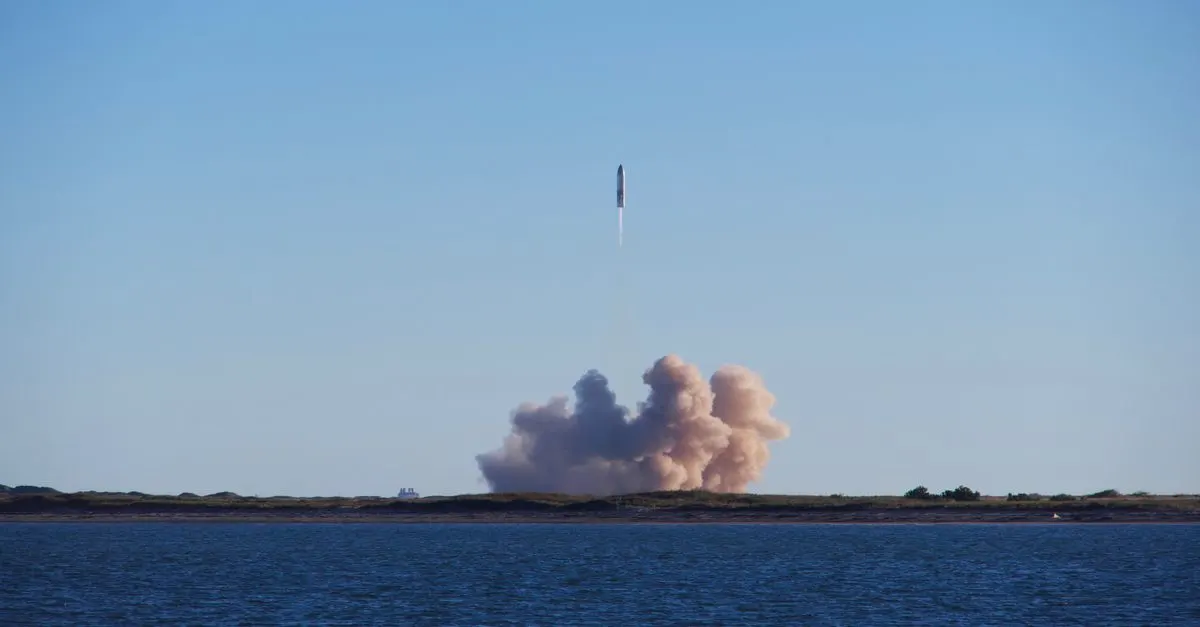
Ask how long it takes to get to the Moon and the honest answer is a question back: get there how? Because the real range is almost comic. If you were a beam of light, you'd arrive in about 1.3 seconds. If you were a crew of astronauts, it would take three days. And if you were a small, ultra-efficient European probe in 2004, it would take more than a year. Same destination, the same roughly 384,400 kilometers, and the trip can last anywhere from a heartbeat to fourteen months. The number depends entirely on how you choose to make the journey.
The practical answer is about three days
For a crewed mission, the answer is three days, give or take. Apollo 11 took 75 hours and 49 minutes from launch to landing in 1969, and the rest of the Apollo flights were close behind, ranging from about 69 hours for the quickest to 86 for the slowest (Britannica). Three days has become the default in everyone's mind for a reason: it's the pace that actually works when human beings, and a spacecraft heavy enough to keep them alive, need to reach the Moon and stop there in one piece.
That last word, stop, is the whole catch. Anyone can go faster. The hard part is arriving slow enough to enter orbit instead of sailing straight past.
You can go much faster, if you don't plan to stay
The fastest a spacecraft has ever reached the Moon is staggering: NASA's New Horizons probe crossed the Moon's distance in just 8 hours and 35 minutes (NASA). But it cheated, in a sense. New Horizons was bound for Pluto, the fastest spacecraft ever launched from Earth, and it tore past the Moon without slowing down even slightly. It didn't orbit, didn't land, didn't so much as wave. For a probe that just wants to fly by, raw speed is free. For a probe, or a crew, that wants to actually arrive, all that speed turns into a problem: you'd need an enormous amount of fuel just to brake. So missions that mean to stay deliberately go slower.
Or you can crawl there on almost no fuel
At the opposite extreme sits the European Space Agency's SMART-1, which reached the Moon in 2004 after a journey of more than a year (BBC Science Focus). It wasn't broken or lost. It was being frugal. Instead of a big chemical rocket, SMART-1 ran on an ion engine, which makes a whisper of thrust by flinging out charged atoms, so gentle that the spacecraft had to spiral outward from Earth in slow, widening loops. The payoff was almost unbelievable efficiency: the entire trip used just 82 kilograms of xenon fuel. SMART-1 traded time for thrift, taking the scenic route because it could barely afford the express lane.
And light makes the trip in a blink
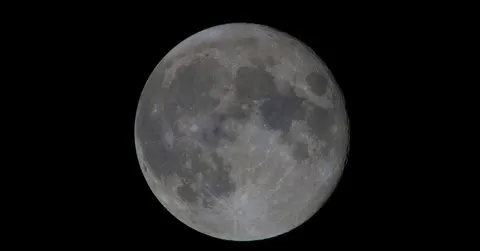
Hold all those human timescales next to the real speed limit of the universe. Light, and the radio waves we use to talk to spacecraft, covers the Earth-Moon gap in about 1.3 seconds (Royal Museums Greenwich). That's why, when mission control spoke to the astronauts on the surface, there was a small but real delay on every exchange: a second or so for the words to fly up, and another for the reply to come back. The Moon is, in the language astronomers use for far bigger distances, just 1.3 light-seconds away. It's the nearest thing to us in the whole sky, and the only place beyond Earth that humans have ever stood.
So there's no single number. The Moon is three days away by rocket, under nine hours away at a dead sprint, more than a year away if you're sipping fuel, and 1.3 seconds away at the speed of light. The distance never changes. Everything else is a choice about how badly you want to slow down when you arrive.
Keep wondering: the Moon keeps shifting on us, from why it's slowly drifting away to how astronauts actually sleep once they get there, and just how cold space gets along the way.


Join the conversation
Comments are reviewed before they appear. Be kind and stay curious.
Loading comments…