
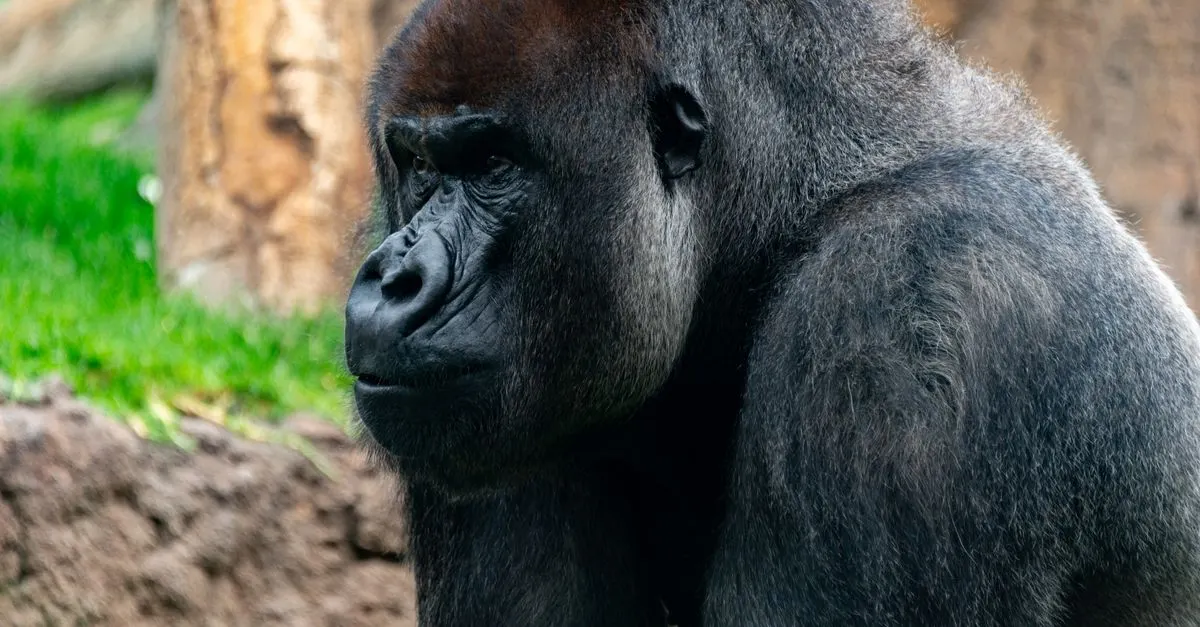
You've heard the number. A gorilla is ten times stronger than a man, or maybe four, or six, or twenty depending on who's telling it. It could rip your arms off, bend steel, deadlift a small car. The figure gets quoted like a fact, with a confident decimal attached. Here's the uncomfortable part: hardly anyone has ever actually measured a gorilla's strength, and the science that does exist points to a much smaller gap than the legend.
No one has properly measured a gorilla's strength
The truth is that a gorilla's exact strength is unknown, because no adult gorilla has ever been put through a clean, controlled maximal strength test. The famous "4 to 10 times a human" range you see everywhere is an estimate stitched together from anatomy, skull mechanics, and old anecdotes, not a reading off a machine. The single best-controlled study on great-ape strength was done on chimpanzees, and it found their muscle produces only about 1.35 times more dynamic force and power than human muscle, pound for pound. That is a real, measured number. Ten times is not.
So a gorilla is genuinely, enormously strong. Just not in the way the meme says.
Where the giant numbers actually came from
Trace the "super strength" claim back far enough and it lands on one man with one device in the 1920s. The biologist John Bauman noticed that everyone agreed apes were vastly stronger than people, yet nobody had bothered to prove it, so he rigged a dynamometer outside the cages at the Bronx Zoo and fed a rope through for the animals to pull.
His star subject, a former circus chimpanzee named Suzette, reportedly pulled 1,260 pounds. Another chimp, Boma, pulled 847 pounds with one arm. Bauman's human volunteers, including a college football team, couldn't beat 500 pounds with both hands. Do that division and you get the legend: apes are several times stronger than us.
Notice three things, though. Bauman tested chimpanzees, not gorillas. The setup was crude, and later scientists flagged that the panicked, caged animals were probably running on an adrenaline surge while the humans pulled politely and submaximally. And gorillas were quietly folded into a number that was never about them in the first place. The "10x gorilla" is, in a sense, a borrowed chimp statistic with the species swapped out.
What the muscle is actually made of
When researchers finally looked inside the muscle in 2017, the mystery mostly dissolved. A team led by Matthew O'Neill compared chimpanzee and human muscle fiber by fiber and found something that surprised a lot of people: a single chimp muscle fiber is no stronger than a single human one. The maximum force each individual fiber can produce is statistically the same. There's no magic ape protein.
The difference is in the mix. Muscle has two broad fiber types. Slow-twitch fibers are the endurance kind, efficient and tireless, the ones that let you walk all day. Fast-twitch fibers fire hard and fast and tire quickly, good for explosive effort. Chimp muscle is about two-thirds fast-twitch, while human muscle leans the other way, biased toward slow-twitch. Our fibers are also a touch shorter on average. Pack a body with longer, fast-twitch-heavy fibers and you get more burst force and power per kilogram, about 1.35 times more in the modeling, without any individual fiber being special.
That's the whole trick. O'Neill's team argues humans didn't lose raw fiber strength so much as trade explosive power for endurance somewhere in our evolution, shifting toward the low-cost, repetitive contractions that let our ancestors walk and run for hours. An ape is built for a short, violent effort. We're built to keep going. Different settings on the same hardware.
So why does a gorilla still feel unstoppable?
Because absolute strength and pound-for-pound strength are two different things, and a gorilla wins the first one easily on sheer size. A silverback can weigh around 180 kilograms, and it isn't soft weight. Dissections of captive lowland gorillas found their bodies average about 37 percent muscle, reaching 38 percent in the leanest, well-muscled animals, much of it stacked across the shoulders, chest, and arms. A human in good shape carries a smaller fraction of muscle on a much lighter frame.
Run the comparison honestly. Take that 1.35x pound-for-pound edge and multiply it across a body that's both heavier and a higher percentage muscle than yours, concentrated in the upper body an ape uses to climb and fight. You don't need a 10x fiber to get a terrifying animal. A creature that's modestly stronger per kilo, but built like a heavyweight made mostly of arm and back muscle, will out-pull and out-tear you without breaking a sweat. The size does the heavy lifting that the myth credits to the muscle.
The leverage helps too. A gorilla's limbs and the way its muscles attach are arranged for pulling and climbing, the daily work of hauling a heavy body through trees, so its everyday movements load those muscles in ways our office-bred arms never see.
The honest answer is more interesting than the myth
Here's the part worth sitting with. We've measured the bite force of long-dead dinosaurs by modeling their skulls, clocked the punch of a mantis shrimp at thousands of times its body weight, and worked out exactly how much an ant can carry relative to its size. But the single most famous strongman in the animal kingdom, the gorilla, has basically never been measured. Its headline strength stat is a guess wearing a lab coat.
That's not a knock on the gorilla. It's a reminder of how a confident number can outrun its evidence and harden into "everyone knows." The real story is better anyway. A gorilla isn't strong because its muscle is alien. It's strong because evolution built a large, climbing-adapted body out of ordinary primate muscle and then asked it to spend its life pulling. We share the same fibers. We just spent ours learning to walk away.
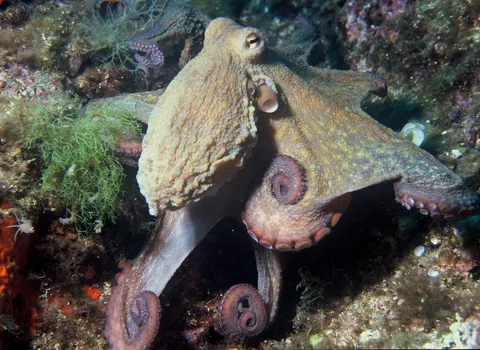
Keep wondering: find out how much an ant can really lift for its size, see how a mantis shrimp throws the fastest punch in the sea, and learn why an octopus has no bones to push against at all.


Join the conversation
Comments are reviewed before they appear. Be kind and stay curious.
Loading comments…