
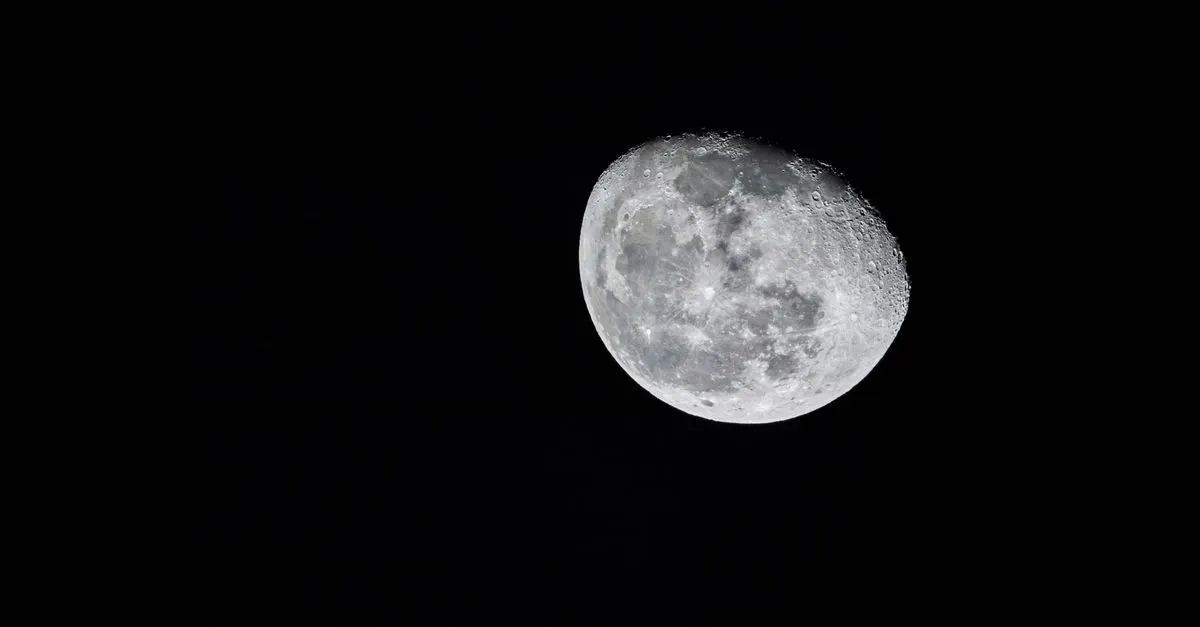
Ask what the temperature on the Moon is and you can't be handed a single number, because the Moon refuses to settle on one. Stand at the lunar equator at high noon and the ground beneath your boots would be hot enough to boil water off your skin. Wait two weeks, until night falls on that same patch of ground, and it would drop to a cold so deep it would crack most materials we know. Same spot, same Moon, a swing of nearly 300 degrees. The reason is the one thing the Moon almost completely lacks: air.
The numbers, from scorching to frozen
Here's the temperature on the Moon, by region. Near the equator, the surface climbs to roughly 120 to 127°C (around 250°F) in direct sunlight, hot enough to cook on, and then falls to somewhere around -130 to -173°C (-208 to -280°F) once the Sun goes down (NASA). That's the everyday range across most of the Moon. But the real extremes hide at the poles, in craters that sunlight never reaches, where it gets colder still, down toward -240°C, putting them among the coldest spots ever measured anywhere in the solar system.
No air means no mercy
On Earth, you barely notice this problem, because our atmosphere does constant, invisible work. Air soaks up the Sun's heat during the day and releases it at night, and winds carry warmth from hot places to cold ones. That blanket keeps a summer afternoon and the night that follows within a few tens of degrees of each other.
The Moon has no such blanket. Its wisp of an exosphere is far too thin to hold heat or move it around (NASA). So sunlit ground bakes with nothing to cool it, and the instant a spot falls into shadow, its heat radiates straight out into space and is simply gone. There's no air to split the difference, which is why the line between sunlight and shadow on the Moon is also a line between scorching and freezing.
And the nights last two weeks
The swings are made worse by the Moon's slow clock. A full day on the Moon, from one sunrise to the next, takes about 29.5 Earth days (NASA). So a given spot on the equator doesn't get a quick night. It bakes under unbroken sunlight for roughly two weeks straight, then sits in total darkness for another two. Fourteen days is a long time for ground to bleed heat with nothing to hold it, which is part of why the lunar night gets so brutally cold. Any future Moon base will have to survive both halves: a fortnight of relentless heat, then a fortnight of deep-freeze dark.
The coldest places in the solar system, full of ancient ice
Now the strangest corner of the Moon. Near the poles sit deep craters tilted so that, for billions of years, sunlight has never once touched their floors. These permanently shadowed regions hover near -240°C and have likely stayed that cold since the craters formed (NASA). And that makes them traps. Any stray water molecule that wanders in, from a comet strike or a passing wisp of vapor, freezes solid and can never leave. Over eons, those frozen craters have gathered real deposits of water ice, possibly billions of years old. That ancient ice is a huge part of why NASA aims its next missions at the lunar south pole: water means drinking water, breathable oxygen, and rocket fuel, all sitting in the coldest dark on the Moon.
There's a gentler twist to end on. Scientists studying the Moon found that certain pits and caves, sheltered from both the sunlight and the open sky, hold a steady, mild temperature of around 17°C, roughly room temperature, day and night (NASA). On a world that swings from boiling to deep freeze and back every month, there are a few quiet rooms that never get the message, sitting comfortably steady while the surface above them roasts and freezes by turns. If people ever live on the Moon, those calm pockets may be where they shelter.
Keep wondering: the Moon is a world of extremes, from why it's so heavily cratered to why it's drifting away from us, and the same cold rules set just how cold space itself gets.

Join the conversation
Comments are reviewed before they appear. Be kind and stay curious.
Loading comments…