
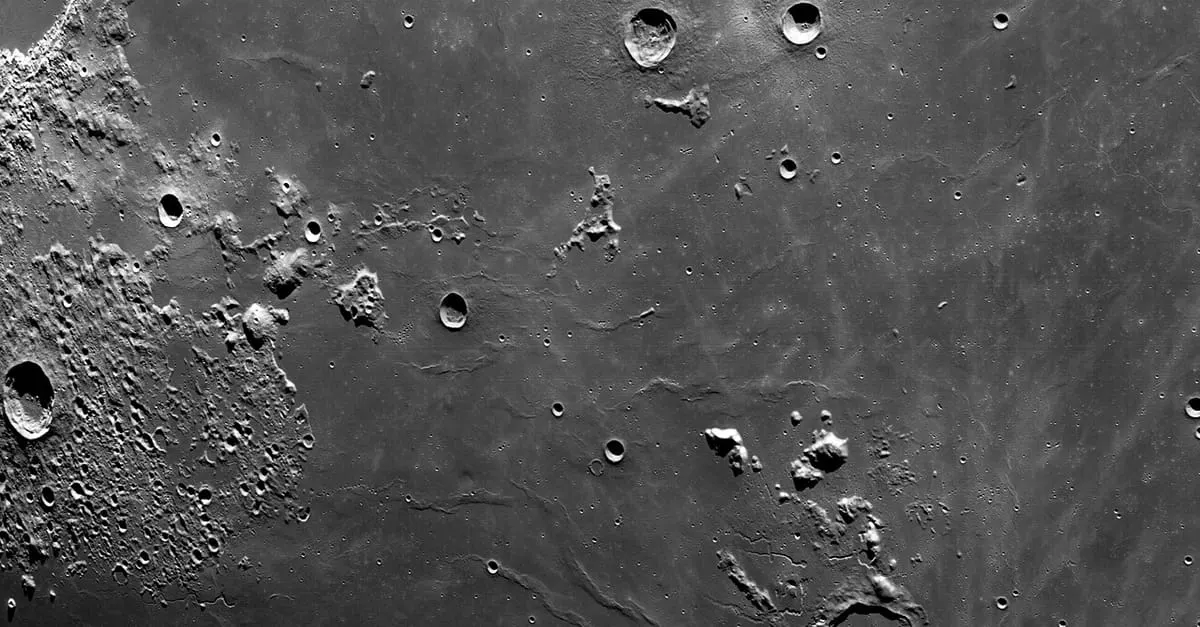
Look at the Moon through even a cheap pair of binoculars and the smooth pearl from your eyes turns into something far stranger: a battered, pockmarked face, dimple inside dimple, all the way down to specks too small to count. It looks like it has had a very rough few billion years. It has. The real surprise is not that the Moon is covered in craters. It is that they are all still there.
The Moon is scarred because nothing ever heals it
The Moon has so many craters because it gets hit constantly and has almost nothing that can erase the damage (NASA Space Place). Many craters are lasting records of asteroids or meteoroids slamming into the surface, and because the Moon has no air, no water, and no active geology to smooth itself over, they can persist for billions of years. Later impacts and moving lunar soil can still modify smaller or older features.
That second half is the part people miss. The hitting is not special. Space is full of debris, and rocky worlds get peppered all the time. What makes the Moon a museum of impacts is that it never cleans up after itself.
Earth is hit just as hard, then quietly erases the evidence
Earth is also struck, but total impact rates are difficult to compare because gravity, surface area, atmosphere, and catalog thresholds differ. One catalog lists about 190 confirmed impact craters on Earth, while lunar catalogs list millions of features across a wider range of sizes (Smithsonian National Air and Space Museum). The visible gap is mainly in what happens after rocks arrive.
Earth is alive in a geological sense. It has weather, water, and plants, and together they break apart and wear down the ground (NASA Space Place). Rain fills craters and washes their rims into mud. Oceans drown them. Forests grow over them. And underneath all of that, the planet's surface is broken into tectonic plates that creep along like a slow conveyor belt, dragging old crust down into the interior and paving fresh rock on top. The oldest seafloor on Earth is only about 200 million years old, because everything older has already been recycled (Smithsonian National Air and Space Museum). A crater that would last forever on the Moon gets eaten alive here in a geological eyeblink.
The Moon has no eraser
Now flip every one of those forces off. The Moon has almost no atmosphere, just an impossibly thin haze of stray atoms, so there is no wind, no weather, and no plants to break down the surface (NASA Space Place). There is no liquid water flowing across it to soften an edge. The Moon has no active plate tectonics, and the volcanism that once flooded the dark "seas" you can see with the naked eye died out long ago (NASA Science).
With nothing to wear them away and nothing to bury them, lunar craters just sit there. As NASA puts it, on the Moon, where there is no liquid water or wind, the record of our solar system's impact history has been preserved for billions of years (NASA Science). Once something hits the Moon, that event is essentially frozen in time. The Apollo footprints make the point: the boot tracks pressed into the dust in 1971 were still sharp when an orbiter photographed them forty years later (NASA Space Place).
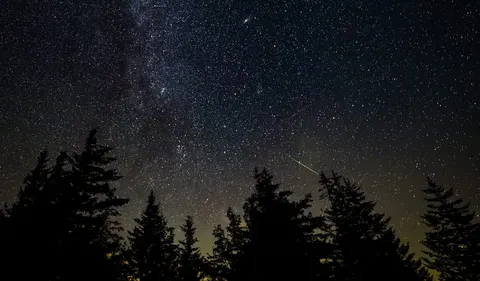
The same airlessness that protects old craters also makes new ones easy. On Earth, our thick atmosphere acts like a shield, and most small space rocks burn up as shooting stars before they ever reach the ground. If you are unsure where that line falls, the difference between a streak in the sky and a rock you can hold is worth a quick read on meteor versus meteorite. The Moon has no such shield. Even tiny meteoroids hit at full speed and leave a mark, which is why its surface is dented at every scale, from basins hundreds of miles wide down to microscopic pits.
A face that remembers the whole story
Because the Moon keeps everything, its surface is a kind of logbook for the early solar system. Scientists read it by crater counting: an old, heavily cratered region has been exposed for a very long time, while a smoother stretch with few craters is younger (Smithsonian National Air and Space Museum). The most pristine craters wear their youth on the surface. Tycho still has a sharp rim and long bright streaks of ejected debris that you can spot through a small telescope, and at roughly 100 million years old it is one of the youngest large craters on the near side.
Many planetary scientists think the inner solar system went through an especially violent stretch of bombardment around four billion years ago, an idea sometimes called the Late Heavy Bombardment, though the exact timing and intensity are still debated. Whatever the details, the Moon kept the receipts. Earth almost certainly endured the same storm of impacts, but its restless surface long ago scrubbed that chapter away. So when you want to know what the early solar system was really like, you do not study the planet you live on. You study its quiet, patient, pockmarked neighbor, which never forgot.
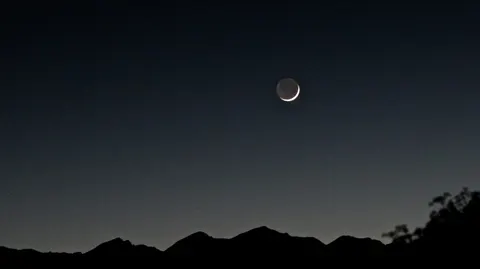
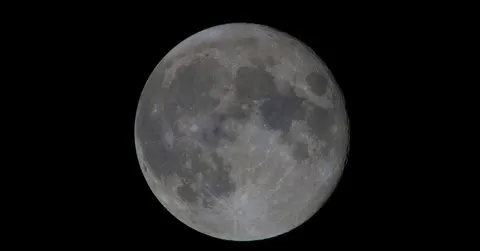
That neighbor is closer and more readable than people assume. You can trace these scars yourself in daylight if you know whether you can see the Moon during the day, and the soft glow lighting up all those craters is not even the Moon's own, a point worth dwelling on once you learn whether the Moon makes its own light.
Keep wondering: sort out a meteor from a meteorite so you know what actually digs the holes, catch the Moon hanging in a blue afternoon sky by checking whether you can see the Moon during the day, and find out why that battered face shines at all in does the Moon make its own light.


Join the conversation
Comments are reviewed before they appear. Be kind and stay curious.
Loading comments…