
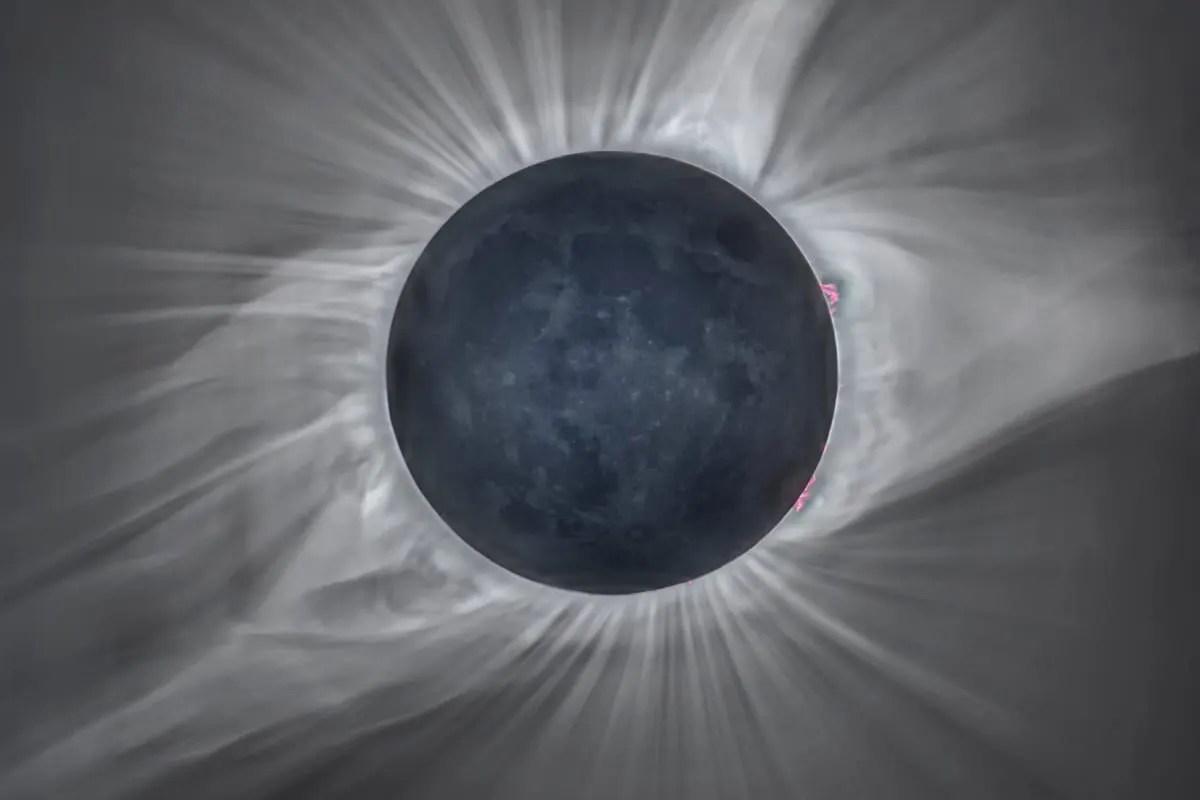
Imagine the Sun simply switches off. Not dies slowly, not explodes, just vanishes, in an instant, completely. How long before you would even notice? The honest answer is the first surprise in a chain of them. The question of what would happen if the Sun disappeared is a physics thought experiment, and the timeline it reveals is far stranger, and slower, than any disaster movie.
First, a fair warning
This cannot actually happen. Matter and energy do not just blink out of existence; that would break the most basic laws of physics. But pretending it could is a classic way for scientists to show off two real and deeply counterintuitive facts: that nothing, not even gravity, travels instantly, and that the Sun's grip on us is a kind of message that takes time to arrive.
The first 8 minutes: business as usual
Here is the part that trips everyone up. For the first 8 minutes and 20 seconds, absolutely nothing would change.
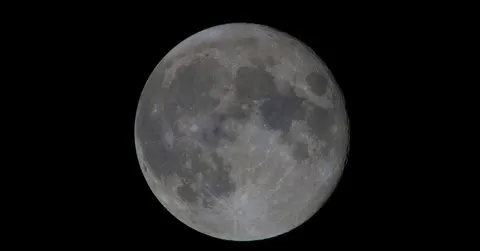
The Sun is about 93 million miles away, which light crosses in roughly 8 minutes (NASA). The sunlight hitting your face right now actually left the Sun more than eight minutes ago. So if the Sun vanished, its last batch of light would still be streaming toward us. As the National Radio Astronomy Observatory puts it, we "would not notice the Sun's disappearance until about 8 minutes and 20 seconds after it had disappeared" (NRAO). The sky would stay bright and blue. The Moon, which only shines by reflecting sunlight, would keep glowing too. Then, all at once, both would go dark, and the only lights left in the sky would be the stars.
The Earth lets go
At that exact same moment, something far more dangerous happens, and it is the reason the 8-minute delay matters so much. Gravity is not instant either. In Einstein's general relativity, "gravity propagates at the speed of light" (UC Riverside). The Sun holds Earth in its orbit by curving space around it, and the news that the curve is gone would travel outward at the same speed as the light.
So for those first 8 minutes and 20 seconds, Earth would keep circling an empty point as if nothing were wrong. Then the gravitational tether would snap. With no Sun to pull it into a curve, Earth would stop turning and fly off in a dead straight line, tangent to its old orbit, at about 30 kilometers per second. In the NRAO's words, "we would also drift out of our orbit as there would be no solar gravity to hold the Earth in orbit." Every other planet would do the same, each released on its own delay as the wave of missing gravity reached it.
The slow freeze
This is where the movies get it most wrong. Earth would not flash-freeze. It is a huge, warm rock with oceans and an atmosphere that hold heat stubbornly.
The global average temperature would drop below 0°F, roughly -18°C, within about a week. Within a year it would fall to around -100°F, roughly -70°C, and over a longer stretch it would keep sliding toward about -400°F as the planet radiates the last of its warmth into space (Popular Science). Cold, but gradual, measured in days and months rather than seconds.
The oceans are the real holdouts. Their surfaces would ice over quickly, but that layer of ice would act like a lid, insulating the water beneath. The deep oceans, warmed a little by Earth's own internal heat, could stay liquid for hundreds of thousands of years. Eventually even the air would give up: the atmosphere itself would freeze, carbon dioxide first, then nitrogen and oxygen, settling onto the dark ground as snow.
What could hang on
With no sunlight, photosynthesis stops almost immediately, and that pulls the floor out from under nearly everything. Plants die within days to weeks, and the food chains built on them collapse close behind. Most life on the surface would not last long.
But not all of it depends on the Sun. Deep on the ocean floor, whole ecosystems cluster around hydrothermal vents, fed by chemicals and heat welling up from inside the planet rather than by light. Microbes living kilometers down in the crust run on the same internal energy. For them, the Sun going out would barely register at first. Earth's last living things would not be in the sunshine. They would be in the dark, where they always were.
A rogue world in the dark
And so Earth would end up a frozen rogue planet, an iceball wandering the galaxy with no star to call its own, carrying a deep ocean and a few stubborn microbes beneath a shell of frozen air.
The real lesson of this grim little experiment is how much rides on a steady stream of light that takes eight minutes to arrive, and how that same delay applies to gravity, the invisible thread that keeps us from flying off into the night. The Sun will not vanish. But it is worth remembering, the next time it rises, that everything we have is on an 8-minute leash, much like the slower, real ending explored in what happens when the Sun dies.
Keep wondering: the Sun's real future is its own dramatic story in what happens when the Sun dies, the runaway heat next door drives why Venus is the hottest planet, and the void itself is colder and stranger than you think in how cold is space. More at Space & Cosmos.


Join the conversation
Comments are reviewed before they appear. Be kind and stay curious.
Loading comments…