
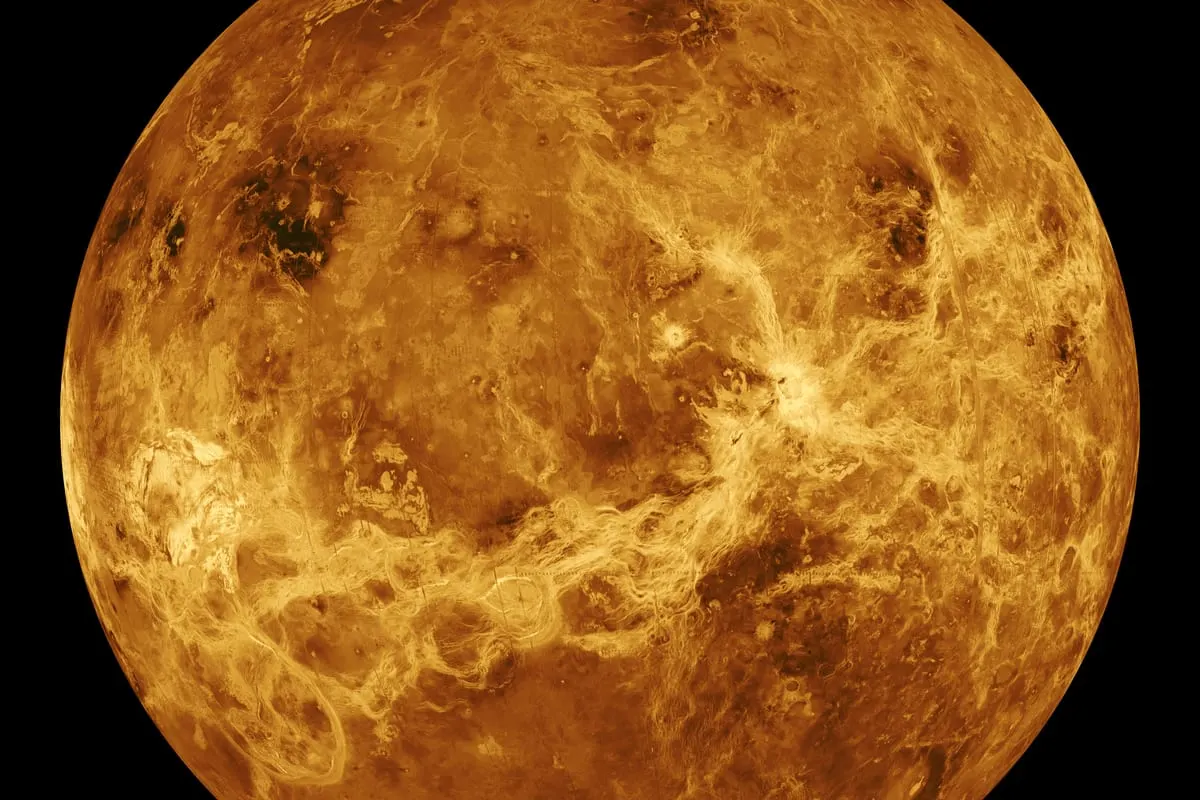
If you had to bet on the hottest planet in the solar system, the obvious move is the one nearest the Sun. You would lose. Mercury is closer, but Venus, one rung farther out, is far hotter, and stays that way day and night. Venus also barely tilts on its axis, so it has almost none of the seasonal swing that Earth's tilt gives us. Why is Venus the hottest planet and not Mercury? It has almost nothing to do with distance and everything to do with what is wrapped around it.
Closer is not the same as hotter
Mercury is the Sun's nearest neighbor, and on its day side the temperature climbs to about 430°C. But Mercury has almost no atmosphere, just a wisp of gas, so the heat has nothing to hold it in. The moment the Sun sets, all that warmth radiates straight back into space, and the night side drops to around -180°C (NASA). Mercury runs scorching and freezing within a single day.
Venus does the opposite. Its surface sits at roughly 465°C, about 870°F, and it stays there, all over the planet, through the long day and the long night alike. Same neighborhood of the solar system, wildly different result. The difference is the air.
A blanket far too thick
Venus is buried under an atmosphere almost entirely made of carbon dioxide, the same heat-trapping gas that warms Earth, except Venus has more than 2,000 times as much of it (NASA). The air is also crushingly heavy, around 90 times the pressure at Earth's surface. Standing on Venus would feel like standing nearly a kilometer underwater, if the water were also hot enough to melt lead.
That carbon dioxide is the whole story. Sunlight filters down through the clouds and warms the surface, the surface tries to radiate that heat back out as infrared, and the thick CO2 absorbs it and holds it in. Heat pours in and cannot leave. NASA describes the surface as "hot enough to melt lead," sealed beneath dense clouds of sulfuric acid (NASA). This is the greenhouse effect turned up past any reasonable limit, which is why scientists call it a runaway greenhouse.
A warning written on a planet
The strangest part is that Venus may not have started this way. NASA's climate modeling suggests it could have had a shallow ocean and temperatures mild enough for liquid water for as long as two billion years. Then, the leading model goes, the ocean evaporated, sunlight split the water vapor apart, hydrogen leaked away into space, and carbon dioxide built up with nothing to check it, tipping the whole planet into the runaway state we see now (NASA).
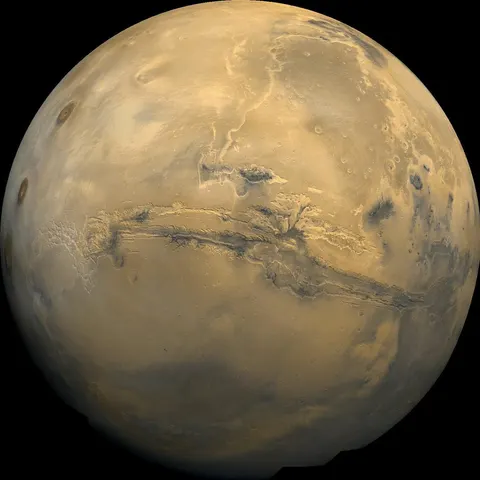
That makes Venus more than a trivia answer. It is a real example, next door, of how a world with a carbon dioxide atmosphere can run away with itself. The planet that should not be the hottest is, and it got that way by trapping its own heat, a sibling to the other planetary puzzles like why Mars is red.
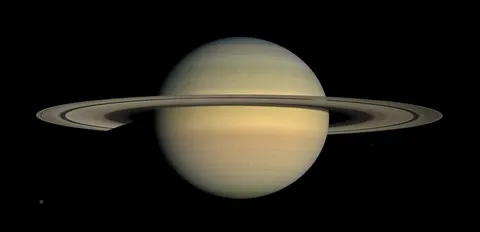
Keep wondering: the planets are full of counterintuitive answers, from why Mars is red to what Saturn's rings are made of. And for the ultimate what-if, see what would happen if the Sun disappeared. More at Space & Cosmos.

Join the conversation
Comments are reviewed before they appear. Be kind and stay curious.
Loading comments…