
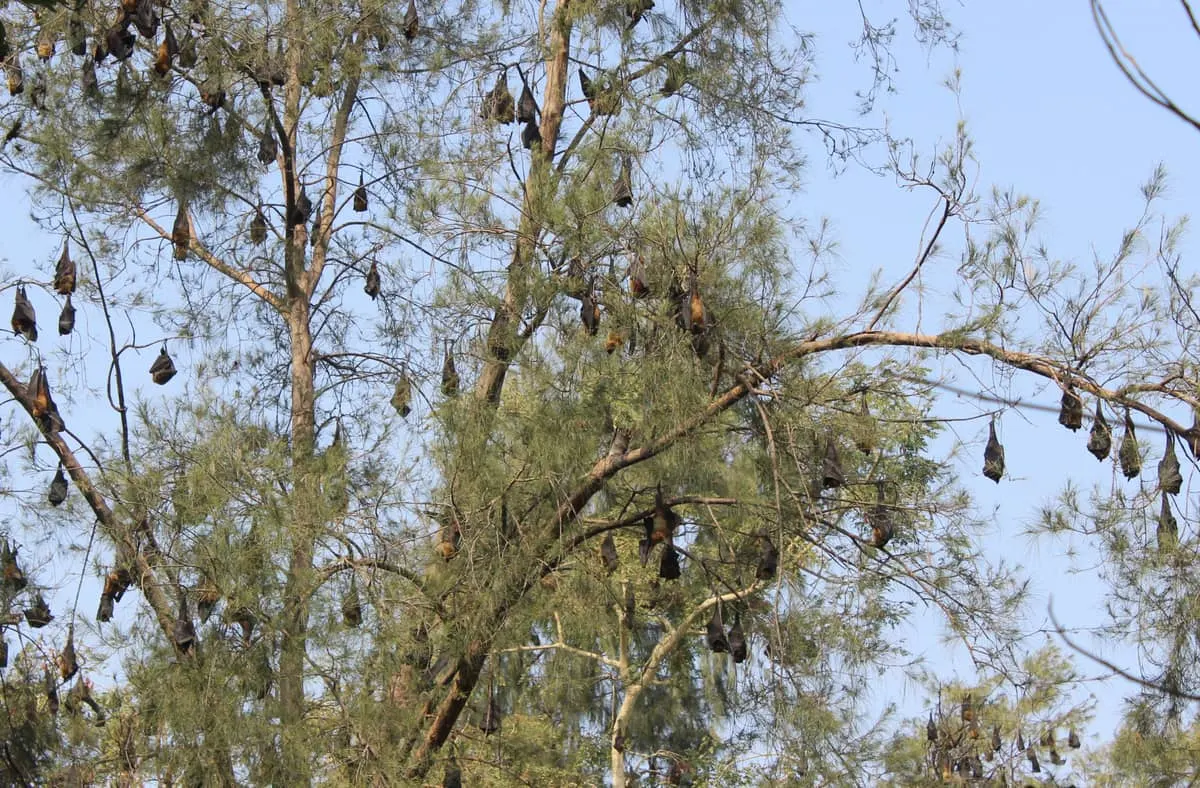
A bat can hang upside down from a branch all day, sleep through a winter that way, and stay hanging even after it dies, never once losing its grip. We tend to file it under "creepy" and move on. But it is one of the most efficient pieces of engineering in any animal, and it solves a problem bats face that birds never do.
A body that can't take off from the ground
So why do bats hang upside down? Start with takeoff. A bird can crouch and spring into the air, or run a few steps and go. A bat mostly can't. Its wings don't make enough lift from a standstill, and its legs are too small and weak to run up to flight speed (Iowa Department of Natural Resources). Stuck on flat ground, most bats are clumsy and exposed.
Hanging high up fixes that in the simplest way imaginable. From an upside-down perch, a bat does not need to take off at all. It just lets go. Gravity drops it into open air, its wings catch, and it is flying before it has fallen far. As one bat biologist puts it, bats "hang upside down to drop into flight" (Live Science). The roost is not just a bed. It is a launchpad, and the launch is free.
Hanging that costs no effort
Now the part that sounds impossible. You would think gripping a branch all day, upside down, would be exhausting. For a bat it is the opposite: hanging takes no muscular effort whatsoever. Its feet are built with a tendon-locking mechanism, a kind of natural ratchet. When the bat lets its weight hang, that weight pulls on the tendons running to its toes and clamps the claws shut, and they stay shut on their own (Journal of Morphology).
The zoologist Daniel Pavuk describes the sequence neatly: "When a bat finds a place to roost, it contracts muscles attached to its talons, which opens them. As the talons touch the roosting surface, the bat relaxes its body. This allows the weight of its body to pull on the tendons connected to the talons" (Live Science). Read that closely and you find the twist: a bat spends energy to open its grip and let go, not to hold on. Holding on is the default. Letting go is the effort.
That is why a bat can hang fast asleep, hang through hibernation, and stay hanging even in death. The lock does not depend on the animal trying. It depends only on the weight, and the weight never quits.
Out of reach, out of the way
There is a third payoff to roosting head-down in high, awkward places: safety. Dangling from a cave ceiling or the top of a tall tree puts a bat out of reach of most predators on the ground (Bat Conservation International). It also lets bats use roosting spots that grabbier, ground-based animals simply cannot get to, so they are not competing for the same shelters.
And no, all that time upside down does not leave a bat dizzy or red-faced. The reason is almost funny: bats are too small for it to matter. As bat expert Rob Mies explains, they "don't weigh enough for gravity to affect their blood flow" (National Geographic). The same featherweight build that makes them helpless on the ground makes hanging head-down completely comfortable.
So the upside-down bat is not being spooky, and it is not even working hard. It is parked nose-down in the one position that lets a poor ground-launcher fly the instant it wakes, held there by nothing but its own weight, safely out of reach. The strangest-looking thing about a bat turns out to be the smartest thing about it.
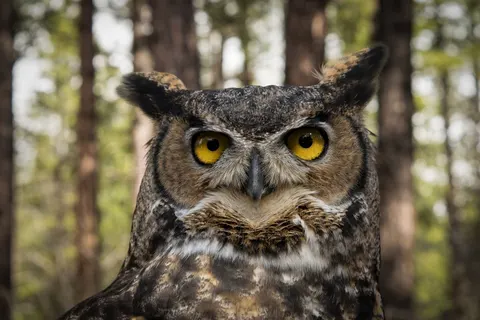
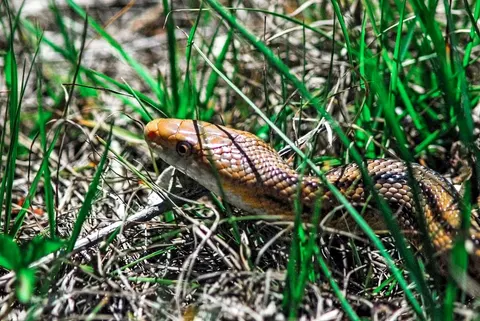
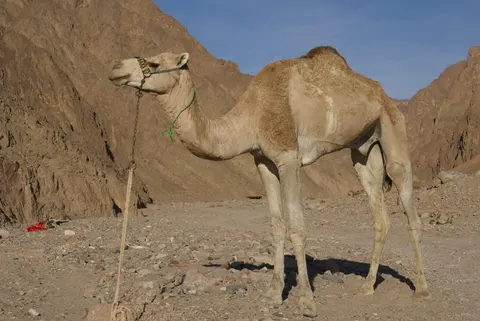
Keep wondering: another creature of the dark gets explained in why owls hoot, more animal engineering shows up in how snakes move without legs, and the myth-busting continues with why camels have humps.
Join the conversation
Comments are reviewed before they appear. Be kind and stay curious.
Loading comments…