
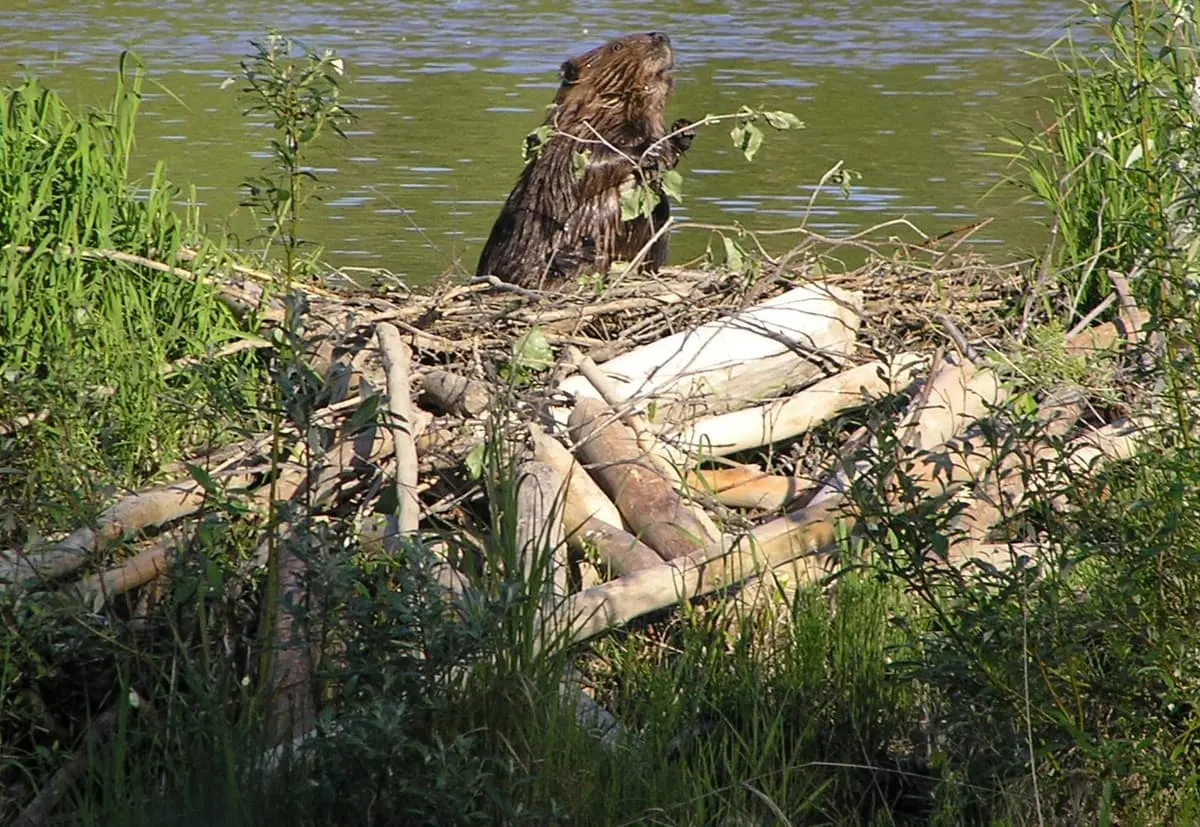
A beaver can turn a trickling stream into a pond in a few nights, flooding a patch of forest and rerouting the water as if it owned the place. It looks like the animal is building a house across the creek. It isn't. The dam is something cleverer than a home. It's a moat.
The dam makes deep water, and deep water means safety
So why do beavers build dams? To raise the water. A beaver is slow and clumsy on land and a strong, fast swimmer in water, so its whole survival strategy is to stay in the water as much as possible. Damming a stream floods the surrounding ground into a deep, calm pond, and that pond is a fortress: it lets the beaver dive away from bears and wolves, and it hides the entrances to its lodge underwater where land predators can't follow (BBC Science Focus). The pond also makes good habitat for all sorts of other creatures, which is a bonus, but the point of it is protection (U.S. National Park Service).
This is the part most people have backwards: the dam is not where the beaver lives. The beaver lives in the lodge, a separate dome of sticks and mud out in the pond, reached through underwater tunnels. The dam just holds the water at the right level around it. The house is the lodge; the dam is the moat.
Deep water beats the winter
The pond does its most important work in winter. A beaver's survival depends on water deep enough that it doesn't freeze solid to the bottom (U.S. National Park Service). In autumn, beavers jam a big cache of fresh branches into the mud underwater near the lodge. When the surface freezes over, the beaver can still slip out of its underwater door, swim to the cache, and haul a branch back to eat, all without ever surfacing into the cold. The dam, by keeping the water deep, is what keeps that winter pantry open.
They build to silence running water
Here's the detail that turns a clever animal into a slightly eerie one. The thing that triggers a beaver to build or repair a dam isn't the sight of a gap or a flood. It's the sound of running water. In a famous set of experiments by the Swedish ethologist Lars Wilsson, beavers would pile sticks and mud onto a loudspeaker playing the noise of a flowing stream, building over the speaker even when it sat on bare concrete with no water at all. In the flip side of the trick, a beaver would rush to plug a leak it could hear while ignoring a plainly visible leak that happened to be silent (Gizmodo). The trickling sound seems to flip a switch in the animal: water is escaping, pile something on the noise (Mental Floss).
That instinct scales up into something far bigger than one beaver's comfort. Scientists call beavers a keystone species, ecosystem engineers whose ponds spread into wetlands that store water, recharge the ground, and shelter fish, birds, amphibians, and insects (U.S. National Park Service). A single family chasing the sound of running water can remake the landscape for a whole community of animals that never asked for it.
So the beaver isn't a tiny carpenter building a cabin on a creek. It's an engineer drowning a sound it can't stand, and in the process digging itself a moat, stocking a winter fridge, and accidentally building one of the richest habitats in the forest. Not bad for an animal just trying to make the trickling stop.
Keep wondering: another animal builds for survival in why bees make honey, instinct outlives its purpose in why dogs bury bones, and the desert's own engineering shows up in why camels have humps.
Join the conversation
Comments are reviewed before they appear. Be kind and stay curious.
Loading comments…