
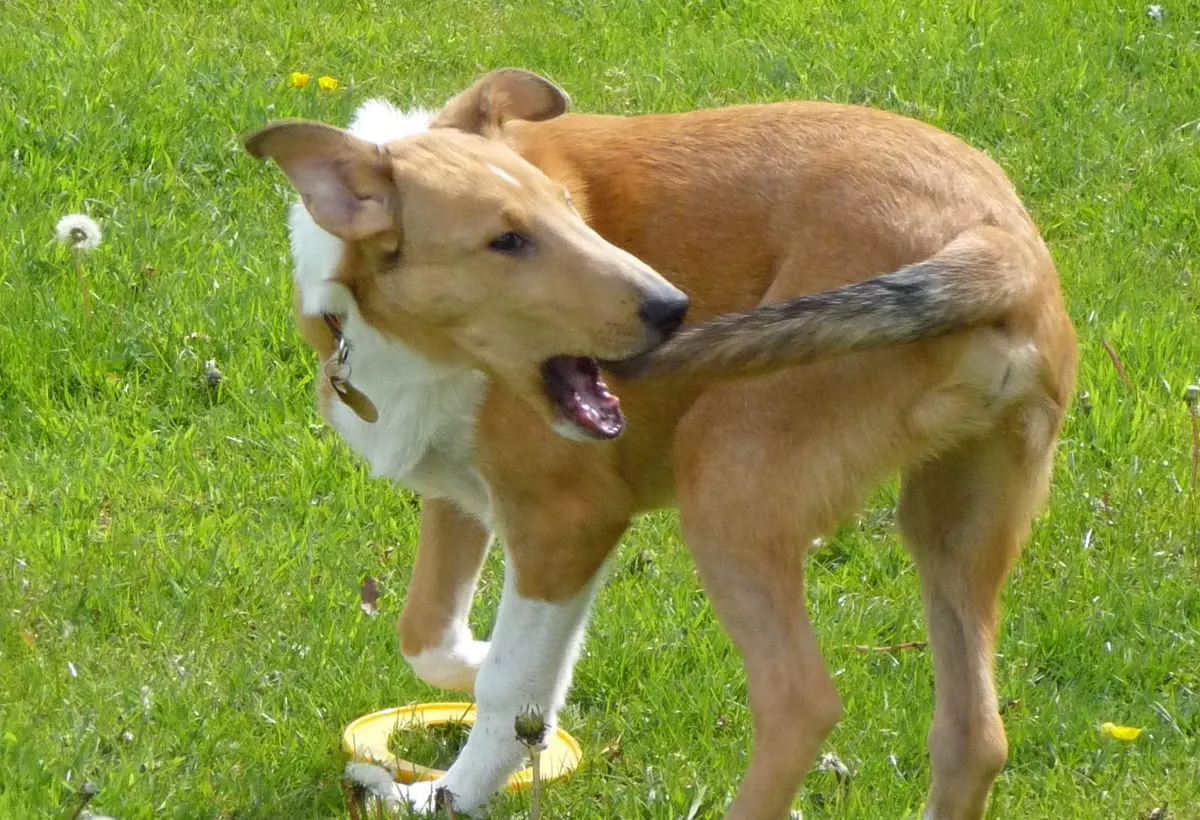
A dog catches sight of its own tail, freezes, and then erupts into a tight, dizzy spin, chasing a thing attached to its own body that it can never quite catch. It is one of the great slapstick routines of pet ownership. It is also, depending on the dog, either completely fine or a small red flag.
Mostly it's just a dog being a dog
So why do dogs chase their tails? For most dogs, most of the time, the answer is delightfully boring: it is play. Chasing the tail burns energy, kills boredom, and, for a puppy, doubles as a science experiment. Young puppies do not yet grasp that the tail is part of them, so they go after it like any other moving toy (VCA Animal Hospitals). Most grow out of it.
There is also a social trap baked in. The first time a dog spins and you laugh, point, or even tell it to stop, you have handed it a reward. To a bored dog, your reaction is the prize, and negative attention still counts. As the dog behavior consultant Russell Hartstein puts it, "anytime a dog is not enriched or exercised fully, they have the potential to be bored and to self-soothe" (Live Science). A tired, well-occupied dog has better things to do than catch its own rear end.
Sometimes the tail really is the problem
Now and then the spin is not a game but a complaint. A dog whose tail end is itchy or sore will go after it to get relief, and the usual suspects are fleas biting near the base of the tail, irritated or impacted anal glands, or other skin trouble (American Kennel Club). If a dog that never used to bother with its tail suddenly starts nipping at it, the smart move is to read it as "something itches" rather than "something's funny" and get it checked.
When chasing tips into compulsion
For a small slice of dogs, tail chasing stops being a choice. Vets call it canine compulsive disorder, and the line is drawn by behavior, not by the act itself: when the chasing causes injury, fires off with little or no trigger, and starts crowding out normal activities, it has crossed from quirk into disorder (VCA Animal Hospitals). It shows up far more in certain breeds, with the relentless spinning of Bull Terriers and German Shepherds the classic examples, which is a strong hint that genes are involved.
This is where a barnyard-comedy behavior turns scientifically serious. A large Finnish study of tail-chasing dogs found the habit tended to start young, in several of these breeds around three to six months of age, and that chasers were on average shyer dogs; it also turned up associations with things like early separation from the mother (PLOS ONE). Crucially, those are correlations from a questionnaire, not proven causes, and the researchers were careful to say so. What excited them was the bigger picture: compulsive tail chasing in dogs looks so much like obsessive-compulsive disorder in people, in its early onset, its repetitiveness, and its breed-linked genetics, that they proposed it as a living model for studying human OCD. The dog spinning in your kitchen and a person locked in a compulsive loop may share more wiring than anyone once guessed.
That is the quiet twist in a silly-looking habit. Watch a dog chase its tail and you are almost always watching plain fun. But in a few dogs, the same circle is one of the better windows science has into a serious human condition. The behavior to laugh at and the behavior to take seriously look nearly identical from across the room. The difference is in how often it happens, how hard it is to stop, and whether the dog can let it go.
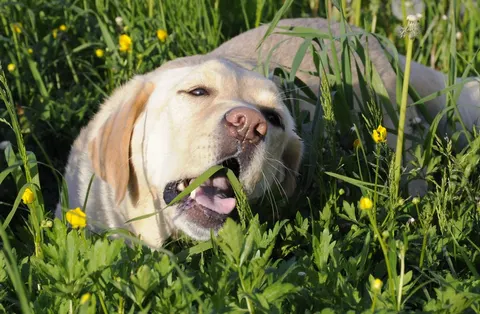
Keep wondering: dogs are full of misread habits, like why a dog eats grass, why one howls at sirens, why a panting dog usually isn't in distress, and why your dog buries bones it will never need.

Join the conversation
Comments are reviewed before they appear. Be kind and stay curious.
Loading comments…