
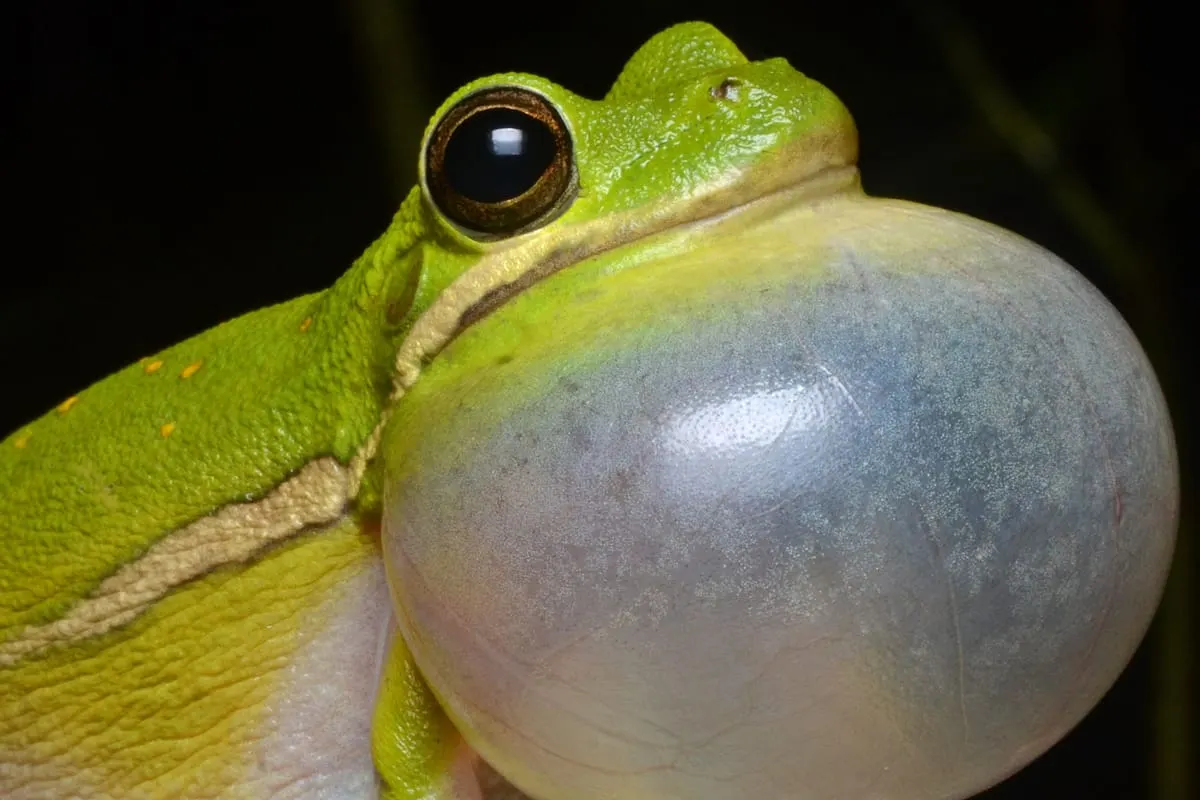
Stand by a pond on a warm spring night and the noise can be overwhelming, a pulsing, overlapping racket that sounds like pure chaos. It isn't. It's one of the most organized broadcasts in nature: thousands of male frogs, each singing a very specific message to a very specific audience.
A pond full of singing males
So why do frogs croak? Almost always, it's males, and almost always, it's about mating. A male frog's main call is an advertisement: it tells females of his species "I'm here, I'm available," and it warns rival males to keep their distance (Australian Museum). The croak is a personal ad and a property line rolled into one sound.
What makes it work in a crowded pond is that every species has its own distinct call. A female isn't just listening for any frog; her ears are tuned to the call of her own kind, so she can pick her species' males out of the din and judge which one sounds like the best bet (Australian Museum). The chaos is really dozens of separate conversations happening at once, each on its own channel.
The balloon under the chin
The sound itself is a neat piece of engineering. A frog calls by forcing air from its lungs across the vocal cords in its larynx, usually with its mouth and nostrils shut (Acoustical Society of America). Then comes the part you can see: a thin-walled vocal sac under the throat balloons out and acts as a resonating chamber, amplifying the call and flinging it out into the night (Science News Explores). The sac isn't making the sound. It's the loudspeaker the sound is played through.
Singing is dangerous, which is the point
Here's what makes the whole performance striking: it's risky. A loud, repeated call doesn't just reach females, it also tells every predator in earshot exactly where a plump frog is sitting (Science News Explores). A calling male is advertising himself to things that want to eat him as loudly as to the females he's courting. That he does it anyway, night after night, says everything about how strongly the drive to mate outweighs the danger.
Frogs do have a few other things to say. Grab a male that doesn't want to be grabbed and he'll give a release call, a kind of "wrong frog, let go." Catch a frog and it may let out a startling distress scream (Australian Museum). But those are the exceptions. The sound that fills a summer night is the love song, sung by males, in a hundred different dialects, each one gambling its safety on being heard.
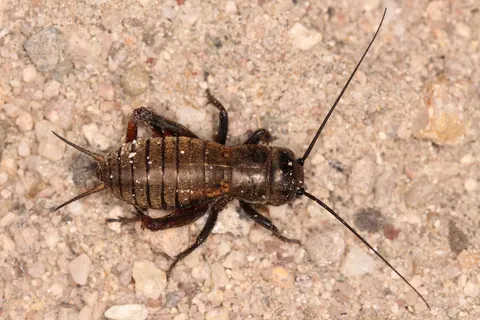
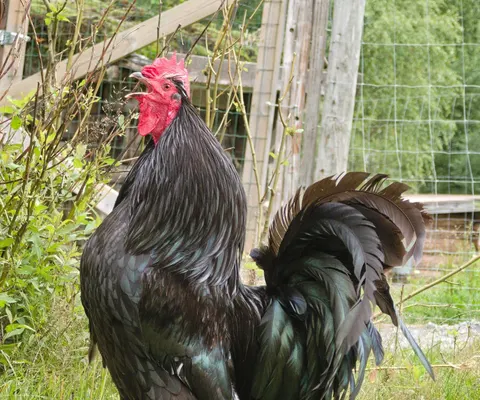
Keep wondering: another male sings with an instrument you'd never guess in why crickets chirp, a bird broadcasts on a schedule in why roosters crow, and the night shift calls back in why owls hoot.

Join the conversation
Comments are reviewed before they appear. Be kind and stay curious.
Loading comments…