
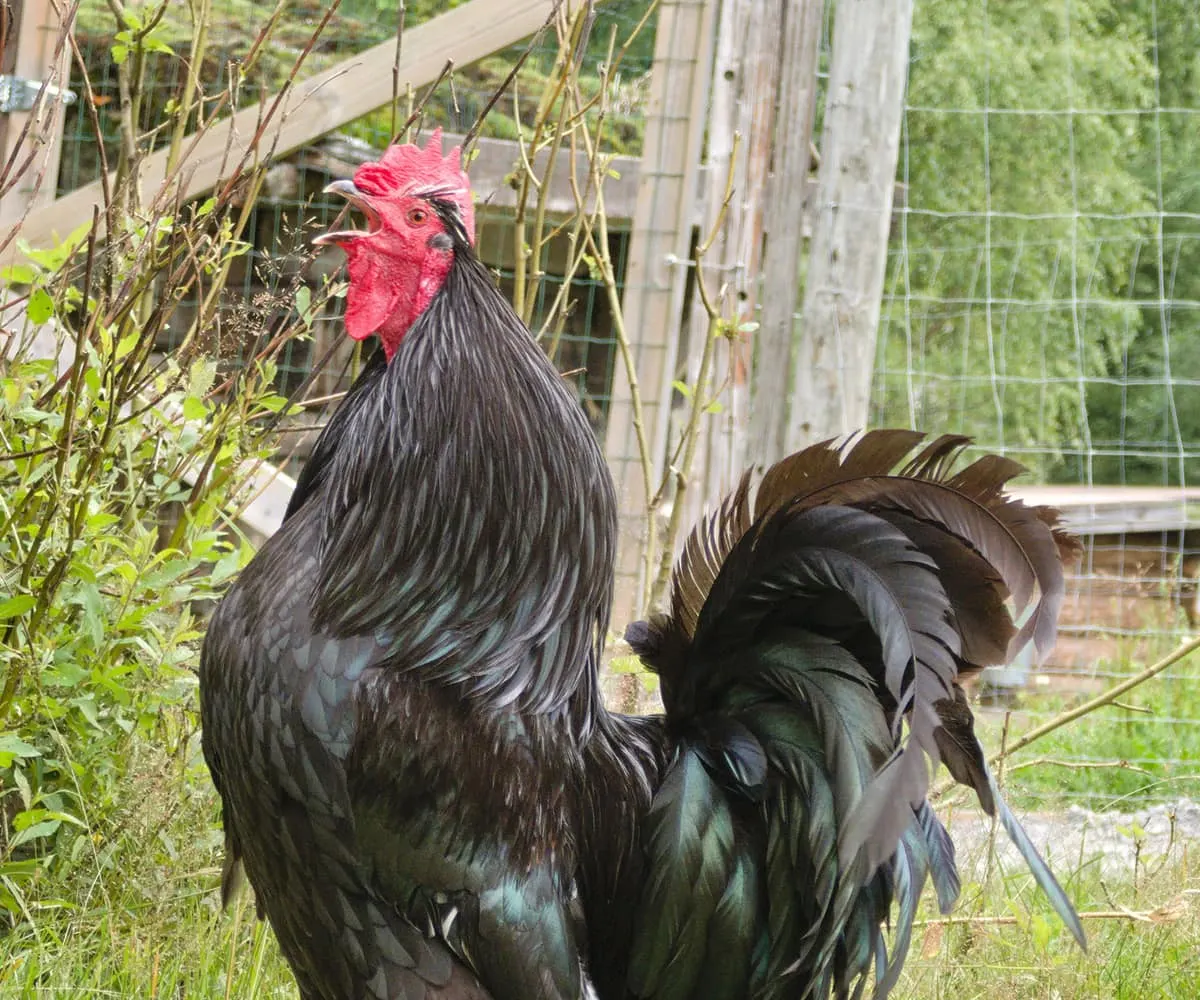
Somewhere a rooster is crowing right now, and the odds are good it is nowhere near sunrise. We tend to picture the bird on a fence post greeting the first ray of light, like a feathered alarm clock that runs on dawn. That picture is charming and almost entirely wrong.
The crow comes before the light
So why do roosters crow, if not to salute the sunrise? Because an internal body clock tells them to, and the crow is a territorial announcement, a way of shouting "this is my patch" across the farm. The proof is tidy. When researchers at Nagoya University kept roosters under constant dim light, with no sunrise to react to at all, the birds kept crowing on a steady cycle of about 23.7 hours, ramping up in anticipation of a dawn that never came (Scientific American). In normal conditions they begin roughly two hours before the light arrives. The clock is internal. The sun is just the thing it is set to.
What surprised the scientists was that nobody had nailed this down before. "To our surprise, nobody [has] demonstrated the involvement of the biological clock in this well-known phenomenon experimentally," the lead researcher, Takashi Yoshimura, said of the work (National Geographic). Everyone assumed the rooster was answering the light. Almost nobody had checked.
Not an alarm, a billboard
The morning crow is also not really about the morning. Crowing is a signal that advertises territory, and a rooster will use it whenever the situation calls for one, throughout the day, set off by a sudden noise, a passing car, or the sound of a rival sounding off first. The catch is that the body clock controls how eager he is. The same trigger that barely registers at noon will set him off instantly near dawn, when the clock has him primed (Scientific American). So the bird is not waking to the sunrise. He is broadcasting on a schedule, and his volume knob happens to be turned all the way up at first light. He is not the only creature that times its sound to the clock, either: out in the grass, crickets pulse their chirps on a rhythm of their own.
That reframes the whole cliche. A rooster crowing at 4 a.m. is not confused about the time. He knows the time better than you do. He is keeping it from the inside.
There's a pecking order to the dawn
Here is the part that turns a barnyard noise into something close to etiquette. In a flock with more than one rooster, the crowing has a strict running order, and it follows social rank. The top rooster almost always crows first, on about 98 percent of mornings, and the lower-ranked birds wait and fall in behind him in order of status (Scientific Reports). A subordinate could, in theory, let his own clock fire first. He doesn't. He holds it.
The researchers put it in almost human terms: subordinate roosters "compromise their circadian clock for social reasons." Think about what that means. A lower bird's body is telling it to crow, and the bird overrides its own biology out of deference to the boss. The dawn chorus you half-hear from bed is not a free-for-all. It is a ranked roll call, taken in the same order every single morning, by birds polite enough to wait their turn.
So the next time a rooster drags you awake before the light, give him a little credit. He is not lost, and he is not greeting the sun. He is running an ancient clock, defending an invisible border, and, if he is not the head rooster, waiting his turn to do it. Not bad for a relative of the dinosaurs, which is exactly what he is once you trace the line back to the feathered ancestors.
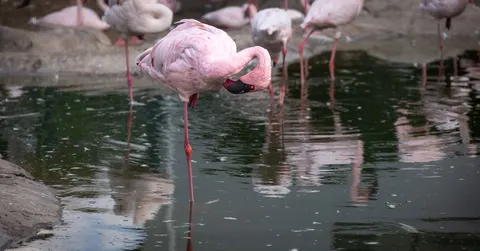
Keep wondering: another animal's inherited broadcast is the wolfish reason dogs howl, the same internal clock shapes why cats sleep so much, and birds pull off other quiet feats of engineering, like why a flamingo stands on one leg.

Join the conversation
Comments are reviewed before they appear. Be kind and stay curious.
Loading comments…