
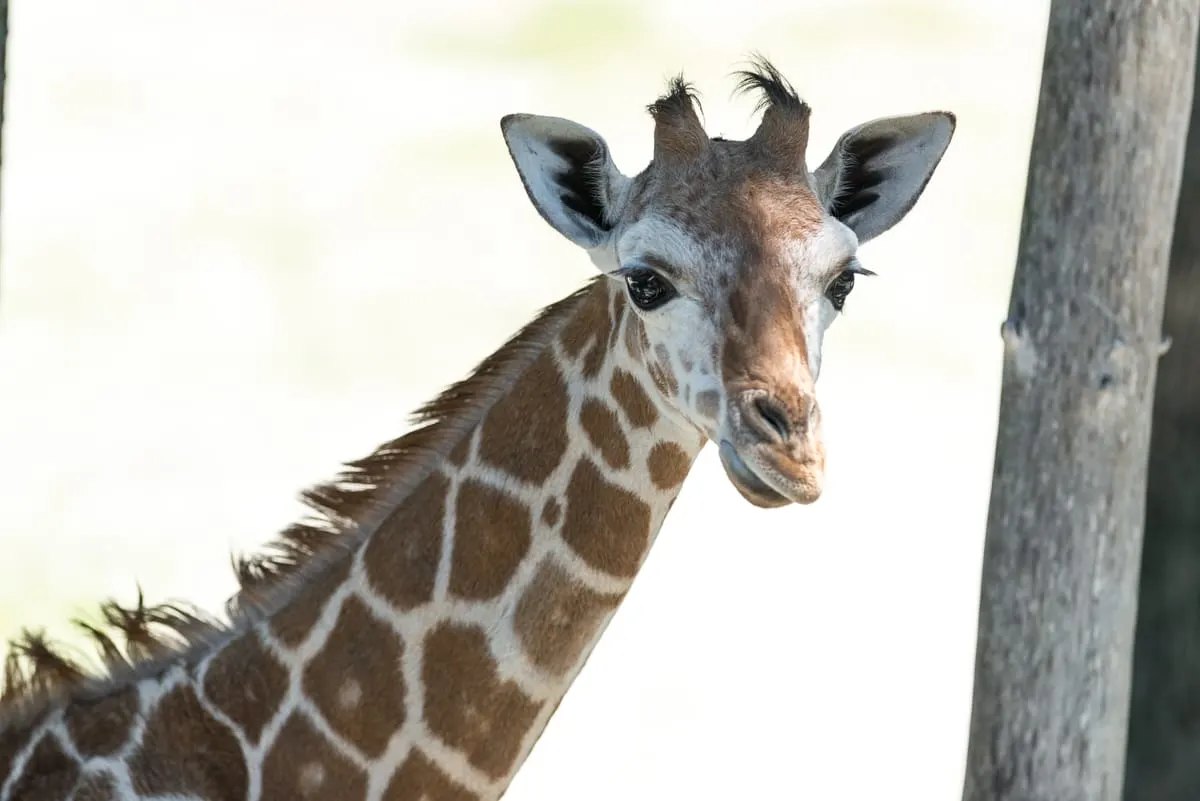
The answer everyone learns in school is that giraffes have long necks to reach the high leaves other animals can't. It's tidy, it's intuitive, and it might not be right. More than 150 years after Darwin, biologists still argue about the giraffe's neck, and the textbook story is only one contender.
The classic answer: a higher lunch
So why do giraffes have long necks, according to the traditional view? To feed where there's no competition. A giraffe can browse the tender leaves at the tops of acacia trees that shorter herbivores simply can't reach, which means more food and less squabbling over it. This "competing browser" idea goes back to Darwin's era and is still the most popular explanation today.
But it has a stubborn problem. If the neck were all about out-reaching the competition, it didn't need to get nearly this long. A giraffe at half its current height would already feed above every other browser on the savanna, so feeding alone doesn't explain why the neck became so extreme (Biology / PMC). Something else may have pushed it further.
The rival idea: necks for sex
That something, one influential theory argues, is fighting. Male giraffes settle dominance with a brutal contest called "necking", swinging their heavy heads and necks at each other like sledgehammers, and males with longer, heavier necks tend to win mates. In 1996 two researchers proposed that this male combat, not feeding, drove the neck to such lengths.
It's a compelling story, and it's also far from settled. The catch is that male and female giraffes have necks that scale pretty similarly for their body size, which you wouldn't expect if the neck were mainly a male weapon (National Geographic). As the science writer Riley Black summed it up, "even now, after nearly a century and a half since the exchange between Darwin and Mivart, the evolution of the giraffe's peculiar neck remains contested" (National Geographic). Feeding, fighting, maybe even shedding heat through a tall thin body: each idea explains part of it and none explains all of it.
The part that isn't debated at all
Step away from the "why" and the giraffe gets even more astonishing, because the "how" is settled and jaw-dropping. That towering neck contains only seven vertebrae, the exact same number as in your neck and in nearly every mammal. The giraffe didn't grow extra bones; it stretched the ones it had, each cervical vertebra running up to about ten inches long (Cleveland Zoological Society).
Then there's the plumbing, which is arguably the real marvel. To pump blood all the way up to a brain held so high, a giraffe runs blood pressure about twice a human's, driven by a heart that can weigh around 25 pounds (Stanford Blood Center). And when the animal suddenly drops its head to drink, all that pressure should rush downward and make it black out, or burst vessels in its skull. It doesn't, because a special web of blood vessels called the rete mirabile, the "wonderful net," buffers the surge (Stanford Blood Center). The giraffe solved a hydraulics problem most engineers would struggle with.
So the next time someone tells you giraffes have long necks to reach the treetops, you can say: maybe, partly, we think. The reason is one of biology's better unfinished arguments. The machinery that makes the neck work, though, is beyond dispute, and beyond impressive.
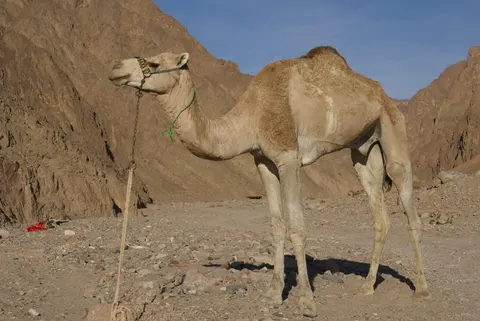
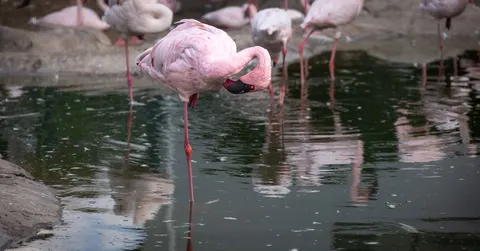
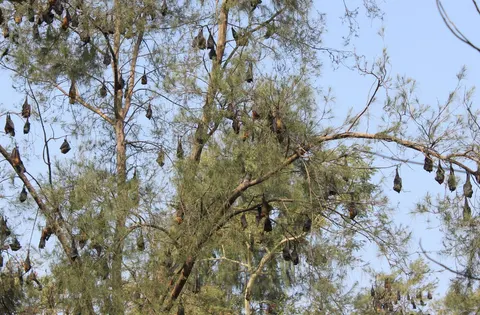
Keep wondering: another animal-adaptation myth gets busted in why camels have humps, heat management turns into a pose in why flamingos stand on one leg, and effortless engineering hangs around in why bats hang upside down.
Join the conversation
Comments are reviewed before they appear. Be kind and stay curious.
Loading comments…