
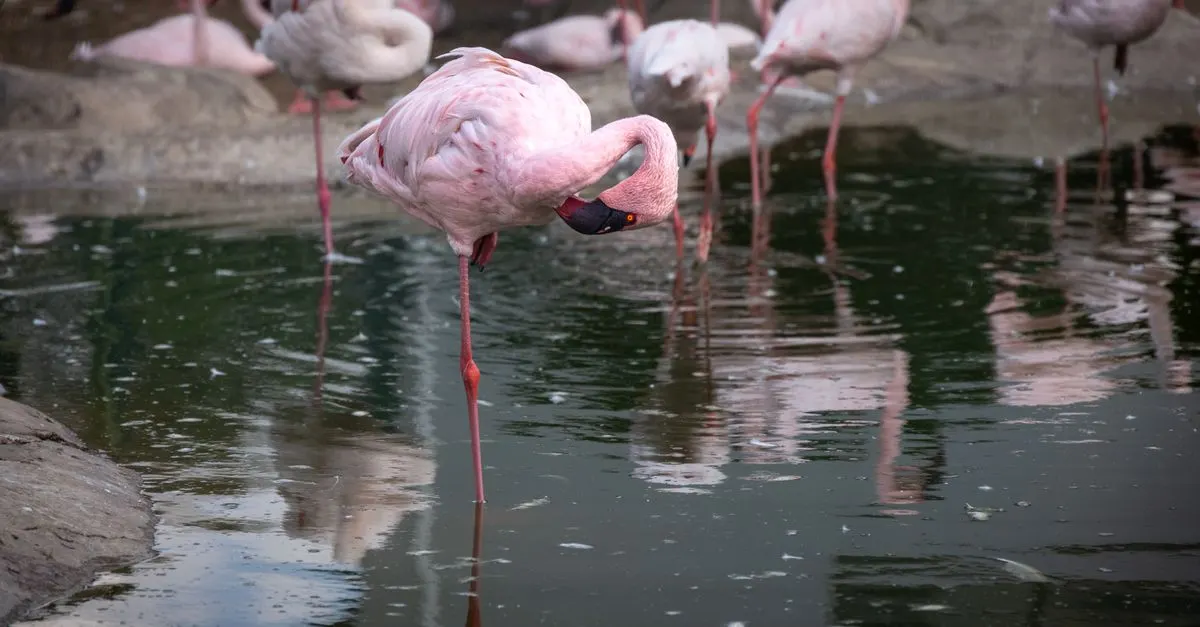
A flamingo balanced on a single stick-thin leg looks like it should be hard, like a yoga pose the bird has to concentrate to hold. But why do flamingos stand on one leg? It is the opposite of hard. Standing on one leg is the easy option for a flamingo, and it solves a real problem: staying warm. Those are the two answers science actually supports, and the second one is stranger than it sounds.
Reason one: it keeps them warm
Flamingos spend hours standing in water, often cold water, and a bird's bare legs are a major leak of body heat. Water pulls warmth away faster than air, so two legs in a lake means twice the drain. Pull one leg up and tuck it into the warm feathers, and you cut that loss roughly in half.
This is not just a tidy guess. When researchers watched captive Caribbean flamingos at the Philadelphia Zoo, they found the birds stood on one leg more often as the temperature dropped, and far more often when they were standing in water than on dry land. Colder, and wetter, meant more tucked legs. The pattern lines up exactly with conserving heat, which is why the study concluded that one-legged standing helps flamingos with thermoregulation. Animals are full of these quiet fixes for staying alive in tough conditions, like the soft-edged feathers that let an owl's hoot travel in near silence.
Reason two: it costs them almost nothing
Here is the part that flips your intuition. You might assume balancing on one leg is tiring, something the bird trades against the warmth it gains. It is not. A flamingo can hold the pose with little or no muscle effort at all, because its own skeleton locks the leg into place. The joints settle into a position where the bird's weight presses down through the bones and holds everything steady on its own, like a folding chair that clicks into place.
How sure are scientists about this? Sure enough that they tested it on flamingos that had died. A flamingo cadaver, with no muscle activity whatsoever, will stand stably balanced on one leg. The same dead bird cannot be propped up on two legs at all; it just topples. Balancing on one leg is the position the flamingo's body falls into naturally, not one it has to fight to maintain.
Live birds back this up. The same research found that flamingos resting drowsily on one leg actually sway less, hold steadier, than when they are alert and paying attention. The sleepy, switched-off bird is the stable one. That only makes sense if the pose runs on bone and gravity rather than concentration.
The reasons you have probably heard, and why they are wrong
Plenty of tidy explanations get passed around. Most do not survive a close look.
The idea that flamingos switch legs to rest a tired one does not hold up, partly because the pose is barely tiring in the first place, and partly because the birds were actually slower to start walking after standing one-legged, not quicker. The notion that they tuck a leg to spring away from predators faster fails for the same reason: if anything, one-legged birds were a touch slower off the mark. And "it is just more comfortable" is not really an explanation, just a restatement of the question.
The two answers that do hold up fit together neatly. As the scientists behind the balance study pointed out, it would make little sense for a flamingo to save heat by lifting a leg if that leg-lift burned a lot of muscle energy. Because the pose is nearly free to hold, the bird gets the warmth for almost nothing. Cheap and warm, at the same time.
So the flamingo on one leg is not showing off its balance or resting a sore foot, any more than its famous pink is a color it was born with. The animal kingdom is good at this kind of misread, the same way most people guess wrong about what a camel actually keeps in its hump. It has found a posture that keeps it warm in cold water and costs it almost no effort to maintain, so efficient that its body slips into it even after death. The strange thing was never that flamingos stand on one leg. It is that standing on two takes them more work.
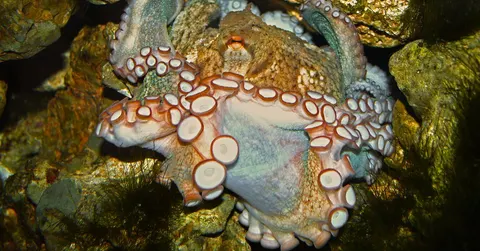
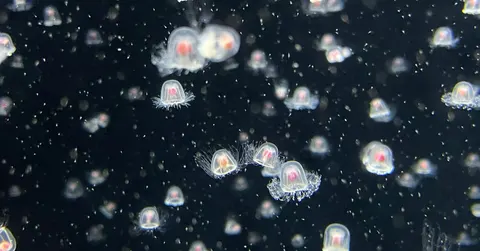
Keep wondering: see how an octopus rewrites its color in a heartbeat, find out why so many sea creatures make their own light, and meet the animal that may be biologically immortal.

Join the conversation
Comments are reviewed before they appear. Be kind and stay curious.
Loading comments…