
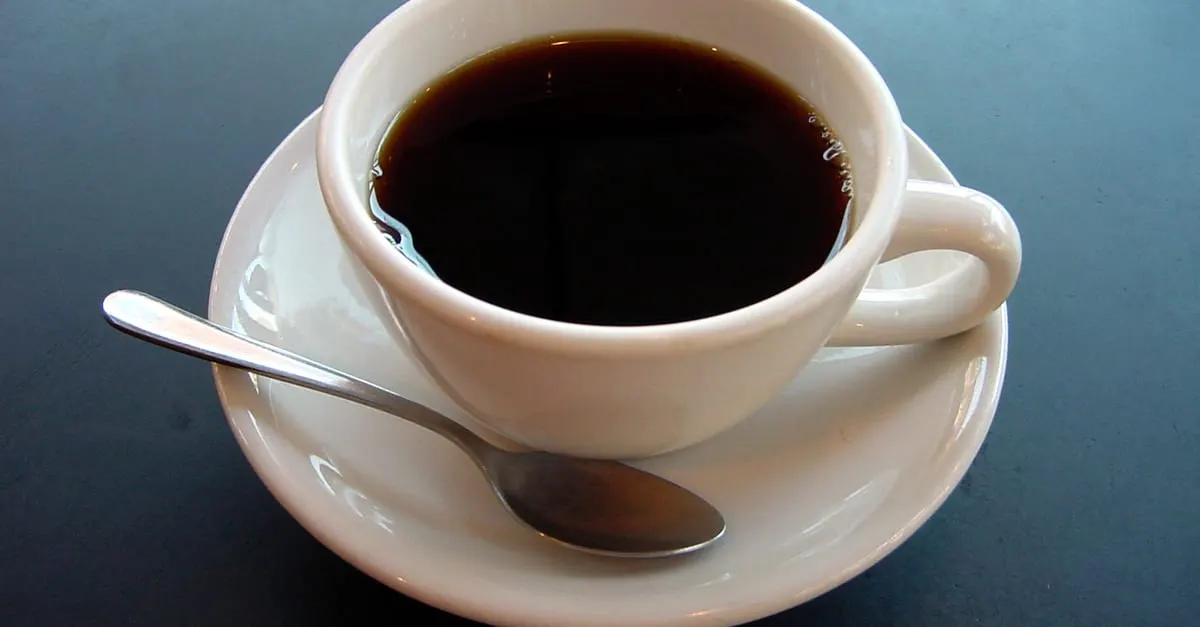
Everyone blames the caffeine. It's the obvious suspect: a stimulant, the thing that gets you going in every other sense of the word. So why does coffee make you poop? Here's the catch that breaks the theory. Decaf does it too. Whatever happens in your gut a few minutes after that first sip, caffeine isn't the one pulling the trigger.
It isn't the caffeine, and it isn't the heat
Coffee makes you poop by setting off a reflex in your colon within minutes of the first sip, and it does that whether the coffee is caffeinated or not. The cleanest evidence comes from a 1990 study in the journal Gut. Researchers gave people regular coffee, decaffeinated coffee, and plain hot water, then measured the muscle activity in their colons. In the people who responded, the colon fired up within four minutes of drinking either kind of coffee. Hot water did nothing at all (Brown et al., 1990, Gut).
That one result kills the two easy explanations. It isn't the warmth of the drink, or hot water would work. And it isn't only the caffeine, because decaf set off the same response. Caffeine does add to the push: Healthline reports it makes the colon about 60 percent more active than water and 23 percent more than decaf (Healthline). But decaf still beats a mug of hot water, which means something else in the bean does plenty of the work. The leading suspects are compounds like chlorogenic acids, not just the caffeine everyone points at.
What's actually happening: a signal, not a delivery
Here's the part most people get backwards. The coffee doesn't reach your colon in four minutes. It can't. It's barely out of your stomach. So this isn't the coffee physically arriving and flushing things through.
What coffee does is send a message. It prompts your stomach and gut to release hormones, mainly gastrin and cholecystokinin, and those hormones switch on the gastrocolic reflex (Harvard Health). That reflex is your body's built-in rule: when something lands at the top of the digestive tract, the bottom should make room. The colon starts contracting in coordinated waves and moves whatever is already down there toward the exit. As gastroenterologist Christine Lee of the Cleveland Clinic explains, if your colon is already loaded, the coffee is just the extra nudge that tips it over (Cleveland Clinic).
Why mornings, and why not everyone
Two more details make it click. First, this doesn't happen to everyone. In the 1990 study only some people were responders, and a survey found about 29 percent of people feel the urge after coffee, with women more likely than men, around 53 percent of the women studied (Healthline). If coffee has never once sent you looking for a bathroom, you're not broken. You're just not wired as a responder.
Second, the timing isn't a coincidence. The gastrocolic reflex is naturally strongest in the morning, when your body wakes the whole system up, the same groggy stretch when you can't stop yawning (Harvard Health). Morning coffee lands right on top of a reflex that's already cresting. The cup isn't creating the wave so much as catching it at high tide.
So should you worry about it?
For most people, none of this is a problem. It's a normal reflex doing a normal thing, and there's nothing unhealthy about a coffee that reliably gets things moving. The caveats are small. If you have irritable bowel syndrome, coffee can hit harder and be more disruptive (Healthline). And coffee isn't a real fix for constipation; leaning on it as a daily laxative treats the symptom, not the cause. If your bathroom habits change suddenly, that's a conversation for a doctor, not a coffee mug.
On an ordinary morning, though, the explanation is almost charming. You're not being purged by a magic bean. Your gut hears the coffee arrive, assumes a meal is on the way, and politely starts clearing the table.
Keep wondering: your gut talks in other ways too, like why your stomach growls; some of its signals you can't override, such as why you can't tickle yourself; and some are pure chemistry, like why onions make you cry.
Join the conversation
Comments are reviewed before they appear. Be kind and stay curious.
Loading comments…