
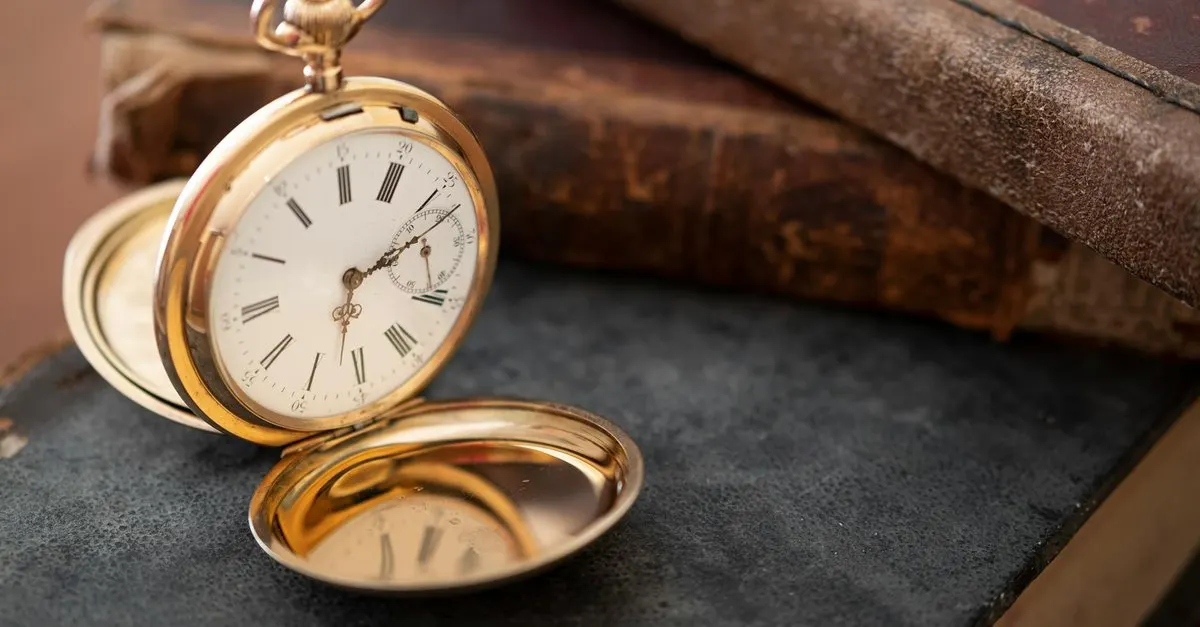
You can almost feel it after thirty. Birthdays arrive like express trains, summers collapse into long weekends, and a decade you swear you just started is suddenly behind you. Kids, meanwhile, can stretch a single rainy afternoon into something close to geological time. The clock on the wall hasn't changed its pace. Why does time go faster as you get older? Your sense of it has shifted, and there are real reasons why.
The leading explanations for why time goes faster as you get older
There's no single proven answer for why time goes faster as you get older, but three ideas keep surfacing and they overlap more than they compete. The oldest is proportional: each new year is a smaller slice of the life you've already lived, so it feels shorter by comparison. The second is about memory: novelty lays down dense, detailed memories, and a routine adult life simply records fewer of them, so months feel thin in hindsight. The third, newer and more contested, comes from engineer Adrian Bejan, who argues your aging brain literally processes fewer mental images per second, so each clock-hour delivers less "happening." All three can be true at once.
Each year is a thinner slice of a thicker life
The proportional idea is the intuitive one, and it's old. The 19th-century French philosopher Paul Janet suggested that we judge a span of time against the total time we've already lived. To a five-year-old, one year is a fifth of everything they've ever known. To a fifty-year-old, that same year is one-fiftieth. The year hasn't shrunk. Your yardstick has grown.
In 1975 the chemical engineer Robert Lemlich turned that hunch into math in Perceptual and Motor Skills. His model predicts that subjective time runs inversely with the square root of your age. In the model's illustrative calculation, time feels about twice as fast for an 80-year-old as for a 20-year-old. That is a model output, not a measured law for every person's time perception. It's also not the whole story, because pure proportion can't explain why a single dull week can crawl while a packed one vanishes.
Why a routine year leaves almost no trace
This is where memory comes in, and it flips your intuition. A boring week feels long while you're in it, then disappears when you look back. A trip full of firsts feels fast in the moment, then expands in memory because it left so much to remember.
Psychologist William Friedman, who spent a career studying how people place events in time, argued that we don't sense duration directly so much as reconstruct it from memory cues, as he laid out in his 1993 review in Psychological Bulletin. Childhood is wall-to-wall novelty: first day of school, first bike, first heartbreak. Each first is a vivid time-marker. Adulthood automates. You drive the same commute, eat the same lunch, repeat the same Tuesday, the same fondness for repetition that can leave a song looping in your head for days. Neuroscientist David Eagleman has put it bluntly: the more familiar the world becomes, the less new information your brain bothers to write down, and the faster time seems to pass. Fewer fresh memories means fewer mental footprints, and a year with few footprints reads as short.
It's a strange trade. The experiences that feel like they fly are exactly the ones you'll later remember as having lasted.
Bejan's claim that your brain's frame rate is dropping
In 2019 Adrian Bejan, a mechanical engineering professor at Duke, published a more physical theory in the journal European Review. His argument: what we call "mind time" is a sequence of mental images, and the rate at which we acquire those images falls as we age.
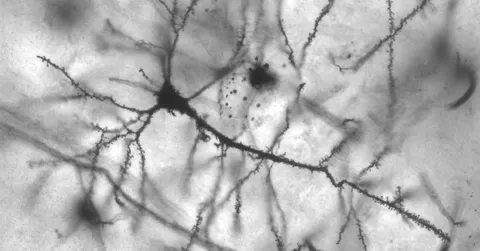
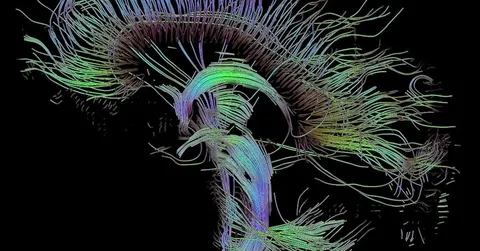
Two things slow the flow, Bejan says. Neural signals have to travel longer, more tangled pathways in a mature brain, and the rapid eye movements that sample the world, the saccades, get slower and less frequent. A young child's eyes flick across a scene constantly, grabbing more snapshots per second. An older brain grabs fewer. And the brain never just stores those snapshots, it ransacks them for meaning, the same pattern-hungry reflex that makes you see faces in things. If your internal frame rate drops, the same clock-minute delivers less perceived change, so the external clock seems to race ahead. As Bejan told ScienceDaily, "Days seemed to last longer in your youth because the young mind receives more images during one day than the same mind in old age."
I find this the most interesting of the three and the shakiest. Bejan reasons from physics and engineering analogies rather than from controlled measurements of how fast people actually perceive images at different ages, and other researchers have pushed back on how much the brain's "processing speed" really maps onto felt duration. It's a hypothesis worth taking seriously, not a settled result.
The hack hiding inside the science
Here's the part that turns this from trivia into something useful. If novelty helps create richer memories, then time isn't a fixed budget you can only watch drain. Unfamiliar things may leave more distinct markers in memory: a new route home, a skill you're bad at, a country you can't navigate. Days dense with the unexpected may feel longer when you look back, but this is a memory effect, not a guaranteed way to slow time.
So no, the years aren't actually speeding up. One possibility is that familiar routines leave fewer memorable pictures. New experiences may give memory more to hold onto, but they are not a guaranteed fix.
Keep wondering: the same memory machinery that makes a familiar year vanish is the one that throws a false flicker of recognition during deja vu, that stitches strange stories together while you sleep in a dream, and that predicts your own touch so well you cannot tickle yourself.

Join the conversation
Comments are reviewed before they appear. Be kind and stay curious.
Loading comments…