
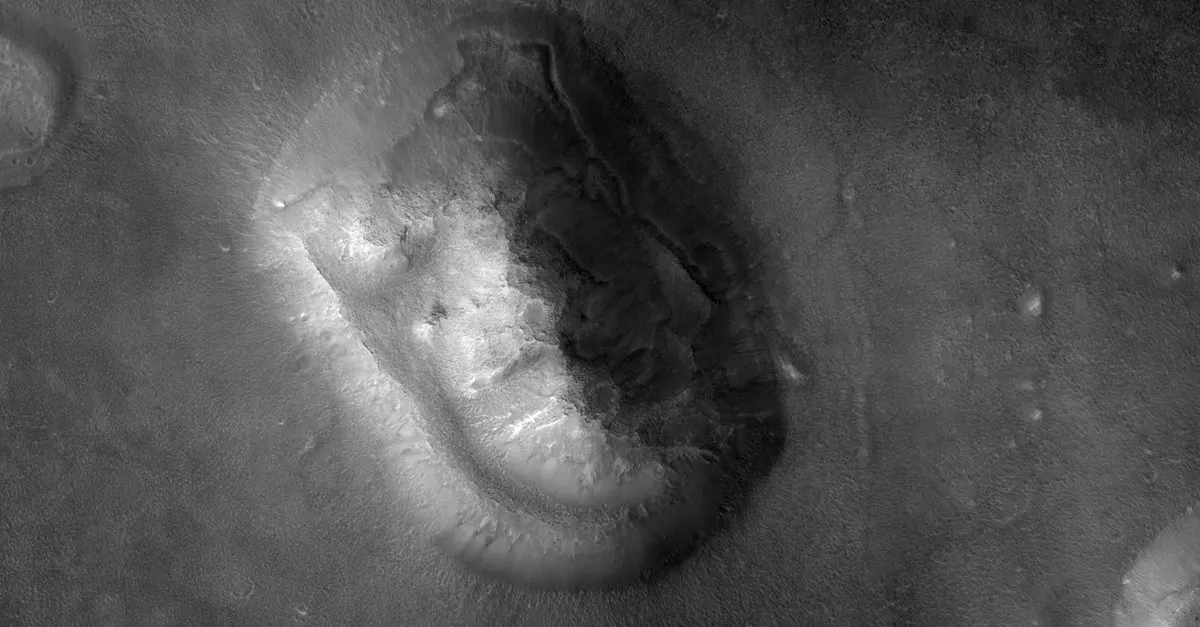
Look at a standard power outlet. Two slots above a round hole. It stares back at you. You know it's plastic, you know it has no eyes, and you can't stop seeing the face anyway. Why do we see faces in things that obviously have none? That's not a quirk of your imagination, it's your brain doing exactly what it was built to do, and doing it very, very fast. The same confident, automatic wrongness is behind why the moon looks bigger on the horizon.
Your brain runs a face detector that can't be switched off
Pareidolia, the perception of faces (or other meaningful shapes) in random objects, is not a bug. It's a feature running wide open. The brain maintains a dedicated face-detection circuit that operates in the first fraction of a second of seeing anything at all. Neuroscientists can measure it: a brain signal called the N170 fires at around 165 milliseconds after an image hits your eyes, and objects that look even vaguely face-like trigger it in roughly the same region, the ventral fusiform cortex, specifically an area called the fusiform face area (FFA), as real human faces do.
The same study, published in NeuroReport, found that 96 percent of participants classified upright face-like objects as "looks like a face." The response is not slow or deliberate. You don't decide to see the face in the outlet. The brain decides for you before you've consciously processed the image. It makes a lot of decisions ahead of you like that, it's also why you can't tickle yourself.
The system plays fast and loose on purpose
Why would a brain designed for accuracy build a detector that constantly misfires? Because misfiring in this direction is cheap. According to Professor David Alais and his colleagues at the University of Sydney, "the benefit of never missing a face far outweighs the errors where inanimate objects are seen as faces." The system, as Alais put it, "plays 'fast and loose' by applying a crude template of two eyes over a nose and mouth."
The logic is ruthlessly practical. For most of human evolutionary history, failing to detect a real face, a predator, a rival, a person who means you harm, could get you killed. Seeing a face in a tree that turns out to be a knot in the bark costs you almost nothing. A brain that set the detection threshold high enough to eliminate false alarms would also miss real faces, and that's the deadly error. So evolution pushed the threshold down, and here we are, seeing expressions in car grilles and sinister glares in cabinet handles.
This is sometimes framed as an asymmetry in what researchers call signal detection theory: the brain accepts a high false-alarm rate because it's the rational trade-off when the cost of a miss is so much worse than the cost of a false alarm.
The face in the outlet is already wearing an expression
Here's where it gets genuinely strange. The brain doesn't just flag illusory faces as "face detected" and move on. It reads them.
A 2021 study by Alais, Yiben Xu, Susan Wardle, and Jessica Taubert, published in Proceedings of the Royal Society B, tested whether the same neural machinery that processes emotional expression in human faces operates on pareidolic faces too. They showed participants sequences of real faces and inanimate objects that triggered strong pareidolia, things like a disgruntled-looking handbag or a cheerful cup of coffee, and asked them to rate emotional expression.
What they found is that pareidolic images are rated reliably and consistently for emotion. People broadly agree on whether the face in the object looks happy or angry. And crucially, the ratings showed the same "serial dependence" pattern seen with real faces: your perception of the current face's expression is pulled toward the expression of the face you just saw, real or illusory, in either order. Illusory faces even had a larger influence on the perception of subsequent human faces than the reverse. The brain's expression-reading system, the authors concluded, operates with "a large degree of tolerance" to visual features, it doesn't need a real face to do its job. As Alais put it, "pareidolia faces are not discarded as false detections but undergo facial expression analysis in the same way as real faces."
Almost every imaginary face you see is male
If the brain is making up a face from scratch, you might expect the invented gender to be random. It isn't.
A 2022 study in PNAS by Susan Wardle, Sanika Paranjape, Jessica Taubert, and Chris Baker ran experiments with 3,815 participants across 256 different illusory face images. About 81 percent of gender ratings went to male, a roughly 4-to-1 bias. Ninety percent of the individual images received a mean rating of male. The bias held across different objects, different participant genders, and couldn't be explained by color, semantic associations, or anything visually obvious about the objects themselves.
The researchers' interpretation is revealing. Female face perception, they found, requires more specific visual information than male face perception does. The minimal cues that are enough to trigger face detection, the crude two-eyes-nose-mouth template, are apparently enough to read male but not female. So when the brain constructs a face from almost nothing, the default it reaches for is male. It's a finding that says something odd and uncomfortable about how face processing is structured, and what "default" means to a brain that isn't consciously choosing anything.
The face that was never there is still doing something to you
The strangest part of pareidolia isn't that it happens. It's that you can't undo it with knowledge. You know the outlet isn't watching you. That knowledge changes nothing. The face pops out anyway, it wears a mood, and your brain registers that mood and carries it into the next moment, influencing how you read the next real face you see.
There's something almost uncomfortable about that. The face detector is so old and so fast and so deeply embedded that the conscious part of your brain, the part reading these words, gets no veto. You're perceiving expressions on things that have no feelings, and those perceptions are shaping your perceptions of things that do. The man in the moon has been staring at every human who's looked up for as long as humans have looked up, and he's always been in a mood. The night sky has always invited that kind of looking, it's also where stars seem to twinkle, though that particular trick belongs to the atmosphere, not your brain.
Keep wondering: if your brain constructs experience this readily from raw input, what's actually happening when you experience deja vu, and the same question of constructed perception runs through why we dream.
Join the conversation
Comments are reviewed before they appear. Be kind and stay curious.
Loading comments…