
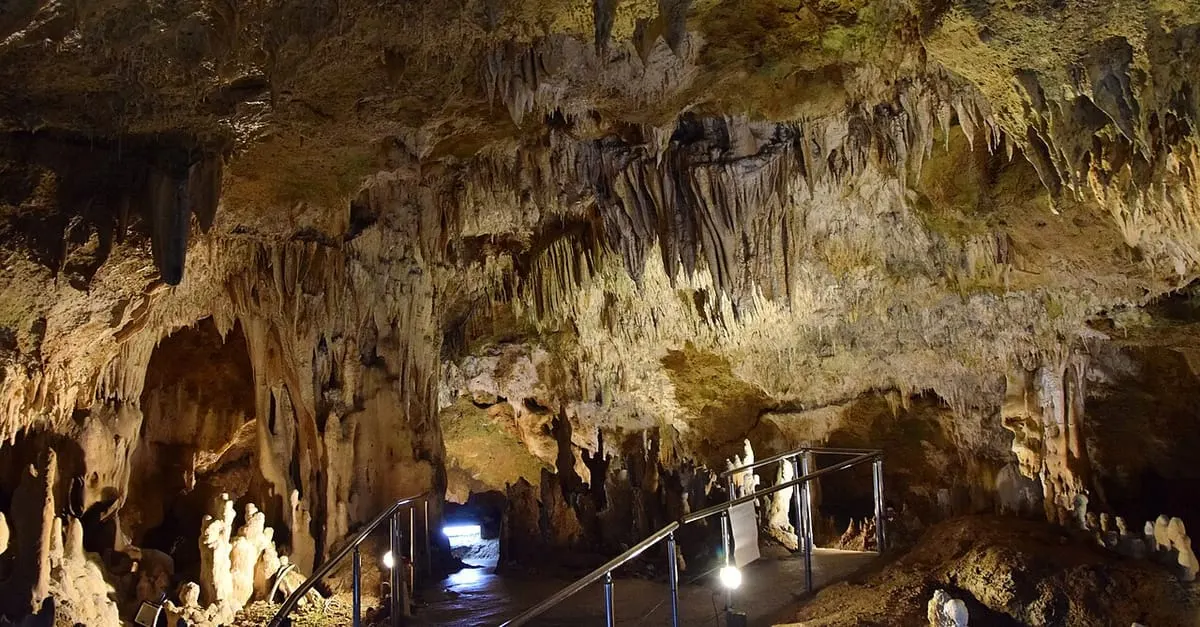
Walk into a big limestone cave and it feels designed. The hanging stone icicles, the rippled curtains, the rooms the size of cathedrals, all of it seems too deliberate to be an accident. But no one built it. So how do caves form? Slightly acidic water does almost all the work, dissolving rock drop by drop, and the main ingredient is time.
The short answer: acidic water dissolves rock, drop by drop
Most large caves are solution caves, hollowed out when slightly acidic groundwater slowly dissolves soluble rock, mainly limestone (National Park Service). The acid is not dramatic. Rain and groundwater are naturally a little acidic because water reacts with carbon dioxide to make a weak carbonic acid (U.S. Geological Survey). It picks up still more CO2 as it soaks through the soil, the same faint fizz of dissolved gas behind the rain that falls from clouds.
Limestone is mostly calcium carbonate, and carbonic acid is exactly the thing that dissolves it. When the acidic water seeps into cracks in the bedrock, it dissolves the rock it touches and carries the minerals away (National Park Service). Do that for a very long time and a hairline crack becomes a tunnel.
From a crack to a cathedral
A cave does not appear all at once. It starts where water can get in: the joints, fractures, and bedding planes that thread through any large body of limestone. As the weakly acidic water moves through those gaps, it dissolves the rock it touches, and the openings get wider. Wider gaps let more water through, which dissolves still more rock, which lets through more water again. The cave helps dig itself.
Much of this happens at or below the water table, in the saturated zone where rock sits permanently flooded. The slow circulation there carves the main passages. Later, if the land lifts or the water table drops, those passages drain and fill with air, leaving the open rooms a person can walk through. This is why a single cave system can have wet lower levels and dry upper galleries stacked like floors in a building.
The timescale is the part that is hard to feel. Each storm carves a vanishingly small amount, so the cave you stand in was being shaped long before any human was around to name it, and in most places it is still slowly changing today.
A whole landscape shaped this way has a name: karst. About 20 percent of the U.S. land surface is karst, built mostly on soluble limestone and dolomite (U.S. Geological Survey). Sinkholes are the same process showing its hand at the surface: when a buried cavern's roof grows too thin to hold up the ground, it collapses.
Why it takes so long, and sometimes doesn't
Dissolving solid rock with faint acid is glacially slow, so ordinary solution caves usually take tens of thousands to millions of years to grow large. But chemistry can speed things up. The famous rooms of Carlsbad Caverns in New Mexico were not carved by gentle rainwater at all. There, hydrogen sulfide rising from deep oil deposits mixed with oxygen in the groundwater to make sulfuric acid, a far more aggressive solvent (National Park Service). The Park Service notes that Carlsbad Cavern was among the last in the Guadalupe Mountains to dissolve, roughly four to six million years ago, from limestone that began as a fossil reef some 265 million years old.
Water reshapes rock at the surface too, just faster and in plain sight, as in the ocean's waves grinding at a coastline.
Where the icicles of stone come from
Once a cave is open and full of air, the process partly reverses. Water still trickles down through the rock above, still loaded with dissolved calcite. When a drop reaches the open chamber and the air, it releases carbon dioxide and evaporates a little, and a tiny ring of calcite is left behind (National Park Service). Drip after drip, those rings stack into the cave's decorations, called speleothems.
- Stalactites grow down from the ceiling, where each hanging drop leaves its mineral before it falls.
- Stalagmites grow up from the floor, built by the drops that land and splash there.
- Given enough time, a stalactite and the stalagmite beneath it can meet in the middle and fuse into a single column.
None of this is quick. Soda-straw stalactites that began growing on broken formations in Great Basin's Lehman Caves are still only an inch to about four inches long after roughly a century (National Park Service). A decorated cave is a museum of slow water, and a hand-length of stone can mark generations of dripping.
Not every cave is dissolved
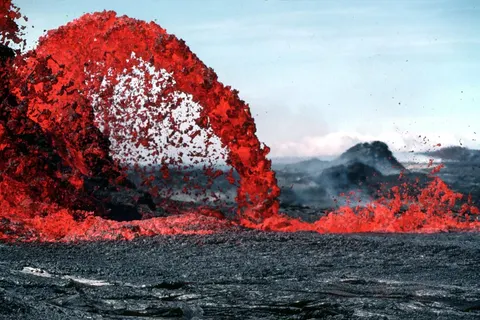
Solution caves are the most common kind, but not the only one (National Cave and Karst Research Institute). Lava tubes form when the surface of a flowing river of lava cools and hardens into a crust while molten rock keeps draining out underneath, leaving a long hollow tube once the eruption stops, a cousin of the processes behind how volcanoes erupt. Sea caves are blunter: ocean waves slam water and air into cracks in a coastal cliff until chunks of rock break free. Glacier and ice caves are melted rather than dissolved, as meltwater bores passages down through a glacier.
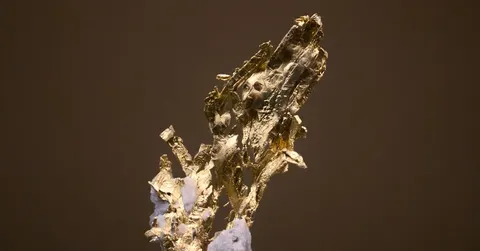
The same patient water that hollows out a cave also builds it back up, one drip at a time. If that kind of slow planetary plumbing is your thing, where gold comes from runs on chemistry just as quiet. More at How It Works.

Join the conversation
Comments are reviewed before they appear. Be kind and stay curious.
Loading comments…