
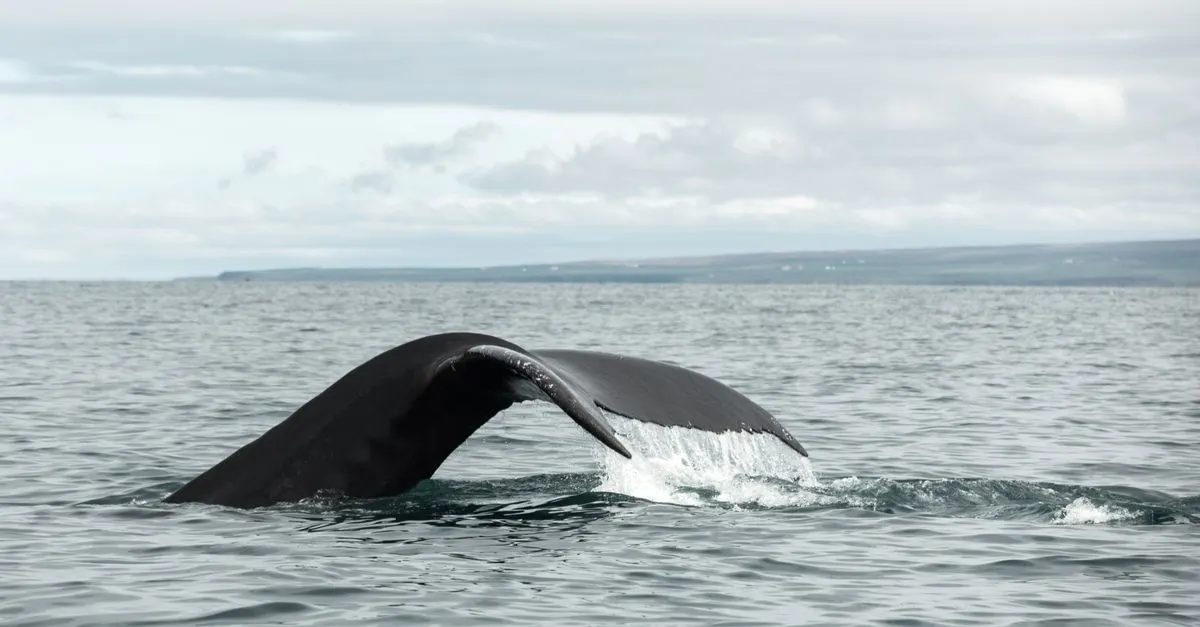
Off the coast of Dominica, a research boat once drifted toward a small group of sperm whales hanging motionless in the water. Not swimming, not diving, just floating upright like sunken telephone poles, heads near the surface and tails pointing down into the dark. The whales did not react. The boat nudged closer and still nothing, until it actually bumped one of them and the whole group startled awake. The scientists had stumbled onto something no one had filmed before: whales, fast asleep, standing up in the open ocean.
Whales sleep with half the brain at a time
Whales sleep one hemisphere of the brain at a time, a pattern called unihemispheric slow-wave sleep, so they never lose the ability to surface and breathe. While one half drops into deep, slow-wave sleep, the other half stays awake, running the body and keeping watch, then a few hours later the two sides trade. Researchers have found this lopsided sleep in every cetacean species examined so far, and it accounts for the great majority of a whale's sleep.
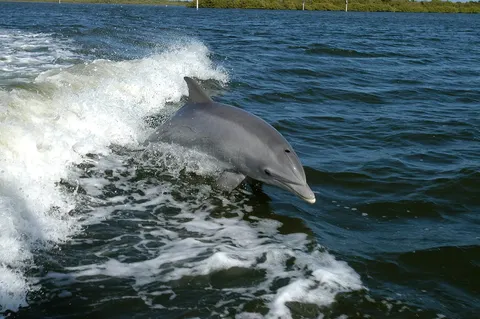
The reason is the same one that shapes how their close cousins rest. A whale breathes air through a blowhole, but it lives underwater, and it has to come up and take each breath on purpose. That is the trap. If the whole brain switched off the way ours does, the next breath would never come. So a whale solves the problem by only ever half-sleeping, the same trick behind how dolphins sleep without drowning.
Why a whale can never fully clock out
Most animals hand the body to autopilot when they sleep. Whales cannot, because their breathing is not automatic. A whale is what biologists call a voluntary breather: unlike a fish that simply pulls oxygen from the water through its gills and never thinks about it, a whale has to consciously decide to surface and exhale. Let the entire brain go dark and the animal would stop breathing and sink.
Keeping half the brain online solves two problems at once. It keeps the surfacing schedule running, and it leaves a sentry on duty to watch for predators and stay with the group. You can sometimes even tell which half is resting. The eye that closes is the one on the opposite side from the sleeping hemisphere, so the awake half keeps an open eye pointed outward (Lyamin et al.). A whale dozing with its right brain shuts its left eye and keeps the right one watching you.
When whales rest at the surface, they often do something whale-watchers call logging. NOAA's marine sanctuary office puts it plainly: when a whale lies quietly at the surface, it is said to be logging, floating still like a drifting log while half the mind stays on shift. Humpbacks and other baleen whales rest this way, lying motionless at or just under the surface for stretches at a time.
The sperm whales that nap standing up
Then there are sperm whales, which do something stranger than logging. They sleep vertically. In 2008 a team led by Patrick Miller at the University of St Andrews fixed suction-cup data-logging tags to the backs of sperm whales and recorded what the animals actually did. Tucked into the data were odd, passive dives where a whale would hang head-up just below the surface and simply hover, motionless and silent. The researchers called them drift-dives, and the whales held the posture in short bouts that did not last long. During a bout the whale neither swam nor breathed. It just drifted, asleep on its feet, if a whale can be said to have feet.
These naps are brief, roughly 10 to 15 minutes each (Whale and Dolphin Conservation). The whales favored the late evening, doing most of their drifting between about 6 p.m. and midnight. Standing up has a quiet logic to it. A vertical float keeps the blowhole near the surface for an easy breath when the nap ends, and it takes almost no muscle to hold, so the whale burns very little energy resting this way. It is the marine equivalent of dozing in a chair instead of lying down, except the chair is the whole Atlantic.
The sperm whale that may switch off its whole brain
Here is the detail that makes sperm whales special. They may be sleeping with the whole brain at once.
That sounds unremarkable until you remember the rule: cetaceans half-sleep, always. Yet those silent, drifting sperm whales were so deeply out that a boat bumped one before the group reacted, behavior that looks far more like full, both-halves-down sleep than the watchful half-sleep of a dolphin. The St Andrews team proposed exactly that, suggesting their findings were the first evidence that whales in the wild may sleep with both sides of the brain at once. If true, the sperm whale would be the exception that proves the rule, an animal that can briefly afford to switch the whole brain off because it sleeps so little to begin with.
And it sleeps astonishingly little. By the tag data, sperm whales spent only about 7.1 percent of the recorded time in these resting drift-dives, which works out to less than two hours a day. That may be the least sleep of any mammal on Earth. A creature with one of the largest brains that has ever existed gets by on a handful of fifteen-minute upright naps, then goes back to hunting squid in the deep.
What none of them seem to get
For all their differences, whales share one strange absence. They show little or no REM sleep, the deep stage where humans do their vivid dreaming. Across decades of recordings, researchers have struggled to find any clear sign of REM in cetaceans at all (Lyamin et al.). A whale may never have a dream in the way you would recognize one. The same half-on, half-off design that keeps it breathing may also lock it out of the richest part of sleep, the part that for us feels like the mind running its own private film.
It is a heavy bargain. To live as an air-breathing mammal in the sea, a whale gives up the one thing every land animal takes for granted: the right to fully let go, close both eyes, and disappear into sleep. Even the sperm whale, drifting upright in the dark with its giant brain switched off, gets only fifteen minutes before the next breath calls it back.
Keep wondering: compare it with how dolphins sleep one hemisphere at a time, find out whether sharks sleep at all, and see why some land animals pull off sleeping standing up like horses.


Join the conversation
Comments are reviewed before they appear. Be kind and stay curious.
Loading comments…