
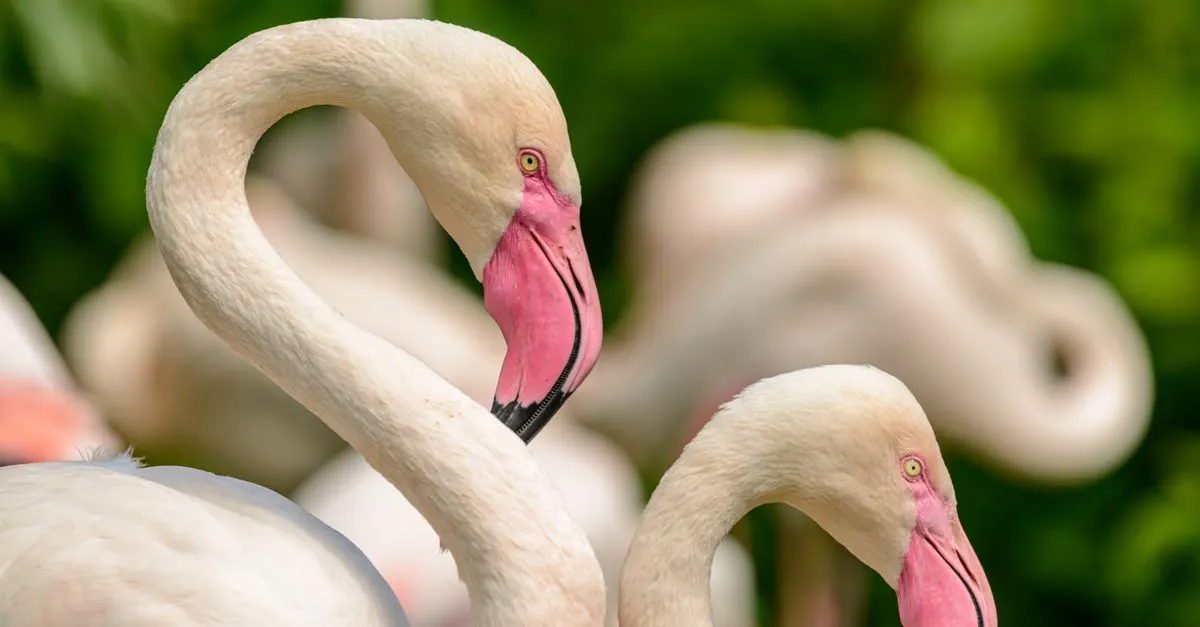
Why are flamingos pink? For the same reason a tan is brown or a bruise is purple: it comes from the outside in. The bird is not born this color and does not grow it on its own. It eats its way to pink, one shrimp at a time. A flamingo is, quite literally, what it eats.
The pigment in the pond
Flamingos wade through shallow, briny water and feed on algae and tiny crustaceans like brine shrimp. Those foods are loaded with carotenoids, the same family of natural pigments that turns carrots orange and ripe tomatoes red. As a flamingo digests its meals, its body breaks down the carotenoids and lays the pigment into its growing feathers, its skin, and its bill.
To get at that food, a flamingo does something odd: it eats upside down. It hangs its head below the waterline and uses its strangely bent bill as a sieve. Comb-like ridges called lamellae line the edges, trapping shrimp and algae while the muddy water rushes back out. Every mouthful is another small dose of pink.
Born grey, earned pink
Here is the giveaway that color comes from diet and not from birth: baby flamingos are not pink at all. Chicks hatch with grey or white down and straight little bills, looking nothing like their parents. It takes months, and for full color a few years, of eating the right food before they flush into the familiar pink.
The flip side shows how important diet is. A flamingo's color is partly shaped by its recent meals. Feed it a diet short on carotenoids and it can fade. This is why zoos have to be careful: a captive flamingo on the wrong food drifts toward pale pink or even white, so keepers add carotenoid-rich foods or supplements to keep their flocks vivid. Take away the pigment and the pink goes with it.
The pink milk
The "you are what you eat" rule has a tender twist. Newly hatched chicks cannot filter-feed yet, so both parents make a kind of crop milk, a protein-rich and fat-rich secretion they dribble straight into the chick's mouth. That milk is tinted pink and red, colored by carotenoids drawn from the parents' own reserves. In other words, the adults spend their stored pigment feeding their young, and can lose some of their own color in the process. They give their pink to their kids.
Flamingos wear makeup
The strangest part may be that flamingos do not just earn their color, some of them apply it. Studying greater flamingos, researchers found the birds rub pigment-rich secretions from a gland near the tail onto their neck and chest feathers, like cosmetics. The plumage grows more colorful during the breeding season, when the birds are showing off in courtship displays, then fades again afterward. Brighter birds tend to be more attractive mates, so a flamingo touching up its color is, in effect, putting on its best face before a date. This is a documented example of birds using gland secretions to modify their plumage. Pink is not the only flamingo habit stranger than it looks, so is the way it dozes balanced on a single leg.
So the next time you see that impossible pink, remember it is not really the flamingo's color at all. It is the color of its dinner, carried up through its body, passed down to its chicks, and sometimes dabbed on by the bird itself. A flamingo is a walking, wading record of everything it has eaten.
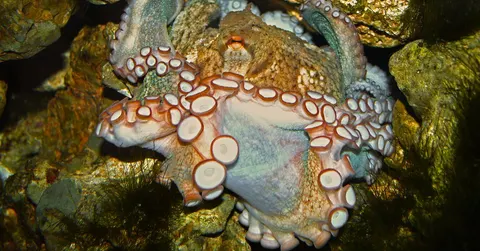
Keep wondering: see how an octopus changes color in a heartbeat, find out why so many sea creatures make their own light, and learn how a Venus flytrap snaps shut on its prey.

Join the conversation
Comments are reviewed before they appear. Be kind and stay curious.
Loading comments…