
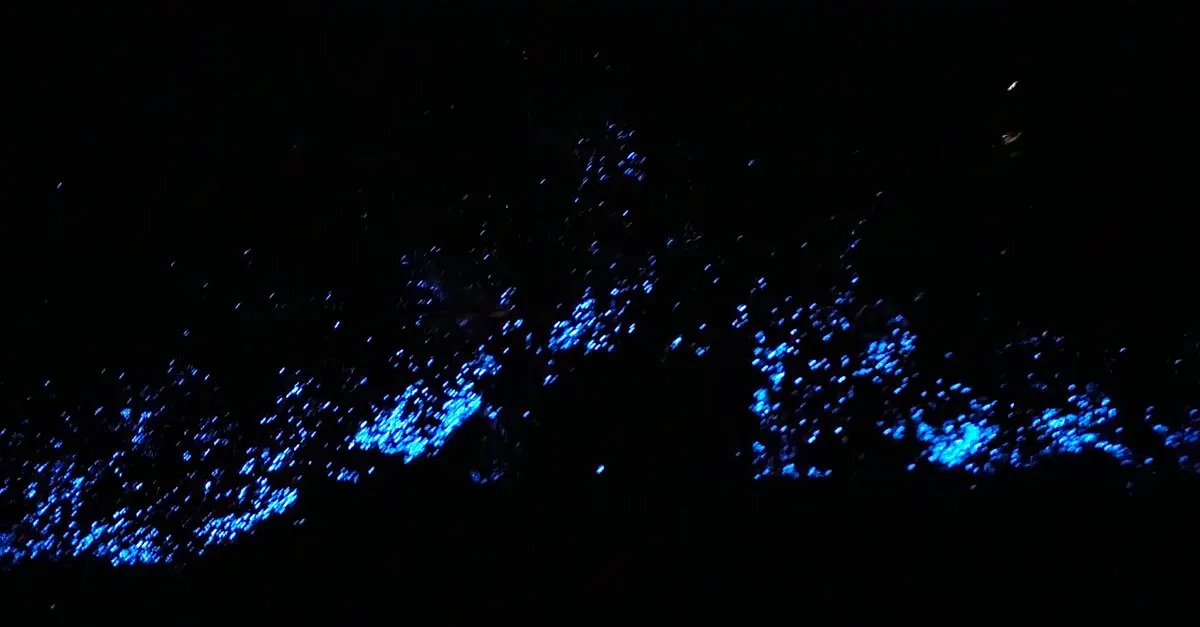
Sail into the right bay on a moonless night, dip your hand into the water, and the sea will light up around your fingers in electric blue. Far below, in the permanent dark of the deep ocean, this living light isn't a rare spectacle, it's the norm. Most animals down there can glow. Which raises the question: why do sea creatures glow, and why has so much of the ocean learned to make its own light?
Living light from a chemical reaction
Sea creatures glow through bioluminescence, light created by a chemical reaction inside their bodies. They do it to survive in the dark: to lure prey, to startle or evade predators, to hide their own shadow, and to find mates. In the lightless deep ocean, where sunlight never reaches, making your own light is one of the most useful tricks evolution has ever produced. It's also a place of crushing pressure, the kind that would kill an unprotected human in seconds, yet it teems with glowing life all the same.
Cold chemistry: how living light works
Bioluminescence is simple chemistry. Most glowing animals carry a light-producing molecule called luciferin and a helper enzyme called luciferase (the names come from the Latin for "light-bearer"). When luciferin reacts with oxygen, with luciferase speeding things along, the reaction releases energy as light instead of heat. The result is "cold light," nearly 100% efficient, with almost none of the energy wasted as warmth. A glowing jellyfish doesn't get hot. Compared to a regular light bulb, which throws off most of its energy as heat, living light is remarkably efficient. It's the same trick of cold chemistry that lets a snapped glow stick shine without giving off any heat.
Some animals make these chemicals themselves. Others can't, and instead strike a partnership: they house colonies of glowing bacteria in special organs and "borrow" the bacteria's light, feeding and sheltering them in return. The famous anglerfish does exactly this, growing a glowing lure stocked with luminous bacteria.
Why glowing is worth it
In the deep sea, light is one of the only ways to send a signal, set a trap, or vanish. Evolution has found at least four brilliant uses for it.
To hunt. The anglerfish dangles a glowing lure in front of its mouth like a fishing rod baited with light. Curious prey swim toward the glow, straight into the jaws waiting in the dark.
To hide, by erasing your shadow. This one is wonderfully counterintuitive. Many small ocean animals glow softly on their bellies to match the faint light filtering down from above. To a predator looking up, a dark silhouette is an easy target. But an animal whose underside glows just enough to blend with the dim background above becomes invisible. This trick, called counterillumination, means animals light up specifically to disappear.
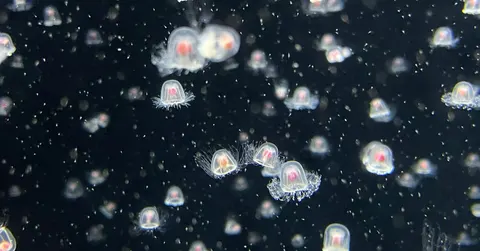
To escape. A sudden flash can blind or startle a predator long enough to flee. Some creatures go further: certain shrimp and jellyfish eject clouds of glowing particles, leaving a bright smokescreen behind while they dart away into the dark. Some deep-sea creatures even use a "burglar alarm" strategy, when grabbed, they light up brilliantly to attract a bigger predator that might attack their attacker.
To find each other. In a vast black ocean, finding a mate is a needle-in-a-haystack problem. Distinctive patterns and rhythms of light let animals signal "I'm here, and I'm your species." On land, fireflies use the very same idea. A cat's eyes seem to join in, but that is a different trick: they do not make light, they bounce it back out.
Just how common is it?
Far more common than most people imagine. In the open ocean below the sunlit surface, scientists estimate the majority of animals can produce light. Across the whole deep sea, bioluminescence may be the single most widespread form of communication on the planet, used by everything from microscopic plankton to jellyfish, squid, shrimp, and fish, the same deep-sea fish built to withstand the crushing pressure down there. The glittering blue "sparkle" swimmers sometimes stir up at night comes from tiny plankton called dinoflagellates flashing when disturbed. When a whole bay fills with them, the water itself seems to catch fire. The deep keeps other secrets just as well, like where eels disappear to breed, a journey science took two thousand years to trace.
A darkness full of light that life made itself
We tend to picture the deep ocean as a place of total, dead blackness. But it would be truer to picture it as a slow, silent light show, a darkness sprinkled with sparks, lures, alarms, and signals, a sea of creatures blinking messages to one another in a language made of light. The deep isn't empty of light. It's full of light that life made for itself, glowing in a place the sun could never reach.
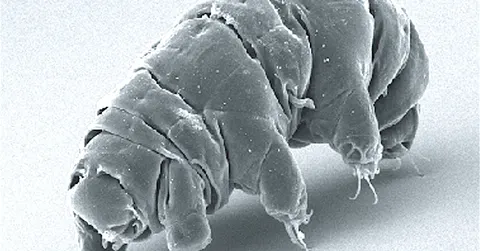
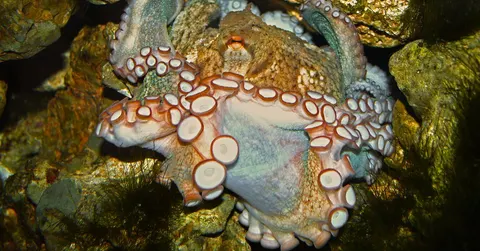
Keep wondering: this living light show unfolds in the crushing dark of the deep, see just how deep the ocean goes, meet another master of survival in extreme places, the tardigrade, or see how some sea animals skip glowing entirely and change color in milliseconds instead.


Join the conversation
Comments are reviewed before they appear. Be kind and stay curious.
Loading comments…