
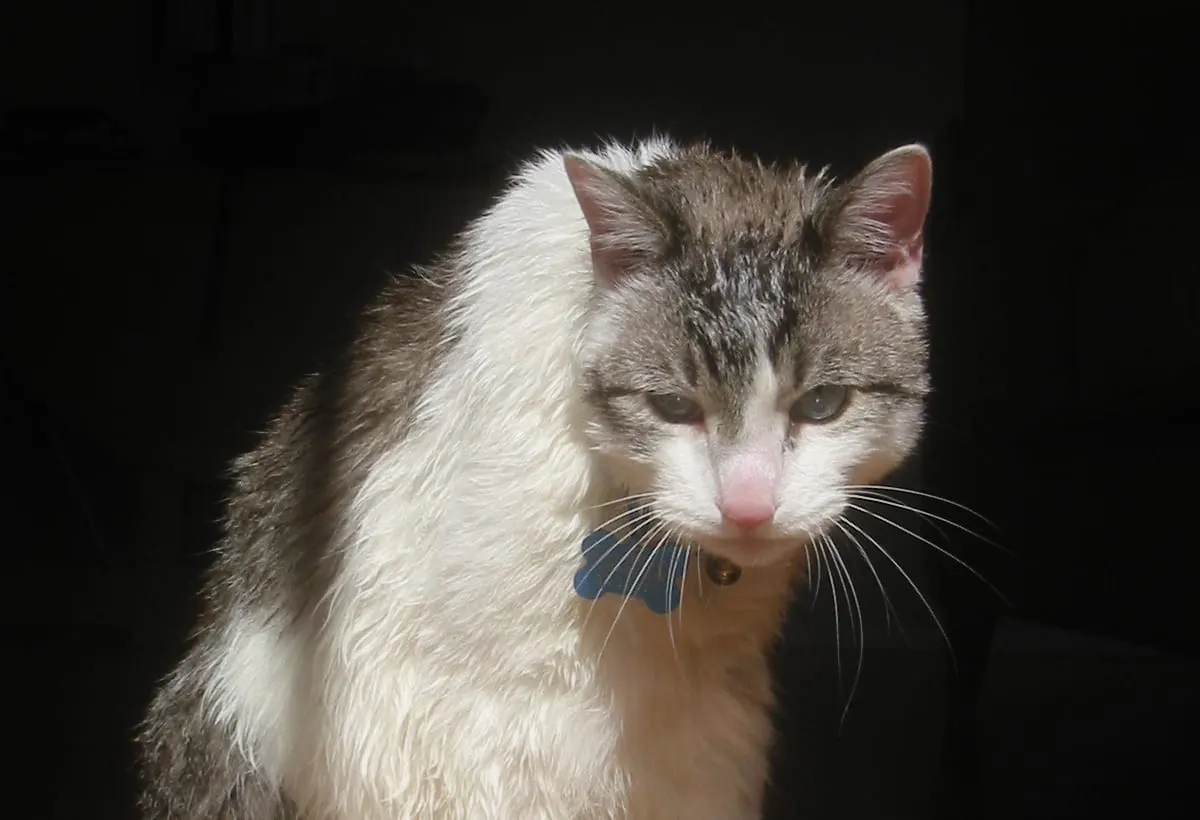
Try to give a cat a bath and you will learn things about cats, and possibly about yourself. Most of them treat the arrival of water as a personal betrayal, twisting and yowling like the bathtub is trying to eat them. Dogs will leap into a lake for fun. Why are cats so different?
A desert animal in your living room
Why do cats hate water? The first answer is written in their family tree. The house cat descends from the Near Eastern wildcat, a small predator of dry, arid country, domesticated in the Fertile Crescent thousands of years ago (Science). That ancestor lived where there were few rivers or lakes and no reason to swim. As the cat behaviorist Kristyn Vitale puts it, "a large proportion of the African wildcat's diet is made up of terrestrial animals, like rodents," not fish (Live Science). Dogs descend from water-friendly wolves that crossed rivers and hunted near water; cats descend from animals that mostly avoided it. The aversion is, in part, an inheritance.
It's worth being honest that this is the leading explanation, not the whole story. Some researchers note that wildcat country wasn't uniformly bone-dry, so evolution alone may not explain the full reaction. Which brings in the more immediate problem: how water actually feels on a cat.
Wet fur is a terrible deal
A cat's coat is built to trap air and insulate, and it is not water-resistant. Soak it and the fur waterlogs, turning heavy, cold, and slow to dry. As the animal cognition researcher Jennifer Vonk explains, a cat's "fur does become waterlogged and make movement more cumbersome, which probably leaves them feeling vulnerable" (Live Science). For an animal that is both a hunter and, to bigger predators, prey, losing speed and agility is genuinely alarming. A waterlogged cat can't move the way it trusts its body to move, and it can struggle to regulate its temperature while the coat is soaked (Cats Protection).
There are smaller insults stacked on top. Tap water carries a faint chemical smell, like chlorine, that a cat's sharp nose may find unpleasant (Cats Protection). And a cat that never met water calmly as a kitten has no reason to think a bath is anything but an ambush (Catster).
Some cats love it, and all of them can swim
Here's the twist that proves it isn't a hard rule: plenty of cats are fine with water, and a few adore it. The Turkish Van is nicknamed the swimming cat for its water-resistant coat and fondness for a paddle, and Maine Coons and Bengals often join in too (Cats Protection). Scale up and the pattern flips entirely. Tigers are strong swimmers that wade in to escape flies and cool off, and can cross lakes and rivers miles wide (Smithsonian's National Zoo). The aversion isn't built into being a cat. It's built into being a small, desert-descended cat with a coat that hates getting soaked.
So your cat isn't being dramatic, exactly. It's a creature shaped by dry ancestors, wearing a coat that turns miserable when wet, with the instincts of an animal that can't afford to feel slow. The bath isn't an insult to its dignity. It's an attack on everything it trusts about its own body. The yowling is just the review.
Keep wondering: the same anxious-predator wiring is behind why cats love boxes, the hunter's economy of why cats sleep so much, the kittenish comfort of why cats knead, and the curious paw that is forever nudging your glass off the table.
Join the conversation
Comments are reviewed before they appear. Be kind and stay curious.
Loading comments…