
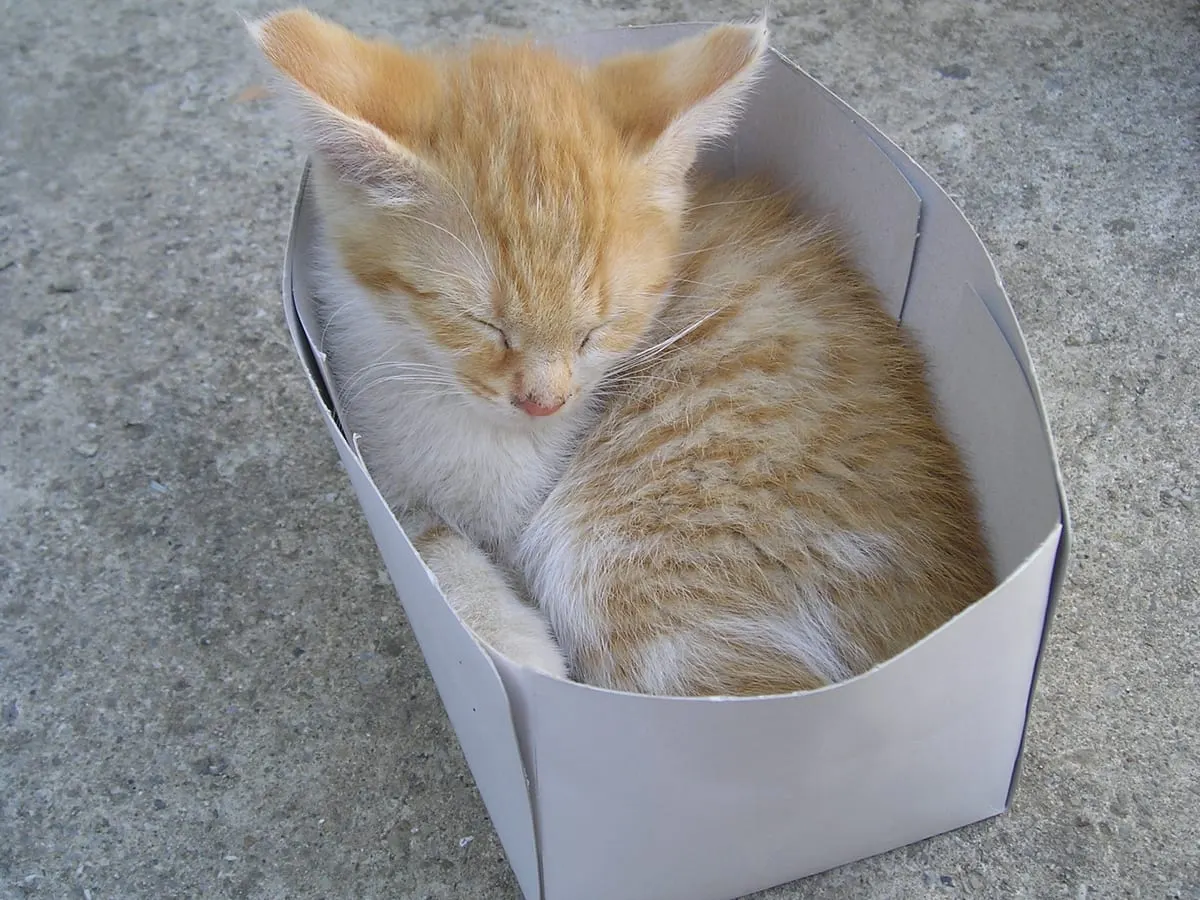
You buy the cat a plush bed, a tower, a toy that lights up. The cat looks at all of it, then climbs into the cardboard box the toy arrived in and falls asleep. Every cat owner knows the joke. The internet long ago turned it into a motto: if it fits, I sits.
The walls are the whole point
So why do cats like boxes more than the expensive thing that came inside them? Because an enclosed space lowers a cat's stress and feels safe in a way an open room never can. A cat is a small predator that is also somebody else's prey, and a box solves both halves of that anxious life at once. Walls on most sides mean nothing can sneak up; a single opening means a clear line of sight and a fast exit. To a cat, a plain box is a fortress with a great view.
This is not just a cute theory. When shelters gave newly arrived cats a simple hiding box, the cats were measurably calmer and adjusted to their new home faster than cats without one (Applied Animal Behaviour Science). A later controlled trial found the box cats settled to a calm baseline about a week sooner (PLOS ONE). Hiding is how a cat copes, and a box is hiding made portable. The flip side of that need for control shows up whenever a cat loses it, which is a big part of why cats put up such a fight around water.
Warm, hidden, and ready to pounce
There are bonuses stacked on top of the safety. Cats are comfortable at warmer temperatures than we are, with a comfort range that sits well above a typical room (The Scientific World Journal). Snug cardboard traps body heat and helps close that gap, which is part of why the box so often becomes a nap spot. And the same three-walls-and-a-doorway shape that makes a cat feel safe also makes a perfect ambush blind. Hidden, warm, and lined up for a surprise attack on your ankles: from a cat's point of view, that is not an empty box. It is prime real estate.
They'll even sit in a box that isn't there
Here is the detail that tips the whole thing from cute to genuinely strange. Cats do not even need real walls. In a citizen science study, owners taped flat shapes on the floor at home, and the cats sat inside not only real squares but illusory ones, outlines your own brain fills in from a few corner cues, the same kind of trick that fools the face-finding part of human vision. The lead researcher concluded that cats are "most likely attracted to 2-D shapes for their contours (sides), rather than solely novelty on the floor" (Smithsonian Magazine).
So it is not really the cardboard the cat loves. It is the suggestion of an enclosure, the sense of an edge to settle against. The box is just the easiest way to offer it one. Give a cat a hint of walls, even a fake one drawn on the floor, and the ancient instinct says the same thing it has always said: this looks safe, sit.
Keep wondering: the same anxious-predator wiring explains why cats sleep so much of the day, the cozy kitten reflex behind why cats knead, and the illusion the box study leans on is cousin to why you see faces in things.

Join the conversation
Comments are reviewed before they appear. Be kind and stay curious.
Loading comments…