
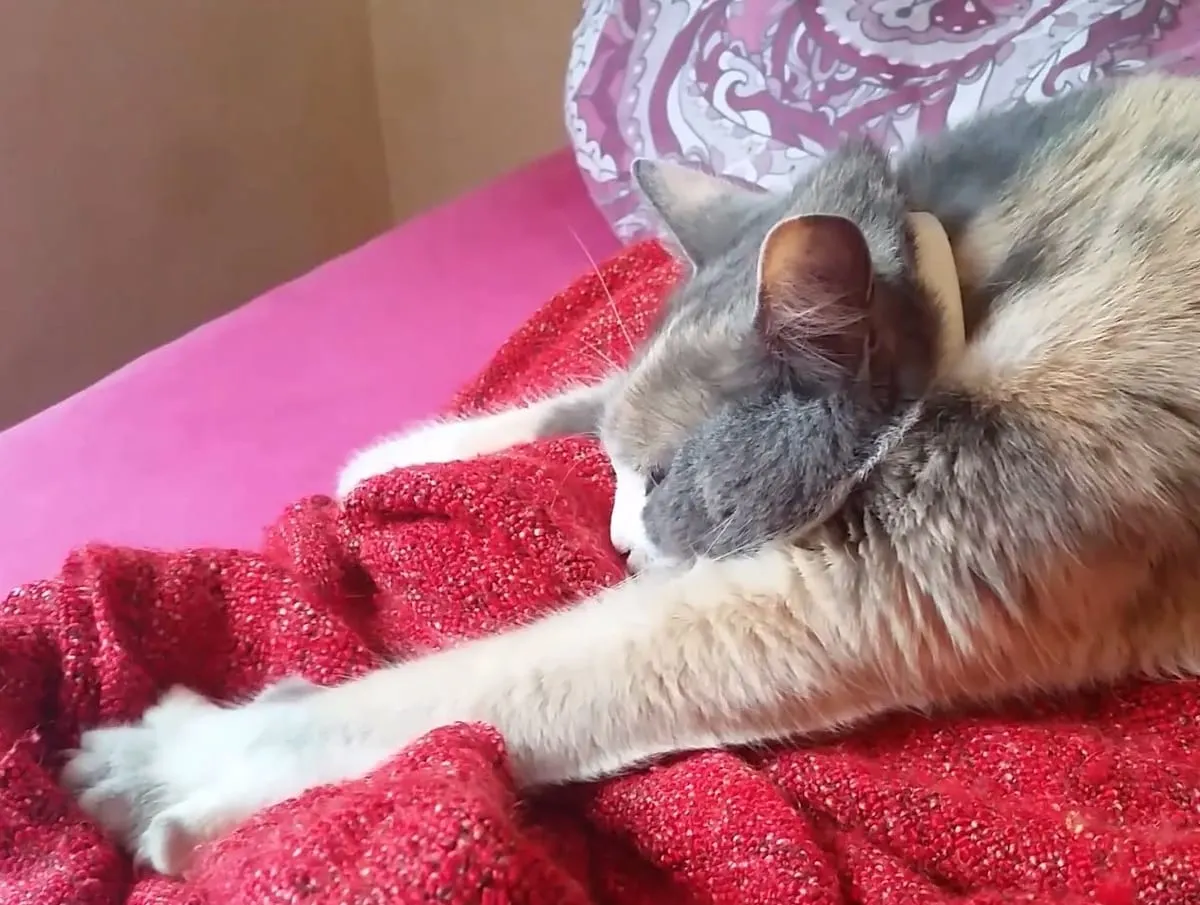
Your cat climbs onto your lap, fixes you with a half-closed stare, and starts pushing its paws into you, left, right, left, right, like a tiny baker working dough. People call it making biscuits. Why do cats knead like this? The habit is older than it looks: for a moment, your full-grown cat is a kitten again.
It begins at the milk bar
Kneading is one of the first things a cat ever does. "The way the behavior starts is: they knead the mother's mammary glands to actually suck the milk," says Leticia Fanucchi, an animal behavior scientist at Oklahoma State University (Scientific American). The pushing motion stimulates milk flow, and that early rhythm gets wired to the best feeling a kitten knows: warmth, safety, and a full belly.
That link never fully fades. The kitten grows up, but the paws remember what kneading once earned them.
Why grown cats keep doing it
An adult cat has no milk to summon, yet the habit sticks around as pure comfort. "Kneading usually means the cat feels happy, friendly and safe," says Kristyn Vitale, a certified applied animal behaviorist, who calls it an affiliative, social behavior that helps build a bond. A cat kneading your lap is telling you it feels secure with you, which is why it so often comes paired with purring and that dreamy, faraway look. Like a dog leaning into a long, mournful sound, it is a body doing the talking, the same wordless signaling that drives the long howl of a dog.
It is the same comfortable contentment that makes you want to squeeze something soft, the warm reflex behind why we want to squeeze cute things.
The message hidden in the paws
There is a quieter purpose too. Cats carry scent glands in the soft pads of their paws, and pressing those pads against a surface leaves an invisible mark (Cornell Feline Health Center). So when your cat kneads the blanket, or you, it is also stretching its muscles and quietly staking a claim: this is mine.
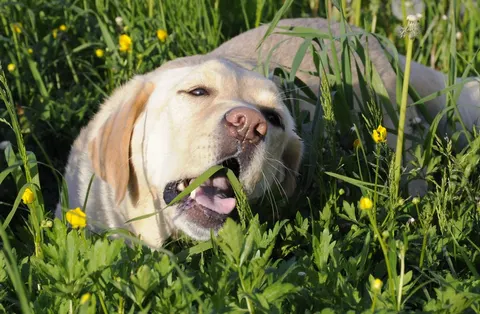
It is worth being honest that the full picture is still fuzzy. "Some of these are just theories because we don't know," says Susan Nelson, a veterinarian at Kansas State University. Cats keep some of their reasons to themselves, the same way they leave us guessing at plenty of other animal habits, like why dogs eat grass. What is clear is the mood behind it. A kneading cat is a comfortable one.
Keep wondering: a kneading cat is running an instinct it has carried since birth, much like a dog that eats grass, and that same comfort instinct fills out the rest of its day, which is mostly spent asleep, for reasons all its own. The animal world is full of stranger holdovers still, like the creatures in is there an immortal animal. More at Life on Earth.

Join the conversation
Comments are reviewed before they appear. Be kind and stay curious.
Loading comments…