
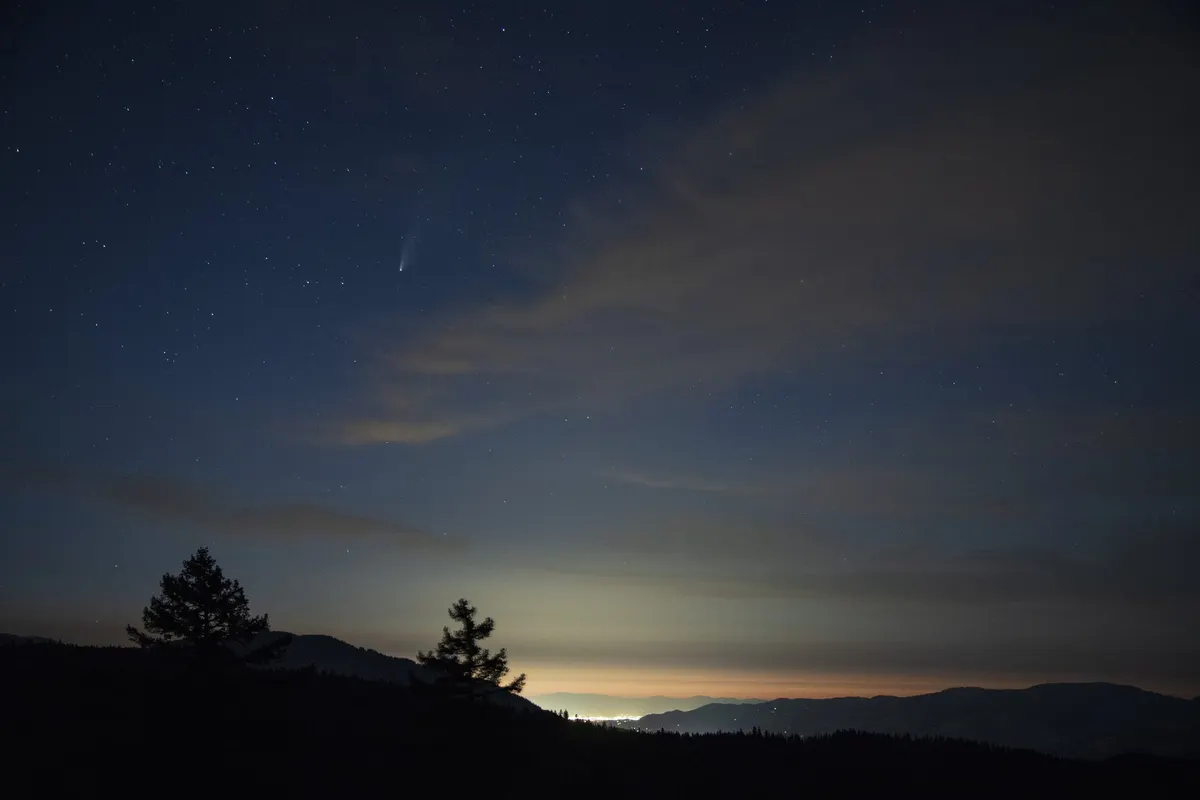
In the second half of 1531, a bright comet hung over Europe. A Bavarian mathematician named Peter Apian watched it night after night and noticed something no European had thought to write down: whichever way the comet moved, its tail pointed away from the Sun. He put the observation in print in his 1540 masterwork, the Astronomicum Caesareum. The comet turned out to be Halley, one of the three apparitions Edmond Halley later linked into a single returning object. Apian had the rule right. The explanation, why do comets have tails at all and why do they point like that, took another four centuries.
The Sun turns comet ice into gas and then blows it away
A comet is a lump of ice, dust and rock, and when its orbit carries it toward the Sun, the ice does not melt into a puddle. It sublimates, going straight from solid to gas and skipping the liquid stage entirely. The escaping gas drags dust off the surface with it and wraps the nucleus in a glowing cloud called the coma. Sunlight and the solar wind then push that material outward into a tail millions of miles long. The tail is not exhaust the comet leaves behind. It is material the Sun is actively stripping off it.
Two tails, made by two different forces
Look at a good photograph of a bright comet and you can usually pick out two tails. They come from the same nucleus and they are built by completely different physics.
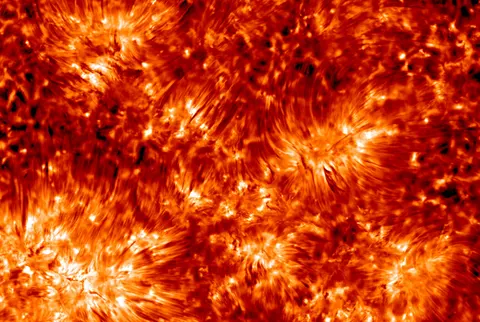
The ion tail is the bluish, ruler-straight one. Ultraviolet light from the Sun knocks electrons off the escaping gas, and the solar wind then carries those ions straight outward, directly away from the Sun. They are light, they are charged, and the wind gets a firm grip on them. That wind is a stream of particles flowing off the same star whose ingredients we can read in its light.
The dust tail is the broad white one, and it is the tail most people picture. Sunlight itself carries a push, called radiation pressure, and it shoves the dust grains outward. But a grain of dust is far heavier than an ion, and the shove is gentler, so the dust never flies straight off. It keeps some of the orbital speed it had when it left the nucleus and drifts sideways as it travels, so the tail bends into a wide curve that traces the path the comet has taken.
One tail is the wind. The other is the light. That is the whole difference.
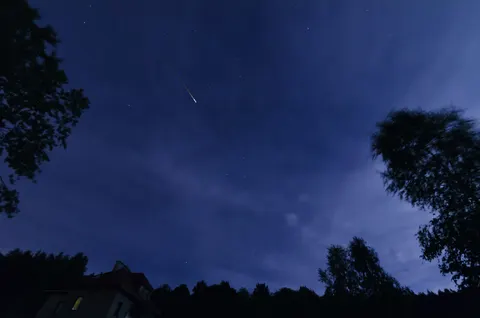
Those dust grains do not vanish, either. They keep circling the Sun along the comet's old track, and when Earth ploughs through one of those trails we get a meteor shower, which is a separate story about what actually burns up in our sky.
Which is why an outbound comet flies tail-first
Here is Apian's rule taken to its conclusion, and it is the part that breaks most people's mental picture. A tail is not a wake. A wake trails behind a moving thing, because the thing is moving. A comet's tail is anchored to the Sun's position instead, so it swings around the comet like a windsock as the orbit curves.
On the way in, the tail streams out behind the nucleus and everything looks the way you would expect. Then the comet rounds the Sun and starts heading back out. The Sun is now behind it, and the tail is still being pushed away from the Sun, so it swings around to the front. For the entire outbound half of the orbit, the tails lead the comet. The comet leaves the inner solar system tail-first, pushed out ahead of itself the whole way.
Rosetta rode one comet through the whole performance
For almost all of history a comet was a smear of light you watched from a field. Then the European Space Agency's Rosetta spacecraft arrived at comet 67P/Churyumov-Gerasimenko on 6 August 2014 and stayed with it until September 2016, flying alongside the nucleus through its closest approach to the Sun and back out again.
From that seat, Rosetta watched the warmth of the Sun evaporate ices on the surface and blast jets of dust into space, and it measured that gas and dust streaming into the tails and meeting the solar wind. Apian's naked-eye rule from 1531 was finally being read off instruments parked inside the thing itself.
What Rosetta really watched was a comet spending itself. Every tail is ice that will never be ice again, four and a half billion years old, held in the deep freeze past the planets and then thrown away in a few bright months. The comets we get to see are the ones losing the most.
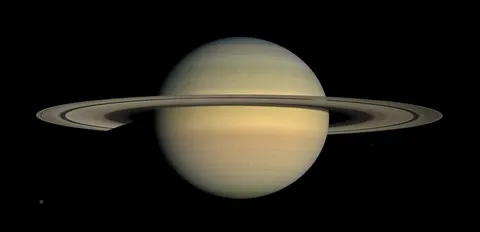
Keep wondering: the dust a comet sheds ends up as the streaks we call shooting stars, the ice it is made of is cousin to the ice in Saturn's rings, and it spends most of its life out where space gets genuinely, properly cold.
Join the conversation
Comments are reviewed before they appear. Be kind and stay curious.
Loading comments…