
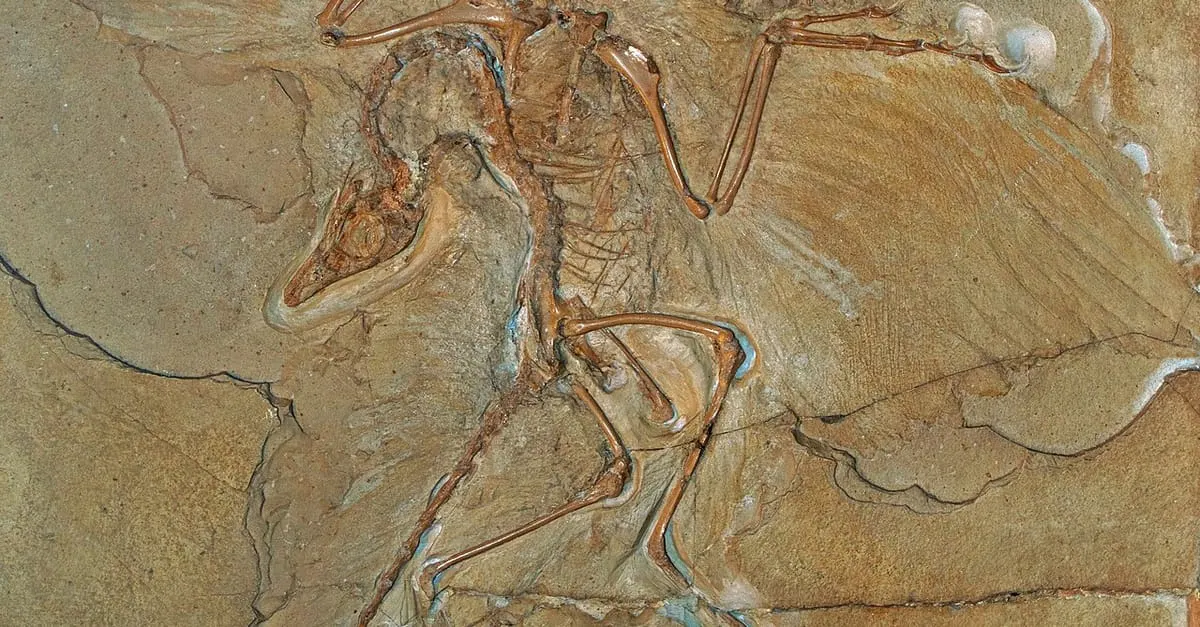
The dinosaur you grew up with, the bare scaly reptile lurching through a swamp like an overgrown lizard, is out of date. That picture held for most of a century, and it was wrong. A lot of dinosaurs were fuzzy. Some were covered head to tail in feathers as elaborate as a hawk's. So did dinosaurs have feathers? Many of them did, and the fossils that proved it are some of the best preserved ever found.
Many dinosaurs had feathers, and the fossils prove it
Feathers were not a bird invention. They first appeared in theropod dinosaurs, the two-legged carnivores that include T. rex and Velociraptor, long before any animal could fly (Scientific American). Since the mid-1990s, paleontologists have dug up dozens of feathered non-avian dinosaurs, ranging from animals coated in simple hair-like filaments to ones with full vaned plumes. The catch was always preservation. Feathers rot fast and rarely fossilize, so for a long time the evidence simply was not in the ground anyone had checked.
Then it was. The fossil beds of Liaoning in northeastern China turned out to be a freak of geology: volcanic ash settling into still lake water, burying animals so gently and so fast that skin, fuzz, and feather outlines survived as dark films pressed into the stone. That one site rewrote the textbooks.
Not every dinosaur was fuzzy, though, and the full extent is still being worked out. Feathers turn up almost entirely in one branch, the theropods, while the giant long-necked sauropods and many armored plant-eaters seem to have stayed scaly. Whether some of those other lineages had patchy feathers, or a fuzzy phase as babies, is still an open question. Even T. rex itself sits in a long-running argument, the same family that gave us the riddle of its tiny arms.
Sinosauropteryx, the first dinosaur caught wearing a coat
The fossil that broke the story was named in 1996. Sinosauropteryx, a small meat-eater from Liaoning, was the first dinosaur outside the bird lineage found with clear evidence of feathers, a coat of simple filament-like structures running down its back and tail (Natural History Museum). These were not flight feathers. They were closer to fuzz, the earliest, simplest kind.
What makes Sinosauropteryx remarkable is that we know its color. The dark bands along the fossil tail contain melanosomes, microscopic packets that hold pigment, and their shape tells you the hue. The tail was ringed in ginger and white stripes (Natural History Museum). A fossil more than 120 million years old, and we can describe its markings like a field guide.
Why a dinosaur would grow feathers it could not fly with
Here is the part that trips people up. If feathers came before flight, what were they for? The answer is everything except flying. The first feathers were almost certainly insulation, a warm coat for a small active animal, which fits the wider case that dinosaurs ran warmer than old reptiles, and they doubled as display, the way a peacock's tail does nothing aerodynamic but a great deal socially (Scientific American). Camouflage, water repellency, and shading eggs in the nest are all on the list of likely early uses.
Flight came much later, and only after feathers had already evolved into complex vaned shapes for other reasons. Evolution does not plan ahead. It built the feather for warmth and showing off, then a few small theropods discovered, millions of years afterward, that the same structure could catch air.
The proof that feathers were not just a tiny-dinosaur quirk arrived in 2012. Yutyrannus huali, a relative of T. rex from Liaoning, weighed over a ton and was still covered in long filament-like feathers, the largest dinosaur ever found with direct evidence of a feathery coat (AMNH). A one-ton predator, fuzzy as a chick. That single fossil killed the idea that big dinosaurs were automatically bare.
The bumps on a raptor's arm
Some feathered dinosaurs do not even need their feathers preserved to give themselves away. In 2007, researchers at the American Museum of Natural History examined a Velociraptor forearm dug up in Mongolia and found six evenly spaced knobs of bone along the back edge (Science). In living birds, those exact bumps, called quill knobs, are where the large wing feathers anchor to the bone with ligaments. Velociraptor had them. So it carried a row of feathers down each arm, probably about 14 of them, even though it was far too heavy to fly (National Geographic).
The movie raptor, scaly and bald, was Hollywood, not biology. The real animal looked more like a vicious flightless bird with a killing claw.
You have already met a living dinosaur
This is the conclusion that takes a second to land. Birds did not just descend from dinosaurs. Birds are dinosaurs, small feathered theropods that made it through the asteroid while their cousins did not, the same way bats are a kind of mammal rather than something separate (Scientific American). The lineage never fully ended. Around 11,000 species of dinosaur are alive right now, nesting in gutters and stealing chips at the beach.
So the honest answer keeps getting better. Some dinosaurs had no feathers, plenty had fuzz, a few wore full plumage, and one branch of them turned the feather into a wing and is still flying. The next pigeon that lands near you is a dinosaur with a coat its ancestors invented for warmth, a hundred million years before anyone used it to leave the ground.
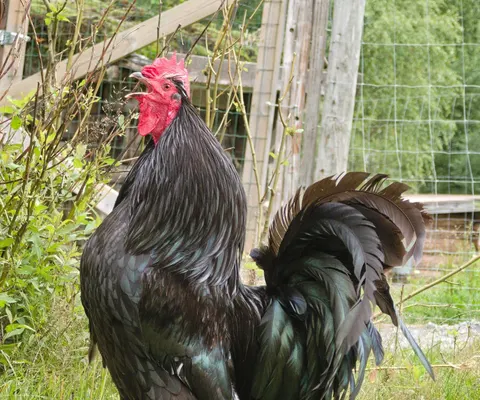
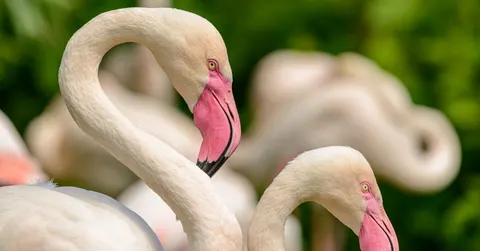
Keep wondering: the closest living dinosaurs are right outside, which is part of why roosters crow; their deep-time relatives were built to outlast almost anything, a bit like why turtles live so long; and feather color still does its ancient display job today, which is why flamingos are pink.

Join the conversation
Comments are reviewed before they appear. Be kind and stay curious.
Loading comments…