
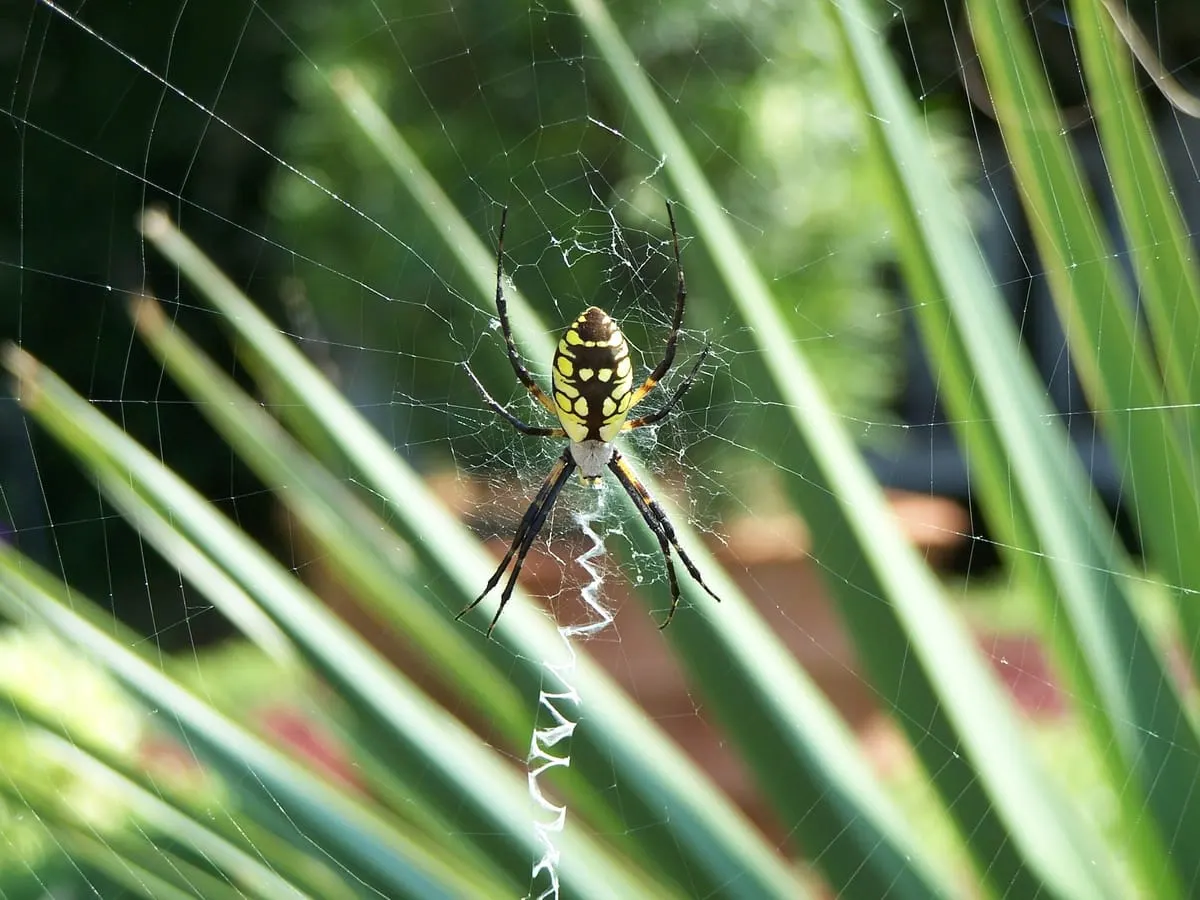
A spider web beaded with morning dew looks like jewelry, a bit of accidental beauty strung between two branches. It's nothing so gentle. That web is a trap, a tripwire, and a sense organ all at once, and building it is one of the most efficient hunting strategies in nature.
A trap that hunts while the spider waits
So why do spiders make webs? Above all, to catch prey without having to chase it. A web is a snare: flying and crawling insects blunder into it and get held fast by sticky capture threads, delivering food to a spider that simply waits nearby (Australian Museum). It's a brilliant trade. Instead of spending energy stalking fast, dangerous prey, the spider invests once in building the trap and then lets the trap do the work.
The stickiness is engineered. On a classic orb web, the spider lays down strong, dry silk for the spokes and frame, then coats only the spiral capture lines with droplets of glue, so the parts that catch insects are sticky and the parts the spider walks on are not (Australian Museum). That's also why a spider doesn't glue itself to its own web: it travels on the dry threads and steps carefully. The threads themselves are a remarkable material, which is the whole story behind how strong spider silk really is.
The web is also an ear
A web does something a simple net can't: it tells the spider what's happening. Many spiders have poor eyesight and lean on touch and vibration instead, and a web-builder reads the tiny tremors that travel along its silk (Australian Museum). A struggling fly, an approaching mate, a threatening wasp, each sends its own signature buzzing through the threads. In effect, the spider has stretched its sense of touch across the whole web, turning a doorway into a giant, listening fingertip.
Not every spider bothers
Here's the catch that surprises people: making webs isn't a universal spider thing. Only about half of all spider species build webs to catch prey (Burke Museum). The rest are hunters. Jumping spiders and wolf spiders have excellent eyesight and chase down or pounce on their prey, no web required. All spiders make silk, but they put it to different uses: even non-web-builders use it for egg sacs, for a dragline safety rope, and for "ballooning," where young spiderlings spin out threads and ride the wind to new ground.
And the silk itself deserves its reputation, as long as you state it carefully. By weight, spider silk is extraordinarily strong and tough, but the popular line that it's "stronger than steel" overshoots. As the engineer Michelle Oyen put it bluntly, "spider silk is not stronger than steel"; what's true is that, pound for pound, accounting for how light it is, silk's strength rivals or beats steel's, and it's far stretchier (University of Cambridge). For a thread a spider squeezes out of its body, that's still astonishing.
So the dewy web in the garden is less decoration than machine: a self-built trap that catches dinner, a sensor that reads the neighborhood, all spun from a material engineers still envy. And the spider that made it is just as likely to have a cousin nearby that builds nothing at all, and hunts on foot instead.
Keep wondering: another builder works in wax in why bees make honey, tiny minds run a society in do ants have brains, and a different insect sings for a mate in why crickets chirp.
Join the conversation
Comments are reviewed before they appear. Be kind and stay curious.
Loading comments…