
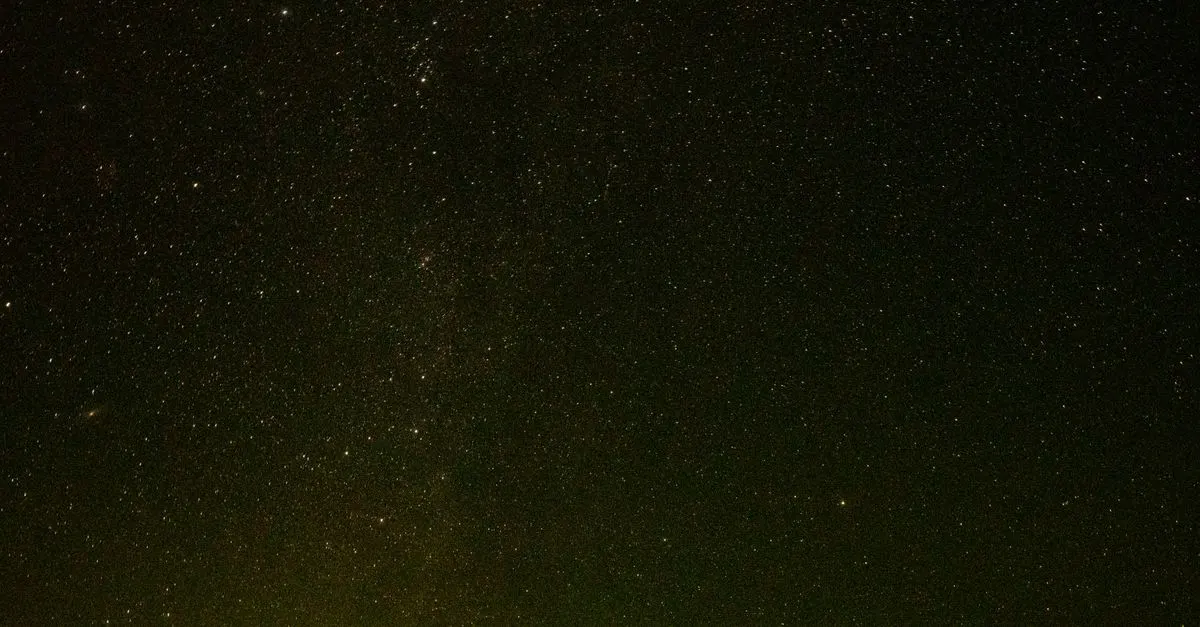
On a crisp night, the stars seem alive, flickering, shimmering, almost flirting with you from across the dark. But look carefully and you'll notice something odd: a few of the brightest "stars" don't flicker at all. They glow with a calm, steady light. Those are usually planets. So why do stars twinkle while a planet holds still?
One point of light, bent a thousand times
Stars twinkle because their light passes through Earth's restless atmosphere. Layers of air at different temperatures and densities are constantly moving and bending the light, so a star's pinpoint glow appears to wobble and flash. Planets don't twinkle much because they're close enough to look like tiny disks instead of single points, and the flickers across that disk cancel out.
How a churning atmosphere turns a pinpoint into a flicker
A star is unimaginably far away, so far that even through a powerful telescope, it remains a single, infinitely small point of light. That perfect pinpoint is the setup for the whole effect.
That point of light has to cross our atmosphere to reach your eye, and the atmosphere is anything but calm. It's a churning ocean of air pockets, each at a slightly different temperature and density. Warm air and cool air bend light by different amounts, the same reason a straw looks broken where it enters a glass of water. As starlight threads through all those shifting pockets, it gets nudged a little this way, then a little that way, many times over.
Because the star is a single point, every one of those tiny deflections shows up directly: the light arrives a hair brighter, then dimmer, from slightly different angles, many times a second. Your eye reads that rapid jitter as twinkling. The scientific name is stellar scintillation, but it's really just starlight surfing through turbulent air.
This is why stars twinkle most when they're low on the horizon, their light has to slice sideways through a much thicker wedge of atmosphere, and on nights when the upper air is especially turbulent.
So why do planets stay steady?
Here's the elegant part. Planets are in our cosmic backyard, millions of times closer than the stars. They're still far too distant to see as disks with the naked eye, but they're close enough that they aren't a true single point either. A planet is actually a small disk made up of many points of light packed together.
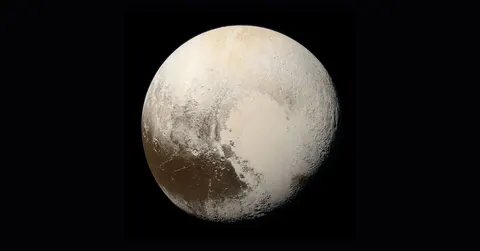
When that light crosses the turbulent atmosphere, each point in the disk twinkles, but they don't all twinkle in sync. One brightens while its neighbor dims. Averaged across the whole little disk, the flickers smooth out into a steady shine. So the rule of thumb every stargazer learns: if it twinkles, it's a star; if it glows steadily, it's probably a planet like Venus, Jupiter, or Mars; and if it streaks and vanishes in a second, it is a shooting star burning up in the same atmosphere. (One former member of that club didn't make the cut: here's why Pluto isn't called a planet anymore.)
The proof is above the clouds
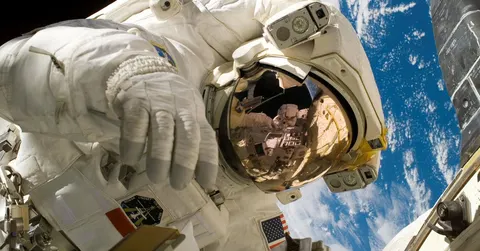
If the atmosphere is the culprit, then removing it should stop the twinkling entirely, and it does. Astronauts above the atmosphere report that stars shine with a flat, unwavering light. This is exactly why telescopes like Hubble and the James Webb Space Telescope are launched into space: from up there, every star is a crisp, steady point, free of the shimmer that blurs the view from the ground.
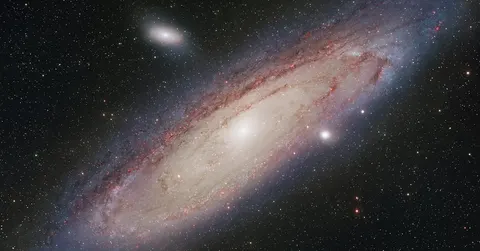
Astronomers on Earth fight back with a clever technology called adaptive optics. A telescope measures how the incoming light is being distorted, then flexes a deformable mirror hundreds of times per second to cancel out the wobble in real time. In effect, it un-twinkles the stars, recovering some of the sharpness that only space used to offer. That sharpened view is how astronomers have watched stars whip around the giant black hole at the center of our galaxy, an object that will one day evaporate into nothing itself.
The whole show happens in the last few miles
When you watch a star flicker, you're not seeing anything happening at the star. That light left its source years, centuries, even millennia ago and crossed the near-emptiness of space without a flutter. A few of those stars may have already burned out, the way our own sun one day will, their last light still on its way to us. The entire shimmer and flash is performed in the last fraction of a second of the journey, in the few miles of moving air right above your head. The twinkle isn't the star's. It's our atmosphere's signature, written onto ancient light at the very last moment. The flicker you love about a starry night is really Earth's air leaving its fingerprint on light that traveled for centuries undisturbed.
Keep wondering: the same starlight can tell you how big the universe really is, and the atmospheric bending behind twinkling is a cousin of the scattering that makes the sky blue.

Join the conversation
Comments are reviewed before they appear. Be kind and stay curious.
Loading comments…