
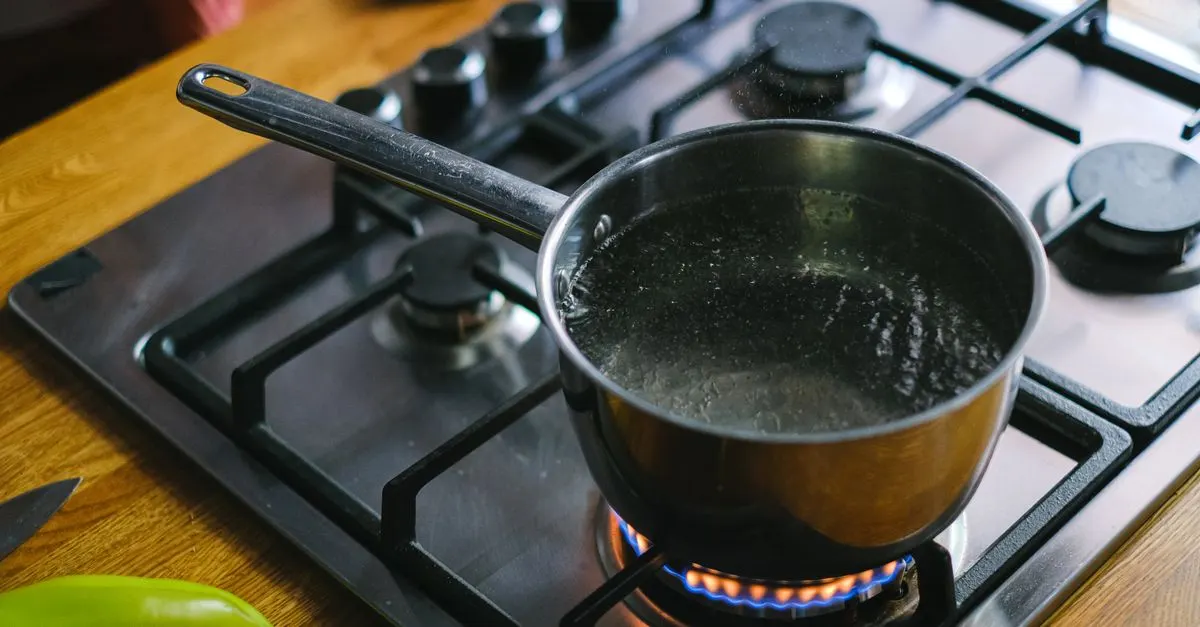
You fill the pot, salt it, walk away for ten seconds to find the colander, and by the time you turn back a white froth is sprinting up the sides and hissing onto the burner. Plain water never did that. It would boil all day and stay politely in the pot. Drop in a handful of spaghetti, though, and the whole thing tries to escape. The pasta is doing something to the water, and the something has a name.
Pasta water boils over because of starch foam
Pasta leaks starch into the water, and that starch coats the steam bubbles so they stop bursting and pile up into a sticky foam that traps steam and climbs the pot (The Naked Scientists). The bubbles are the same bubbles you always get from boiling. What changes is that they no longer pop. They survive, stack, and turn into a froth with nowhere to go but up.
That is the whole trick, and it explains why clean water behaves and starchy water does not.
What the starch actually does to a bubble
In plain water, a steam bubble rises, reaches the surface, and pops. The steam puffs into the air, the bubble is gone, and the water level barely moves. Bubbles are loners. They burst the instant they break the surface.
Starch ruins that. Pasta is loaded with it, and as the pieces soften, starch molecules dissolve out and begin to form a thin gel in the water (The Conversation). The gel makes the bubble walls stretchy and sticky instead of thin and fragile. A starch-coated bubble reaches the surface and, rather than popping, just sits there. The next bubble arrives and sits on top of it. Then the next. Soon you have a mat of hot, sticky bubbles, and that mat is a lid.
That lid is the real problem. Steam keeps boiling up from the bottom of the pot, but now it cannot get out, because the foam blanket is trapping it. The pressure has to go somewhere, so it shoves the whole foamy mat upward, over the rim, and onto your stove (Gizmodo). The overflow is not really boiling water spilling. It is trapped steam lifting a raft of foam off the top.
Why the wooden spoon trick works
Lay a wooden spoon across the top of the pot and, for a while, the foam stops short. People treat this as kitchen folklore, but it is straightforward physics. As the foam climbs and touches the spoon, the wood pops the bubbles on contact, because it sits cooler than the boiling water and its porous, sponge-like surface bursts the delicate bubble walls the moment they meet it (The Conversation). Burst the top of the mat and the trapped steam underneath finally has a way out. No lid, no overflow.
There is a catch, and it is an honest one. The spoon only works while it stays cooler than the water. Sit it across a roaring pot long enough and it soaks up heat and moisture until it matches the temperature underneath, and then it stops bursting bubbles. That is why half the internet swears the trick is a myth: they left the spoon there too long and watched it fail. It is real, it just has a clock on it.
The other fixes, and why each one works
Once you see the foam as the enemy, every kitchen remedy makes sense. A bigger pot gives the rising mat more headroom before it reaches the rim, so it has farther to climb and more time to settle. Turning the heat down the moment the pasta goes in slows the steam coming off the bottom, so the foam never gets the push it needs to surge. A small splash of oil floats on top and helps break the surface film so bubbles burst instead of building. And if you ever cook rice, the same starch foam is why rinsing it first, which washes off loose surface starch, keeps the pot far calmer.
None of these are competing theories. They are four ways of saying the same thing: either give the foam more room, or help the bubbles pop. That is the entire fight.
The quiet lesson in the pot
What makes this one satisfying is how small the cause is. A few grams of starch, invisible in the water, completely rewrites how the whole pot behaves. The energy was always there in the boil. Starch just changed the rules about which bubbles get to survive, and that one change turned a calm pot into a volcano.
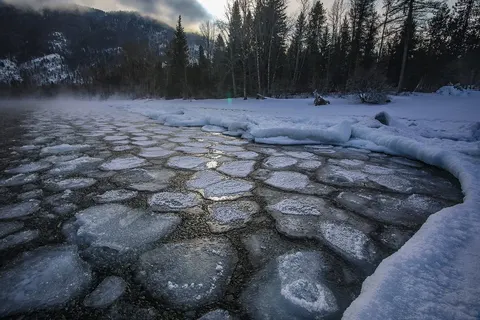
It is the same kind of hidden-mechanism story that runs under a lot of everyday physics, the way salt secretly lowers water's freezing point on an icy step, or the way ice quietly floats because freezing makes water less dense. Nothing dramatic is announced. A tiny change in the small print, and the whole thing behaves differently.
Keep wondering: see why popcorn pops when trapped water flashes to steam, then why salt melts ice on a winter morning, and why ice floats when almost everything else sinks.


Join the conversation
Comments are reviewed before they appear. Be kind and stay curious.
Loading comments…