
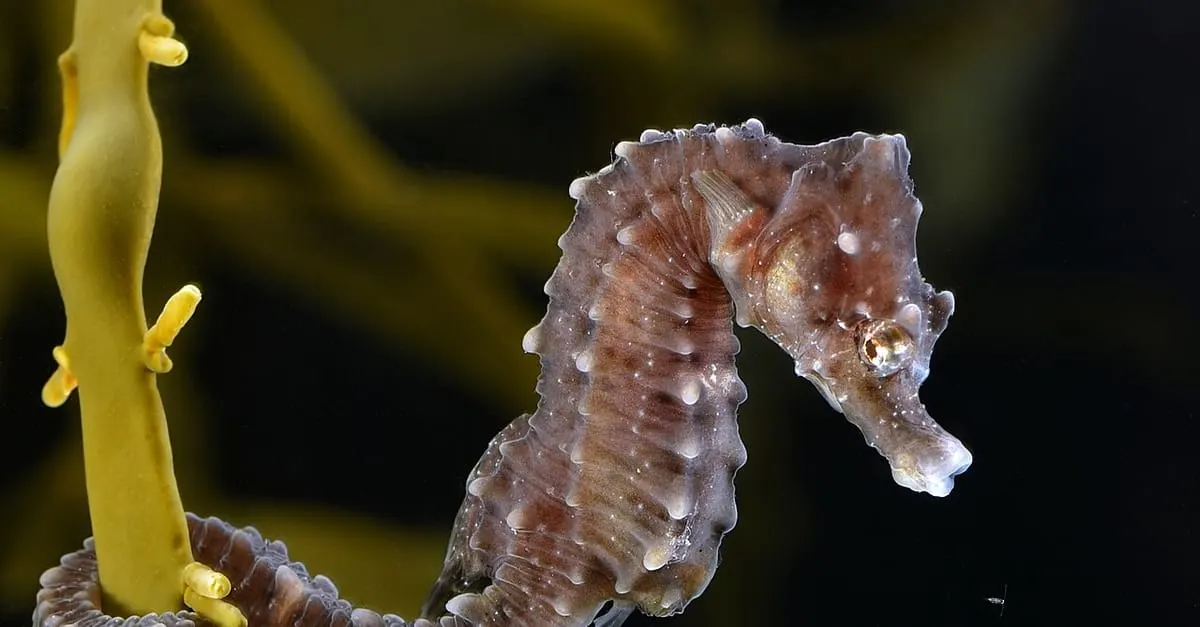
In seahorses, the father gets pregnant. He carries the developing young inside his own body, supplies them with oxygen and food, and then goes into labor. So how do seahorses give birth? The female lays the eggs, the male handles the pregnancy, and the handoff between them happens in a few seconds flat. Almost no other animal on the planet splits the job this way.
In seahorses, the male carries and delivers the young
The female deposits her eggs into a pouch on the male's belly, and the male seahorse fertilizes, carries, and gives birth to the young himself (University of Sydney). This is real pregnancy, with a placenta-like brood-pouch structure, which I will get to. Seahorses belong to a small family of fish, the Syngnathidae, that also includes pipefish and seadragons, and they are the only known vertebrate lineage in which males carry the developing young and give birth (PubMed).
It starts with a long courtship. Pairs spiral around each other, change color, and drift upward snout to snout in a dance that can run for hours (Wikipedia). Then the female lines up with the male and uses a tube called an ovipositor to push her eggs into his brood pouch. A single transfer can move anywhere from dozens to thousands of eggs, and after that her part is basically over. The eggs are now his.
The handoff happens in seconds
What comes next is fast. As the eggs go in, seawater floods the pouch, and fertilization happens inside that closed space during a window of about six seconds (Wikipedia). Then the pouch seals shut. From the outside, the male just looks like he is putting on weight. Inside, hundreds of embryos are settling into the pouch wall to grow.
That wall is where things get interesting. The brood pouch is not a passive bag; it is a living incubator that does much of what a womb does.
His pouch becomes a placenta
As the pregnancy advances, the pouch wall thins and grows a dense web of tiny blood vessels that brings the father's blood supply close to the embryos (The Conversation). A University of Sydney team studied this in the pot-bellied seahorse, Hippocampus abdominalis, and found that the distance between the father's blood and his young shrinks dramatically toward the end of the pregnancy. That helps move oxygen and carbon dioxide across the pouch, which is why the researchers describe the structure as placenta-like rather than identical to a mammalian placenta (University of Sydney).
The pouch does more than breathe for the brood. It supplies nutrients, helps manage waste, and slowly adjusts the saltiness of the fluid inside until it matches the open sea (Wikipedia). By the time the babies leave, they have already been tuned to the water they are about to enter. A fish father is solving the same problem a pregnant mammal solves, using completely separate equipment.
Biologists call this convergent evolution, where unrelated animals arrive at the same solution independently. The pattern repeats all over the ocean, from the way fish pull oxygen out of water with their gills to the chemistry that lets deep-sea creatures make their own light.
Labor, contractions, and a burst of fry
Pregnancy length varies by species and conditions. In the pot-bellied seahorse study, it lasted about 30 days (PubMed). When the young are ready, the male's body goes into what really does look like labor. He grips a blade of seagrass with his tail, then pumps and bends, squeezing the pouch with muscular contractions until the babies shoot out into the water in clouds.
The numbers can be large for an animal this small. The pot-bellied seahorse research described a male supporting up to about 1,000 developing young, but clutch size varies by species (PubMed). Each newborn is a miniature, fully formed seahorse, often no bigger than a grain of rice. Birth can take hours, and a recovered male may be ready to be pregnant again soon after releasing a brood.
Then comes the harsh part. Seahorses generally provide no extended parental care after the fry leave the pouch, and the young fend for themselves (University of Sydney). Survival from release to adulthood is low, but exact rates vary widely by species, habitat, and study conditions. That uncertainty is another reason not to attach one universal survival percentage to every seahorse brood.
Why pregnancy moved to the males at all
Biologists are still working out the full answer here, so this part comes with real uncertainty. One leading idea is that male pregnancy lets a pair produce more young overall: while the male gestates one brood, the female is free to start building her next batch of eggs, so the pair effectively runs two production lines at once. Whatever the original driver was, the trait is now fixed across the whole seahorse family.
Many seahorse species are under pressure from habitat loss and harvesting. The tiny dwarf seahorse, for example, is listed on CITES Appendix II so its international trade can be tracked, though the United States declined to list it as threatened or endangered in 2020 (NOAA Fisheries). Either way, the biology of the pregnant father is part of what makes seahorses worth protecting. It is a hard thing to evolve twice.
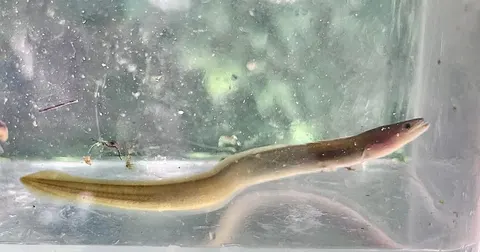
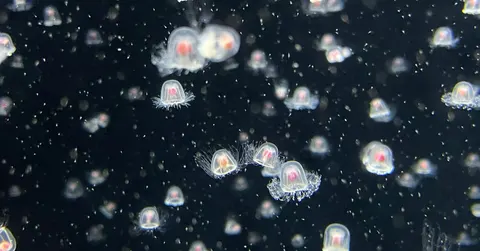
Keep wondering: the ocean is full of reproduction that ignores our intuitions, like the way eels vanish to a distant patch of sea to breed. And if long lives interest you, meet the animal that may be effectively immortal, or find out why turtles live so long.

Join the conversation
Comments are reviewed before they appear. Be kind and stay curious.
Loading comments…