
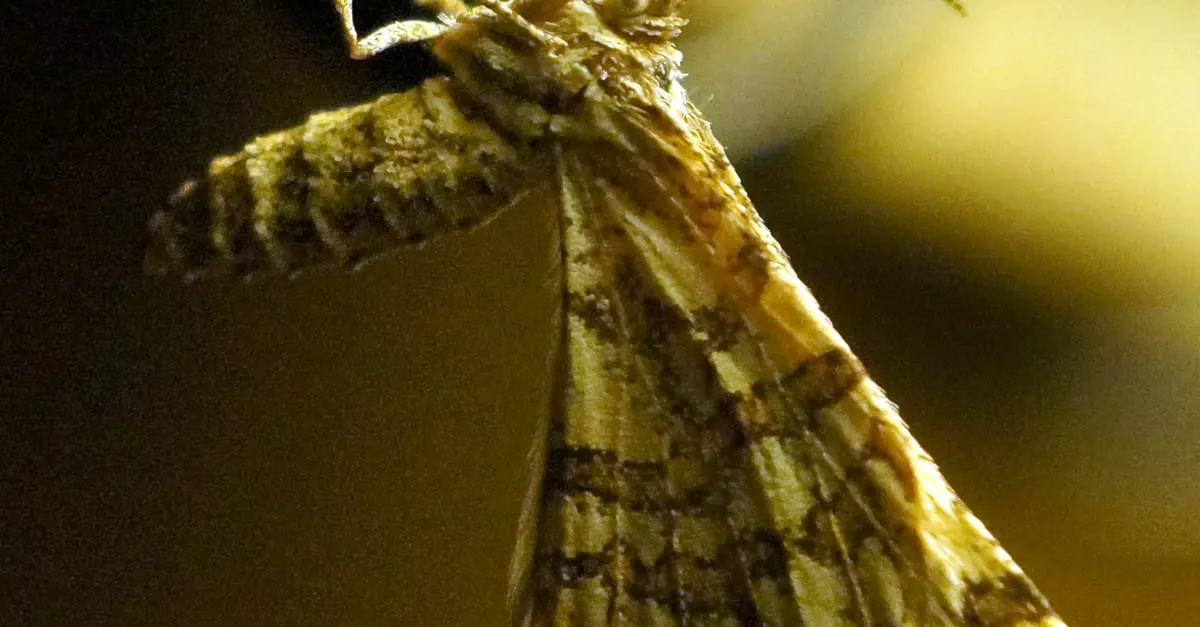
A single moth at a porch light, hanging upside down off the lampshade, looping back every time it drifts away. We have been watching this exact scene since people first sat around fires, and we still cannot say for certain why it happens. The phrase "like a moth to a flame" is old enough to feel like settled fact. The science underneath it is anything but.
No one is fully sure, and moths may not be "attracted" at all
Why are moths attracted to light? The honest answer is that no one knows for certain, and the newest research suggests they may not be steering toward the light so much as having their flight scrambled by it. The people who study it the hardest are the first to admit the uncertainty. "This has been a prehistorical question. In the earliest writings, people were noticing this around fire," says Jamie Theobald, a biologist at Florida International University who worked on the most detailed study yet (FIU News). His blunter line: "It turns out all our speculations about why it happens have been wrong" (FIU News).
So treat what follows as the state of an open argument, not a closed case. There are two main ideas, one of them very old and one of them only a couple of years old, and they disagree about something basic: whether moths are drawn toward the light at all.
The old idea: the moon as a broken compass
For decades the popular explanation has been transverse orientation. A moth navigating at night keeps a far-off light, the moon or a bright star, at a fixed angle to its eye. Because the moon sits at what is effectively optical infinity, that angle never drifts, so holding it steady keeps the moth flying in a straight line for miles (Wikipedia).
Swap the moon for a streetlamp and the trick breaks. A nearby light isn't at infinity, so the angle to it changes fast as the moth flies past. The moth keeps correcting to hold that angle and ends up spiraling tighter and tighter into the bulb. It's a tidy story, and it has one real virtue: it explains the spiral. It also has a problem. There isn't much hard evidence that wild moths actually navigate by the moon this way, and the idea was mostly built backward from the behavior we wanted to explain.
The new idea: they are trying to keep their backs to the sky
In 2024 a team led by Samuel Fabian at Imperial College London put cameras on the question. They used motion capture in the lab and high-speed infrared video in a Costa Rican cloud forest, collecting 477 videos across 10 insect orders, then rebuilt the 3D flight paths (Nature Communications; FIU News). What they found wasn't attraction. It was a steering reflex going haywire.
Insects turn their dorsum, their back, toward the light, then fly at right angles to it (Nature Communications). "What we kept finding is that insects, such as dragonflies, moths, butterflies and other night-flying insects as well, were tilting their backs, which we call the dorsal axis, their dorsum, towards the light," Fabian says (Mongabay). This is the dorsal-light response, and in nature it's a way to stay upright. Gravity is hard to feel mid-flight, when accelerations mask which way is truly down, so an insect uses the brightest thing in view, the sky, as its definition of "up" (Scientific American).
Point a moth's back at a lamp instead of the sky and its lift goes the wrong way. "That means that all of their flight forces they're producing, the lift, is they're not pointing in the right direction for them to continue flight, they're going to start curving. And so that's why we see them circling, and not really spiraling in, cruising around and round and round and seeming completely stuck and unable to leave," Fabian says (Mongabay).
The cameras caught three signatures of this. Orbiting, a steady banked circle with the back tipped toward the bulb. Stalling, a steep climb away from the light that bleeds off speed. And inverting, where an insect crossing over the top of the light flips upside down and dives (Nature Communications; Scientific American).
What the new study quietly demolishes
Here is the part that reframes everything. If moths were navigating by a celestial compass, you'd expect them to commit to one side of the light, the way you'd keep the moon over your left shoulder the whole journey. They don't. When the researchers switched the light's position, insects "readily changed their side facing the light," which is exactly what a compass-follower should never do (Nature Communications). The paper says this refutes the basic premise of the lunar-navigation story.
And the most important correction is the simplest. Moths are not aiming at the light. Their velocity points sideways to it, not at it (Nature Communications). What looks like a creature hurling itself at a flame is, up close, a creature trying to fly level around a false sky and never managing to get out from under it.
So what is actually settled
Less than the confident captions suggest. It's settled that the dorsal-light response is real, that insects bank their backs toward bright lights, and that this produces the orbiting, stalling, and inverting we see at any summer porch (Nature Communications). It's settled that "flying straight into the light" is the wrong mental picture. What's still open is whether the dorsal-light response is the whole answer or just the cleanest piece of it, and why some species and some wavelengths pull harder than others. The 2024 paper calls itself the most plausible model so far, not the last word, and it studied insects already near the light, not what first lures them in from the dark.
That gap is the honest one to sit with. The next time a moth circles your porch light without ever quite landing on it, you're watching an animal that thinks it has found the sky and can't understand why up keeps moving. We can describe that confusion now in careful detail. We still can't claim we've fully explained it.
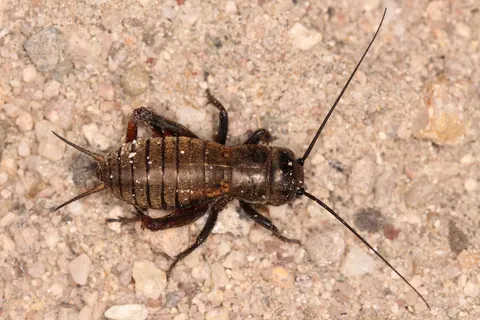
Keep wondering: the lamp is standing in for the moon, which raises the question of why the Moon shines at all; other night insects fill the dark with sound instead of chasing light, which is why crickets chirp; and some creatures make their own glow rather than orbit someone else's, which is why sea creatures glow.
Join the conversation
Comments are reviewed before they appear. Be kind and stay curious.
Loading comments…