
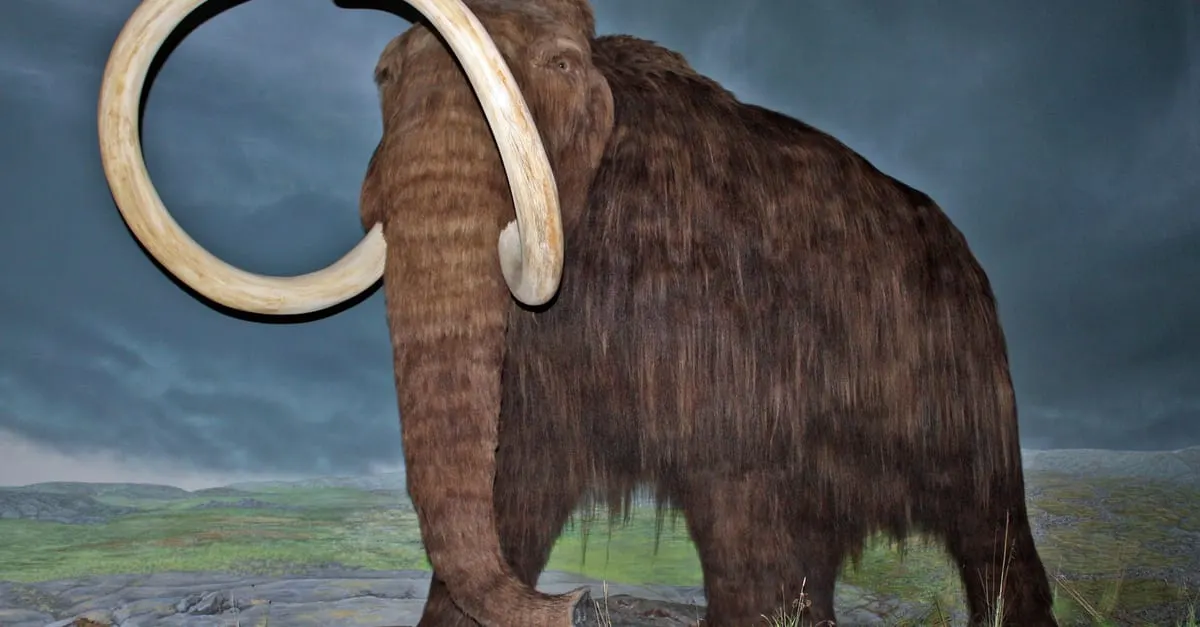
The Great Pyramid of Giza had stood for centuries, and somewhere in the cold Arctic Ocean a herd of woolly mammoths was still alive. On Wrangel Island, off the coast of Siberia, the last of them grazed until about 4,000 years ago (Natural History Museum). So why did woolly mammoths go extinct, and why did it take a species this tough, with these last holdouts hanging on past the age of pharaohs, so long to vanish completely? The honest answer is that scientists are still arguing about it.
What we know, and what is still in dispute
Woolly mammoths most likely went extinct from two pressures hitting at once: rapid warming at the end of the last ice age destroyed the cold grassland they depended on, and human hunters spread across that same range as it shrank (Natural History Museum). They had roamed the northern grasslands for hundreds of thousands of years before that. As the last ice age ended, the climate warmed fast and the cold dry steppe they fed on gave way to forest and bog, just as people were moving into the same country. Mainland mammoths were gone by roughly 10,000 years ago (Natural History Museum). Most researchers think climate and hunting worked together. What they disagree on is how much each one mattered.
The habitat that melted out from under them
Mammoths were built for a world that no longer exists: the mammoth steppe, a vast band of cold, dry grassland that stretched across the north during the ice age. Their thick coat and fat reserves were the cold-weather equivalent of the desert kit you see in a camel's humps, tuned for one set of conditions and useless once those conditions changed. As Earth warmed out of that age, that habitat collapsed. Grasses and willows gave way to forest, tundra, and waterlogged ground that suited mammoths far worse.
The numbers are stark. One 2008 study reconstructed the climate mammoths could tolerate and found that about 90 percent of their suitable range disappeared between 42,000 and 6,000 years ago, shrinking from roughly 8 million square kilometers to under 1 million (PLOS Biology). Adrian Lister, a mammoth expert at the Natural History Museum in London, has argued that climate change played a real part, and that the speed of the warming was a big problem on its own. Mammoths had survived plenty of cold-to-warm swings before. This one came too fast for them to track north and find new grassland in time (Natural History Museum). The same warming still works on the Arctic today, thawing the permafrost that keeps coughing up frozen mammoths, the cold ground that preserved them now melting from underneath.
Where the people come in
Here is the part that gets contested. Humans and mammoths overlapped for a long time, and there is clear evidence people hunted them. The question is whether hunting was a major cause or a finishing blow on a population the climate had already wrecked.
The same 2008 model offers a clue. By the time warming had squeezed mammoths into scattered pockets, the survivors were so few that very light hunting could have tipped them over. Killing as little as one mammoth per person every three years would have been enough to drive even a healthy local group to extinction (PLOS Biology). A shrinking species does not need to be slaughtered. It just needs to lose a few more than it can replace, year after year.
So the mainstream picture is a one-two punch: a warming world took away the food and the room, and human pressure kept the dwindling herds from ever recovering. Some researchers lean harder toward climate, others toward hunting, and the relative weight is exactly what remains unsettled.
The island that kept its mammoths for 6,000 extra years
The strangest chapter happened on Wrangel Island. When rising seas cut the island off around 10,000 years ago, a tiny band of mammoths got stranded there, and they did not die. They held on for nearly six thousand more years while the rest of their kind were already gone. Plenty of animals are freakishly good at hanging on, from tardigrades that shrug off the vacuum of space to deep-sea oddballs, but a herd of elephants outlasting its own species by six millennia is a different kind of stubborn.
For a long time the assumption was that this isolated, inbred little population must have slowly rotted from the inside, a textbook case of a gene pool too shallow to survive. A 2024 study published in the journal Cell tested that idea directly, sequencing genomes spanning the island's entire occupation (Cell). The founding group was startlingly small, at most eight individuals, and it grew to a few hundred within about 20 generations. Yes, the mammoths were inbred and low in genetic diversity. But the population stayed stable for millennia and was actually weeding out its most harmful mutations over time (ScienceDaily).
That overturns the tidy story. As Love Dalen, the study's senior author, put it, the team can now confidently reject the idea that the population was simply too small and doomed to die out for genetic reasons. His blunter version: it was probably just some random event that killed them off, and if that event had not happened, we might still have mammoths today (ScienceDaily). The genomes stop a few centuries short of the very end, so whatever struck the final blow, a disease, a freak run of bad weather, a crash in their food, left no genetic fingerprint we have found yet.
A death with no single cause
It would be neater if there were one villain. There isn't. The mainland mammoths most likely fell to a warming planet and the hunters who arrived as the cold left, with the exact split between those two still genuinely open. The island survivors seem to have died from something else entirely, a piece of bad luck we cannot yet name. A species can be killed slowly by the world changing around it, and then, at the very end, by accident. The last mammoth that ever lived was alive while the pyramids stood, and nobody can say for certain what it died of.
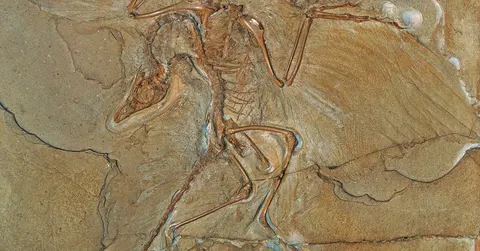
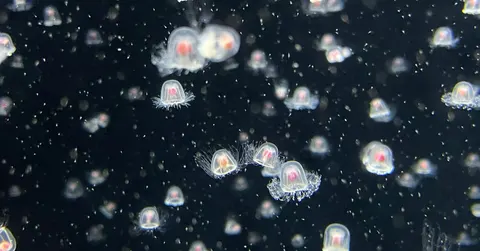
Keep wondering: mammoths are far from the only extinct giants we piece together from bones, which is where you get questions like whether dinosaurs had feathers; extinction also makes the rare survivors stranger, like the species that may have cracked dying in whether there is an immortal animal; and long life has its own quiet champions, part of why turtles live so long.

Join the conversation
Comments are reviewed before they appear. Be kind and stay curious.
Loading comments…