
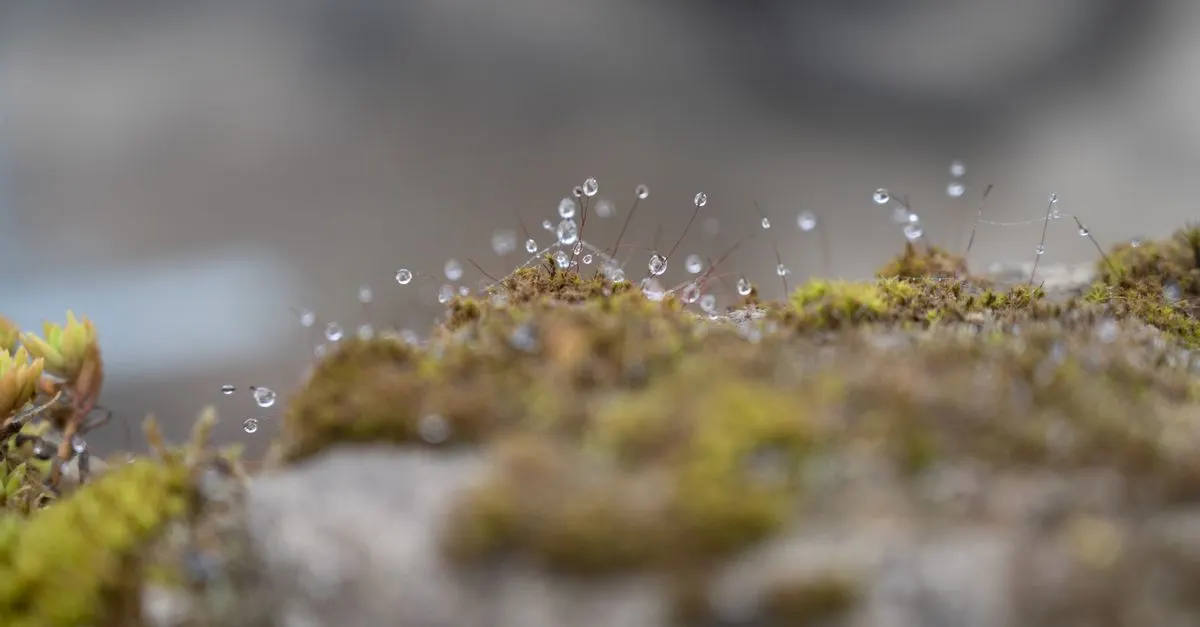
A tardigrade is smaller than a grain of salt, looks like a pudgy eight-legged gummy bear, and lives in the wet film on a patch of moss. It is famous for surviving things that should kill it: boiling, freezing, the vacuum of space. But strip away the survival stunts and a plainer question remains, the one a kid asks first. This blobby little water bear has to eat something. So what do tardigrades eat when they are awake and hungry, and how does an animal that small catch a meal at all?
Tardigrades stab open cells and drink the insides
Most tardigrades eat by piercing the cells of plants, algae, and moss with a pair of needle-like mouth spears, then sucking out the fluid inside (Ask A Biologist, ASU). Many also feed on bacteria, and the larger, fiercer species are full predators that hunt rotifers, nematodes, and even other tardigrades. Strange table manners are everywhere in the animal world, like a starfish that pushes its stomach out through its mouth to eat. So there is no single tardigrade diet. There is a feeding method, the stab-and-sip, and a menu that swings from gentle vegetarian grazing to active hunting depending on the species.
How the stab-and-sip mouth actually works
Tardigrades do not chew, and they do not swallow solid chunks the way you do. They have a round mouth backed by a small but vicious piece of equipment. Instead of teeth, a tardigrade carries two sharp spears called stylets, which it uses to pierce its food and drink the insides like juice.
Those stylets are tougher than they sound. Researchers who looked closely at the tardigrade feeding apparatus found the piercing stylets are built almost entirely of aragonite, a hard crystalline form of calcium carbonate, the same mineral that stiffens seashells. A tardigrade is, in effect, walking around with two tiny mineral daggers folded into its head.
Behind the daggers sits the pump. A tardigrade has round mouths with muscles in their heads that work like cheeks to suck up food. Bite into a plant cell with the stylets, and a muscular sucking throat called the pharynx pulls the liquid contents straight through the mouth tube and into the gut. Picture a hummingbird working a flower, except the flower is a single algae cell and the beak is a pair of calcium spears. Stab, then sip. The whole thing costs almost no energy, which suits an animal living on whatever it can find in a smear of water.
The full setup is more refined than two loose spears. Scientists who mapped the feeding apparatus describe it as several linked parts: a buccal ring at the lips, a rigid buccal tube, a stylet system, and the lining of a muscular sucking pharynx. The stylets ride inside protective sheaths and are braced by supports, so they punch forward like a pair of retractable lances rather than flopping around. The hardest, most aragonite-rich parts are the piercing tips, exactly where the animal needs rigid edges to break a cell wall, while parts under bending stress hold more flexible chitin. It is a small, well-engineered drill, and the design tells you everything about the diet: this is a mouth built to puncture and drain, not to bite and grind.
The vegetarians: moss, algae, and a film of water
A lot of tardigrades are mild-mannered grazers. They live in the same place they eat: the thin layer of moisture on lichens and mosses, plus soil, sediment, leaf litter, and sand dunes (Carleton SERC). That mossy water film is a whole pantry. It is packed with the cells of plants and algae and crawling with bacteria, and a grazing tardigrade simply drifts through it puncturing cells and draining them one by one.
These herbivorous species are why tardigrades and moss are so tied together in people's minds. The animal that survives space is, most of the time, doing something far less dramatic. It is sucking the juice out of moss cells in a damp corner of your garden, the way an aphid drains a leaf, just at a scale you would need a microscope to watch.
It is worth being honest about how varied this is. Tardigrades live almost everywhere there is a film of water, from Himalayan peaks to deep-sea sediment to the lichen on a city wall, and the menu shifts with the address. The reference descriptions land on a deliberately broad summary: tardigrades feed on the fluids of plant cells, animal cells, and bacteria. A moss-dweller might run mostly on plant and algae cells; one living in damp soil or sediment might rely more on bacteria and tiny animals. Same body plan, same stab-and-sip mouth, different local pantry.
A side of bacteria and dead matter
Bacteria deserve their own mention, because for a lot of tardigrades they are a real part of the meal rather than an accident. The wet moss and soil where water bears live is dense with bacteria, and those microbes are an easy, protein-rich food a tardigrade can take in alongside plant and algae cells. Some species also feed on decaying organic material and the microbes growing on it, which makes them part of the cleanup crew in their tiny ecosystems rather than pure grazers or pure hunters.
That mixed diet matters for how scientists think about tardigrades in the wild. A single moss cushion can hold grazers draining algae, scavengers working through bacteria and decay, and predators hunting the smaller animals around them, all of them the same kind of creature wearing the same kind of mouth. The stylets are general-purpose enough that what a given tardigrade eats often comes down to what is nearby and easy, not a rigid rule written into the species.
The hunters: rotifers, nematodes, and cannibals
Not every water bear is a vegetarian, though, and some take the stylets in a much darker direction. Large species are active predators. The best-known is Milnesium tardigradum, described as an omnivorous predator that actively hunts its prey, feeding on rotifers, nematodes, and algae. Its mouth is armed with the same calcium carbonate stylets, which pierce smaller invertebrates and release the cellular contents for the tardigrade to drink.
And it does not draw the line at its neighbors. Milnesium has been recorded eating smaller tardigrades from other genera, so a water bear can absolutely end up as another water bear's lunch. The hunting can be brisk: one study clocked a single adult consuming as many as 13 rotifers in 17 minutes. For an animal a fraction of a millimeter long, that is a serious predator, the moss-world equivalent of a wolf working through a flock.
The hunt also changes as the animal grows up. Young Milnesium are clumsier feeders, and the same record notes that the youngest stages can take over fifteen minutes to drain a single rotifer, absorbing the contents through the prey's shell because they cannot yet pierce it with their stylets. Only after their third molt can they swallow prey whole. So even within one predatory species, the answer to what a tardigrade eats and how depends partly on how old the hunter is.
The twist: when a tardigrade eats nothing at all
Here is the part that ties the diet back to the tardigrade's reputation. The same animal that drains 13 rotifers in a sitting can also go a very long time eating absolutely nothing.
When the water around a tardigrade dries up, the animal pulls in its legs, expels most of its body water, and curls into a shriveled barrel called a tun. In that state its metabolism drops so low it is barely detectable, and feeding stops completely. No stabbing, no sipping, no hunting. The stylets and the sucking pharynx sit idle. A tun can hold out like this for years, waiting, and this shutdown is exactly how a tardigrade survives space and other extremes. Only when water returns does the animal swell back up, wake up, and start feeding again.
So the honest answer to what a tardigrade eats has a strange footnote: sometimes, nothing. Its eating life is not a steady drip of meals but a series of feasts separated by long dry pauses where the whole question of food is simply switched off. That on-off pattern, gorge in the wet, fast in the dry, is part of what lets such a small body ride out conditions that would starve almost anything else.
Look closely and the menu tells you something about the animal. The tardigrade is not really one creature with one diet. It is a body plan, two mineral daggers and a sucking throat, that nature has aimed at moss cells in some species and at living prey in others, and that can power down and skip meals for years when the world runs dry. That trick of pausing has fed a myth worth correcting: whether tardigrades are actually immortal, and why the honest answer is no. That flexibility, more than any single food, is what keeps water bears thriving in places almost nothing else can stomach. It is the same patient toughness you find in the deep ocean's creatures that never see the sun, or in the rare animal that seems to cheat death entirely.
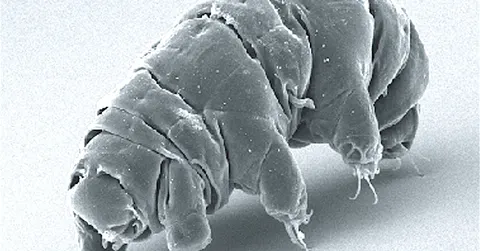
Keep wondering: see how tardigrades survive the vacuum of space, meet the animal that may be effectively immortal, then dive into how deep the ocean really goes and the life waiting down there.
Join the conversation
Comments are reviewed before they appear. Be kind and stay curious.
Loading comments…