
We call it the Blue Planet, but blue only describes the lid. Underneath sits the largest living space on Earth, and almost none of us will ever see it: a cold, black world that drops away for miles. Most of the seafloor has never been mapped in any detail. So how deep does it actually go, and what could possibly be alive down there in the dark?
Nearly 7 miles straight down
Start with the bottom of the bottom. The deepest known spot on the planet is the Challenger Deep, a slot in the Pacific's Mariana Trench that sits about 36,000 feet, nearly 7 miles, below the surface. Drop Mount Everest into it and the summit still wouldn't break the surface. It would sit there with more than a mile of water on top of it.
That number is hard to feel as a number. So take the dive yourself, layer by layer.
Five worlds, stacked on top of each other
The ocean isn't one place. It's a stack of wildly different worlds, and each one is darker, colder, and stranger than the last.
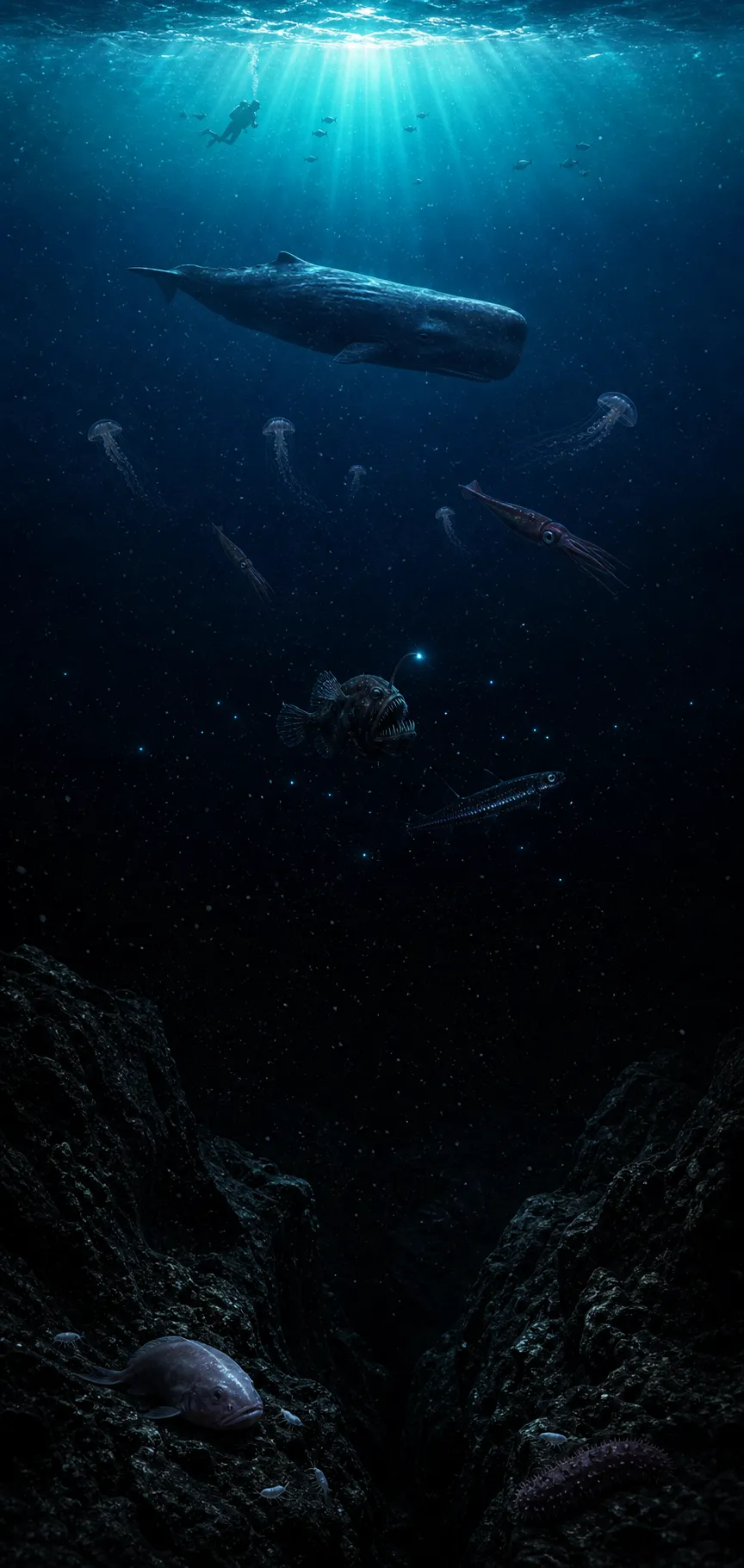
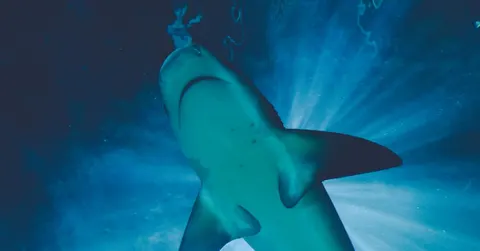
The top slice, the first 650 feet or so, is the sunlit zone. This is the ocean you picture: reefs, turtles, tuna, dolphins, and the sharks that patrol it (which raises its own odd question, namely whether sharks ever actually sleep). It's a thin, bright film on a very deep planet, and basically everything you've ever seen underwater lives in it.
Below that the light starts to die. From roughly 650 to 3,300 feet is the twilight zone, where the blue fades to gray and then to almost nothing. Plants can't grow, so the rules change: it's all hunters and scavengers now, and many of them make their own light to find food and mates.
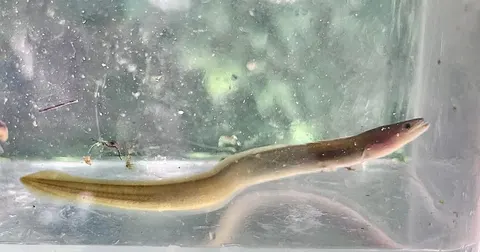
Push past 3,300 feet and you hit the midnight zone. Total darkness, permanent, never once touched by the sun. The water sits a hair above freezing. And it's full of nightmares with teeth: anglerfish dangling glowing lures, gulper eels, vampire squid. Keep going and the floor flattens into the abyssal plain, then cracks open into the trenches that bottom out at the Challenger Deep.
The crush that shapes everything
The deep sea's defining feature isn't the cold or the dark. It's the pressure. Every 33 feet you go down adds roughly another atmosphere squeezing in from every direction at once.
At the bottom of the Challenger Deep that's over 1,000 atmospheres, the rough equivalent of parking a few cars on a single fingertip. Send a styrofoam cup down there and it comes back the size of a thimble, the air crushed clean out of it. That same force is exactly what the trench would do to an unprotected human body, going straight for the air pockets we carry around inside us.
This is why the deep stays unexplored. To go down you need a vehicle built like an armored ball, and even then the margin for error is brutal. It's genuinely easier to photograph the surface of Mars than to map our own seafloor, which is the heart of how little of the ocean we have actually explored.
A graveyard, a record, and two men in a steel ball
Drag the dive back up and you pass a strange roll call of human history, each artifact frozen at the depth it came to rest.
The Titanic sits about 3,800 feet, nearly 2.4 miles down, found in 1985. It's the same depth that killed the Titan submersible in 2023, lost on its way down to photograph that very wreck. Deeper still, at 4,790 feet, lies the battleship Bismarck, hunted down in 1989 by Robert Ballard, the man who'd found the Titanic four years earlier. And further down than any of them, at about 21,180 feet sits the deepest shipwreck ever found, the destroyer escort USS Samuel B. Roberts, sunk in the Battle off Samar and located in 2022.
Then there's the record nobody mentions enough. On January 23, 1960, two men, Jacques Piccard and Don Walsh, rode a steel sphere called Trieste all the way to the bottom of the Challenger Deep. Humans reached the deepest point on the planet a full nine years before we walked on the Moon, and then, for the next half-century, almost nobody went back.
And still, things live down there
You'd expect a dead zone. You'd be wrong. Snailfish have been filmed swimming calmly past 27,000 feet, their bodies built so the crushing pressure simply passes through them. Pale amphipods swarm anything edible that drifts down. Sea cucumbers and weird microbes carpet the mud.
The real shock sits around hydrothermal vents, splits in the seafloor where superheated, mineral-loaded water blasts up from inside the Earth. There's no sunlight to power anything, so whole communities run on chemosynthesis instead: bacteria turn the vent chemicals straight into energy, and that feeds gardens of giant tube worms, ghost-white crabs, and clams in a place that should be barren. These ecosystems quietly rewrote biology. Life, it turns out, doesn't strictly need the sun, which is exactly why astrobiologists keep eyeing the ice-covered moons of Jupiter and Saturn and wondering what might be down there.
The biggest wilderness left is below us
Most of the room for life on this planet is down there in the dark, and we've laid eyes on a sliver of it. Deep-sea expeditions still pull up animals nobody has ever seen, on a routine basis. Right now, in the black water under the waves, there are almost certainly creatures alive that have no name and no photograph. The last great unexplored wilderness was never in space. It's here, and it's wet, and it's enormous.
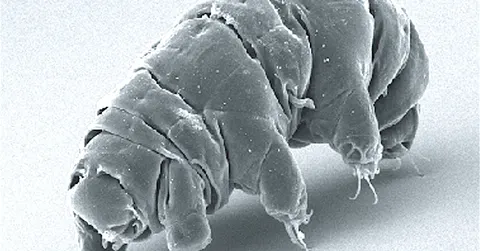
Keep wondering: a lot of deep-sea animals get through the dark by making their own light, a survival trick about as improbable as how tardigrades shrug off the vacuum of space.

Join the conversation
Comments are reviewed before they appear. Be kind and stay curious.
Loading comments…